
 27 C
27 C Phys.org
Elections 2026Business / Phys.org

The 1960s were a time of great change in technology, culture and politics. Television was radically altering the media environment, and nobody was quite sure how to think about it.
Humans have been observing the sky for thousands of years. Our ancestors were undoubtedly fascinated by it, but observing the heavens also had practical uses: It helped people measure time, both over the course of the day and through the changing seasons, and became especially important with the spread of agriculture. What is now seen as scientific frontiers, such as cosmology and astrophysics, are in fact only the latest chapter in an evolving history of observing and interpreting the sky.

For generations, wheat planting has followed predictable seasonal patterns. But this year, unseasonably warm weather in March and April accelerated wheat growth, pushing the crop into a vulnerable growth stage when widespread freezing temperatures hit.
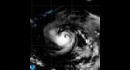
Tropical Storm Karina strengthened into a hurricane in the Pacific Ocean on Sunday and could become a major storm this week, forecasters said. The cyclone
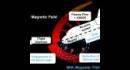
Researchers from Tokyo Metropolitan University have created a new system to test magnetohydrodynamic aerobraking for spacecraft reentering the atmosphere. Their platform generates intense magnetic fields with a powerful electromagnet as a miniature vessel is hit with a shock wave traveling at over seven kilometers per second (4.3 miles per second). The magnets reached far higher fields than previous work with permanent magnets and are a crucial stepping stone toward tests with real vessels in th

Whether employees are worried about losing their jobs to AI depends largely on their knowledge of artificial intelligence

A horde of schoolchildren watched excitedly as a diminutive humanoid tour guide named Wuji welcomed them to a robot school in eastern China, gesticulating theatrically as it described the institute