



CARA launches year-round campaign against illegal adoption
New Delhi, Sep 1 : The Central Adoption Resource Authority (CARA), under the Ministry of Women and Child Development, Government of India, has launched the theme for Adoption Awareness 2026, reinforcing its commitment to promoting legal, safe, transparent and child-centric adoption across the country. The theme for Adoption Awareness 2026 is: Legal Adoption. Safe Childhood. Secure Future. Say No to Illegal Adoption! The theme was formally launched by Bhavna Saxena, CEO, CARA, during a Live Morning Show on DD National, marking the beginning of a sustained nationwide awareness initiative to promote legal adoption and prevent illegal adoption practices. During the programme, Bhavna Saxena, CEO, CARA, emphasised the importance of following the legal adoption process and said, Adoption is not a shortcutit is a sacred responsibility. Through CARA and the legally prescribed channels, we safeguard the dignity, rights and future of every orphaned, abandoned or surrendered child. Every child deserves a safe, loving and secure familynot secrecy, uncertainty or risk. CARA has been undertaking several measures to strengthen awareness, coordination and enforcement against illegal adoption practices, including enhanced coordination with the Ministry of Health and Family Welfare and the Ministry of Home Affairs. However, sustained awareness and capacity building at the State, district and community levels remain critical to ensuring that every child is protected and every adoption is carried out through the prescribed legal process. Year-Round Outreach to Promote Legal Adoption Under the theme Legal Adoption. Safe Childhood. Secure Future. Say No to Illegal Adoption, several outreach activities will be conducted throughout the year to create widespread awareness among citizens and key stakeholders. As part of the initiative, State/UT-level Adoption Awareness Workshops are being organised from September 2026 onwards, moving beyond the earlier approach of limiting adoption awareness activities to the month of November. These workshops will provide a platform for stakeholders to understand the statutory adoption process, strengthen inter-departmental coordination, identify and address illegal adoption practices, and reinforce the principle of the best interest of the child. The campaign will involve a wide range of stakeholders, including Women and Child Development Departments, Child Welfare Committees, District Child Protection Units, Specialised Adoption Agencies, Child Care Institutions, Police, Health Departments, Judiciary, Legal Services Authorities, hospitals and nursing homes, medical professionals, ASHA and ANM workers, civil society organisations, media and digital platforms, among others. Adoption Awareness Workshop in Delhi on 10 September 2026 As part of this nationwide initiative, CARA will organise an Adoption Awareness Workshop in Delhi on Thursday, 10 September 2026, at the Delhi Secretariat, New Delhi in collaboration of Department of Women and Child Development, Govt. of Delhi and concerned authorities. The workshop will focus on strengthening awareness regarding the legal adoption framework and the roles and responsibilities of stakeholders in ensuring that children in need of care and protection receive appropriate care, protection and rehabilitation through lawful mechanisms. The workshop will also emphasise the importance of timely reporting of children found separated from their guardians, lawful surrender procedures, declaration of children as legally free for adoption, and adherence to the prescribed adoption procedure. A Collective Responsibility to Protect Every Child The campaign seeks to ensure that prospective adoptive parents and the general public understand that adoption is a legal and child-centric processnot a private arrangement between individuals. Citizens are encouraged to follow only the legally prescribed adoption process through CARA and the designated authorities/agencies and to report suspected instances of illegal adoption to the competent authorities. Through sustained, year-round awareness and coordinated action, CARA aims to build a stronger ecosystem in which every childs dignity, identity, rights, safety and future are protected.
CM Omar Abdullah revamps J&K Cancer Treatment and Management Fund for Poor
Srinagar, Sep 1: In a major leap forward for public healthcare and social welfare, the Chief Minister Omar Abdullah-led government has announced a comprehensive overhaul of the landmark Cancer Treatment & Management Fund for Poor (CTMFP) to ease the out-of-pocket financial burden on poor and vulnerable patients battling cancer. This major policy shift directly targets the critical gaps that previously left low-income families financially exhausted. While major inpatient operations and therapies are broadly covered under the Ayushman BharatPMJAY SEHAT ecosystem, patients historically suffered massive out-of-pocket expenses for outpatient care, routine diagnostics, and daily medication. Addressing this gap head-on, Chief Minister Omar Abdullahs modified guidelines raise the annual family income eligibility limit from 2.40 lakh per annum (20,000 per month) to 4.00 lakh per annum, extending a strong safety net to other low-income families. Furthermore, recognising that cancer recovery demands sustained assistance, the administration has replaced the old one-time grant with up to three distinct financial sanctions. The revised scheme showcases a modern transformation when evaluated against the original 2010 guidelines. The Chief Minister Omar Abdullahs updated initiative institutes clear assistance slabs of 75,000 for families earning up to 3 lakh annually and 50,000 for those earning between 3 lakh and 4 lakh. Further, beneficiaries are no longer confined to a short list; they can now access care at any hospital empanelled under the Ayushman Bharat-PMJAY-SEHAT network. The modified scheme modifies traditional approach of assistance sent to hospital accounts. Instead, direct bank transfers via Direct Benefit Transfer (DBT) to the patient shall be made. Further, once sanction is received from the Chief Ministers office, Deputy Commissioners are required to deposit sanctioned funds directly into beneficiary bank accounts within 72 hours of release from the Chief Minister's Secretariat. This modified scheme is the governments decisive move to address financial vulnerability of patients suffering from life threatening disease and to provide governmental support to the families in need.
IGP Kashmir Sujit Kumar calls on CM Omar Abdullah at Civil Secretariat
Srinagar, September 1: Inspector General of Police (IGP), Kashmir Zone Sujit Kumar today paid a courtesy call on the Chief Minister at the Civil Secretariat in Srinagar, following his recent assumption of charge as the Inspector General of Police, Kashmir. During the meeting, the Chief Minister welcomed the senior police officer and extended his best wishes to Sujit Kumar for a successful and productive tenure. The courtesy meeting comes shortly after the IGP Kashmir took charge of the important assignment, which oversees policing and security-related matters across the Kashmir Valley.
Three major urban development projects worth nearly Rs 2700 crore approved in J-K
Srinagar, Sep 1: The Union Territory Level High Powered Steering Committee (UTHPSC) in Jammu and Kashmir on Tuesday approved three major urban development projects worth nearly Rs 2700 crore. The projects identified by the Housing and Urban Development Department (H&UDD) include TARANG (Tawi Area Regeneration and Green Growth) in Jammu, Walled City and Nigeen Lakefront Revitalisation in Srinagar, and KRIPA (Katra Revitalisation Through Integrated Pilgrimage Amenities) in Reasi are designed to combine public investment with market-linked financing and private participation to create modern, sustainable and economically vibrant urban spaces, an official spokesperson said. In a major step towards accelerating sustainable and investment-driven urban transformation in J&K, the UTHPSC, chaired by Chief Secretary Atal Dulloo, has approved three major urban development projects with a cumulative base cost of Rs 2,692.58 crore under the Government of India's Urban Challenge Fund (UCF), the official said. The approval marks a significant advancement in J-K's efforts to leverage the UCF framework for transformative urban infrastructure, while unlocking additional institutional, municipal and private capital for large-scale development, the spokesperson said. With an estimated cost of Rs 1,567.91 crore, TARANG envisages comprehensive regeneration of the Tawi riverfront and the surrounding urban areas through a combination of public infrastructure and PPP-led commercial development. The project has a funding structure comprising Rs 307.05 crore each from the Centre and the UT government, while Rs 953.81 crore is proposed to be mobilised through market and PPP financing. The PPP component will facilitate development of a high-end residential group housing project, an upscale hotel, a modern retail mall and associated Left Bank road infrastructure. The project also provides for extensive structural and river-protection work, including a diaphragm wall, embankment filling, retaining wall with anchor slabs and interceptor drainage infrastructure. The Walled City and Nigeen Lakefront Revitalisation project, with an estimated cost of Rs 1,010 crore, seeks to rejuvenate Srinagar's historic urban core and unlock the economic potential of its lakefront areas in the interiors of the historical city. Around Rs 300 crore will be deployed towards core public infrastructure and revitalisation of the historic city, while the PPP component will support development of a Hospitality Centre, Pokribal Lakefront and a premium five-star boutique hotel. The KRIPA project in Reasi, estimated at Rs 113.90 crore, will focus on improving pilgrim amenities, mobility management and institutional infrastructure in Katra. A major component is the Katra Gateway Centre, envisaged as a seven (5+2) floor mixed-use facility over half-an-acre site, with 1.39 lakh square feet of built-up area. It will include pilgrim dormitories with 480 beds across 36 dormitories, 35 guest rooms, retail outlets, a community dining hall and dedicated prayer spaces. To address parking and traffic congestion, the project also provides for a multi-level car parking facility, EV charging infrastructure and dedicated bus bays near the Yatra Parchi Counter. The project additionally provides Rs 15.25 crore for institutional remodelling, including modern commercial office spaces, retail kiosks and upgraded administrative facilities for the Municipal Committee, Katra.
Nepal seeks climate compensation for deadly flood; says it is 'moral liability', 'not charity'
Kathmandu, Sep 1: Nepal has launched a diplomatic push to seek climate-related compensation from greenhouse emitters for the devastation caused by the recent deadly flash floods, asserting that post-disaster assistance should be treated as a matter of moral liability, ot charity. Foreign Minister Shisir Khanal said Nepal, despite contributing virtually negligible greenhouse gas emissions, are bearing the disproportionate consequences of global warming, including rapid glacier melt and extreme mountain disasters. We are paying the ultimate price for a global crisis we did not create. The rapid melting of glaciers and these catastrophic mountain tsunamis are direct consequences of global climate change, he said in an interview with Kantipur TV, the excerpts of which were published by The Kathmandu Post newspaper on Tuesday. Khanal said Nepal is shifting its diplomatic framework from aid to justice and compensation. This is not a matter of charity; it is a matter of legal and moral liability, he said. Khanal said Nepal would raise the issue with absolute firmness and clarity at international forums and seek compensation from major emitters for climate-related losses suffered by vulnerable countries. This is a matter of civilisational survival. If our Himalayan glaciers disappear, the water security of over two billion people in South Asia dependent on rivers like the Ganges and the Trishuli will be permanently compromised. We are advocating not just for Nepal, but for the survival of South Asian civilisation, he said. Khanal said the finance ministry has officially dispatched a formal climate compensation claim letter to its international partners. The minister identified China, the US and India as the world's three largest greenhouse gas emitters and said they have a historical responsibility to compensate vulnerable nations like Nepal. India has repeatedly emphasised climate equity and highlighted its relatively low per-capita emissions. It has argued that climate obligations should take into account differences in countries' historical emissions, development needs and capacities. India maintains that Western nations, which industrialised first, occupy the majority of the global carbon budget. New Delhi has supported efforts to address loss and damage suffered by vulnerable developing countries, while maintaining that developed countries should provide the necessary financial resources to help such nations deal with climate impacts. Nepal has formally approached the board of the Fund for Responding to Loss and Damage, seeking urgent financial assistance following the catastrophic flash flood in the Bhotekoshi river basin on August 26, The Kathmandu Post newspaper reported. The mechanism was established at COP27 in 2022 and operationalised at COP28. A letter jointly signed by Finance Minister Swarnim Wagle and Forests and Agriculture Minister Geeta Chaudhary sought an urgent response to the catastrophic flash flood, which caused widespread loss of life, displacement and destruction of homes and critical infrastructure. The full scale of economic and non-economic loss and damage has yet to be determined; however, preliminary information indicates that the consequences are extensive and exceed Nepal's immediate response capacity, the letter said. Maheshwar Dhakal, joint secretary at the Ministry of Forests and a member of the Loss and Damage Fund's board, said this was the first time Nepal had sought assistance from the mechanism. The scale of damage caused by the flood, and the search, rescue, relief, rehabilitation and reconstruction required in its aftermath, has become a major challenge for Nepal, he said. Since we are genuinely suffering from the adverse effects of climate change, we have approached the board, Dhakal said, adding that Nepal wanted an immediate response rather than waiting for the board's next scheduled meeting in December. The letter said the disaster had affected a fragile transboundary mountain river system and demonstrated how extreme events in the cryosphere could rapidly cascade from high mountains to densely populated downstream areas. It highlighted impacts on water, food, energy, health, infrastructure, ecosystems and human security. As a least developed and highly climate-vulnerable mountainous country, Nepal contributes negligibly to global greenhouse gas emissions yet continues to bear disproportionate and escalating climate impacts, the letter said. It said the Bhotekoshi disaster demonstrates how extreme events in the cryosphere can rapidly cascade from high mountains to densely populated downstream areas, undermining development gains and affecting water, food, energy, health, infrastructure, ecosystems and human security. In view of the exceptional urgency and magnitude of this disaster, the Government of Nepal respectfully requests the Board to take a special decision to respond rapidly, directly, and effectively in accordance with its governing instrument, the letter said. The Fund for Responding to Loss and Damage was established at the UN climate conference, COP27, in Egypt in 2022 to assist developing countries particularly vulnerable to the adverse effects of climate change. Its funding arrangements were further advanced, and the fund was operationalised at COP28 in Dubai in 2023. Nepal, a least developed and highly climate-vulnerable mountainous country, has increasingly made Himalayan climate risks a central part of its international diplomacy. Rapid warming in the Himalayas, glacier and snow melt, glacial lake risks, landslides and increasingly intense rainfall have heightened the country's exposure to climate-related disasters.
SC quashes all FIRs against CJP protestors, Sept 5 march called off
New Delhi, Sep 1: The Supreme Court on Tuesday quashed all FIRs registered against students who participated in the Cockroach Janta Party-led protests between July 20 to 25 across the country, prompting the group to call off its September 5 march in the national capital. A bench headed by Chief Justice of India Surya Kant also directed the Centre to provide within three months compensation to families of students who ended their lives over the NEET paper leak. Closing the criminal proceedings against the protestors, the bench said, Keeping in view the future prospects of the young protestors, we invoke our powers under Article 142 of the Constitution to do complete justice. Article 142 empowers the apex court to pass any orders to do complete justice. Acceding to the Centre's request, the apex court, however, permitted Delhi Police to register fresh FIRs against 2,873 individuals with serious criminal antecedents who were present in the Jantar Mantar protest. The bench, also comprising Justices Joymalya Bagchi and V Mohana, took note of the submissions of Solicitor General Tushar Mehta and widened the ambit of its order. If there is any other FIR registered with regard to same protest between July 20 to July 25 in any of the states or UTs, which are not before this court, they shall not be pursued and will be treated as closed, it said Dealing with the award compensation to the families of those who committed suicide, the court directed the Centre to formulate a pan-India policy on the issue and pay the money within three months to aggrieved families. CJP co-convenor Saurav Das appeared before the bench and read out a statement on behalf of the group. As co-convener of the CJP, I want to state that in view of the positive assurances of the Government of India and the judicial sanctity bestowed upon them today, and in view of the order being passed by this Court, the CJP deems it appropriate to withdraw the call for the march on September 5 and looks forward to compliance with today's order. I also thank the Court for this decision and the learned counsel on both sides, Ms. Vrinda Grover and the Solicitor General, for their efforts, Das said. The bench recorded the statements of the solicitor general and Das and said it has invoked its extraordinary powers keeping in mind the peculiar facts and circumstances of the case. It expressed the hope that both sides will abide by their promises. During the hearing, Mehta informed the court that the Centre is committed to honour assurances given to the CJP that the police in Delhi and other states would not pursue the FIRs registered in connection with the protests. The solicitor general also told the court that the Union of India is committed to other assurances as well, including compensation to the families. Mehta, however, sought time to work out the necessary modalities. The CJP had called for a protest march in Delhi on September 5, Teachers' Day. It had accused the Centre of failing to honour the promises made on July 25 to persuade the group to withdraw its 36-day agitation against irregularities in exams and the NEET paper leak. According to the CJP, the march was to be led by families of students who committed suicide following the cancellation of the NEET exam and the subsequent re-test, as well as those who were allegedly subjected to police excesses during the July agitation. The top court had agreed to hear a plea filed by Delhi Police seeking quashing of 13 FIRs against students who participated in the protests and registering a fresh case against 2,873 individuals. The application said that according to the decision taken by the Central government on July 25, Delhi Police no longer wished to pursue the 13 FIRs. It is submitted that 2,873 individuals having serious criminal antecedents as per the National Crime Records Bureau database were prima-facie reported to be present at the protest site. The investigation is required to ascertain their role, if any, in the commission of offences relating to bodily harm or destruction of property at the said protests. The Delhi Police seeks leave to file a fresh FIR only for these 2,873 individuals. The registration and consequential investigation of this fresh, specific FIR shall be in conformity with the clarification of the expression, 'criminal antecedents', the application said. The apex court had earlier constituted a high-powered enquiry committee headed by former apex court judge Justice R Subhash Reddy to probe issues and allegations, including those of police excesses against students surrounding the nationwide protests against NEET-UG paper leaks. The CJP-led march on July 20 in Delhi saw clashes between protesters and security personnel, who used lathis and teargas shells to disperse crowds attempting to move towards Parliament. The student-led protests, which spread to several cities, were centred around the resignation of the then Union education minister Dharmendra Pradhan. The agitation, which began at Jantar Mantar on June 20, was called off on July 25 after Pradhan resigned and the government accepted the CJP's other demands.
Chenab swells in J&Ks Reasi as four Salal Dam gates opened to regulate reservoir flow
Reasi, Sep 01: The Chenab River witnessed a fresh rise in water level in Reasi district on Tuesday after four gates of the Salal Dam were opened to regulate increased inflow into the reservoir. The gates were opened as rainfall continued across the upper catchment areas, resulting in a substantial increase in the volume of water entering the reservoir. The excess water was released downstream in a controlled manner to regulate the reservoir level as the authorities kept a close watch on the situation. The latest rise in the Chenab comes amid ongoing rainfall activity in parts of Jammu and Kashmir, with water levels in rivers and other water bodies being monitored by the concerned authorities. The controlled release from Salal Dam is aimed at managing the increased inflow and maintaining the reservoir within safe operating levels. [KNT]
J&K LG Manoj Sinha chairs security review meeting at Lok Bhawan
Altaf Bukhari urges collective action to protect J&K Banks character, interests
Srinagar, Sep 1: Apni Party president and former Jammu and Kashmir finance minister Syed Mohammad Altaf Bukhari on Tuesday urged political parties, civil society groups, business organisations and other stakeholders to come together to protect the character, identity and interests of Jammu and Kashmir Bank. Expressing concern over what he described as the banks gradual drift away from the interests of the people of Jammu and Kashmir, Bukhari said several recent developments warranted collective attention. He alleged that the bank was reducing its credit growth within Jammu and Kashmir while expanding its operations outside the Union Territory. Bukhari also raised concerns over a proposal that, he said, could pave the way for recruitment of outsiders at the cost of employment opportunities for the youth of J&K. He further alleged that Jammu and Kashmir had inadequate representation on the banks Board of Directors and expressed concern over an alleged attempt to shift the headquarters of the premier financial institution from Srinagar. These developments cannot be dismissed as routine administrative matters. They have a direct bearing on the economic interests of the people of Jammu and Kashmir, who have a legitimate stake in the institution and its future, Bukhari said. He appealed to all political parties and social organisations to rise above partisan interests and collectively oppose any move that could, in his view, undermine the interests of the people of J&K. This is not an issue concerning any one political party or section of society. It concerns the collective social and economic interests of the people of Jammu and Kashmir, he said. Bukhari said the people of Jammu and Kashmir collectively hold more than 52 percent of the shares in J&K Bank, describing them as the institutions principal stakeholders. They have, therefore, a legitimate right to demand that the interests of the institution and its shareholders be protected, he said. Calling for a collective strategy, Bukhari urged the Chambers of Commerce from both Jammu and Kashmir, lawyers, intellectuals, civil society groups, business organisations and other concerned sections to discuss the issue and make their voices heard. The time has come for all of us to speak with one voice: J&K Bank must remain rooted in Jammu and Kashmir, and its policies must continue to prioritise the interests of the people who have nurtured, supported, and strengthened this institution for generations, he said. Bukhari appealed to stakeholders to come together before, what he termed, it is too late and work towards ensuring that the bank continues to prioritise serving the people of Jammu and Kashmir.
Kargil Democratic Alliance announces full support for KargilLeh padyatra from September 10 to 24
Kargil, Sep 1: The Kargil Democratic Alliance (KDA) on Tuesday announced its full support to the proposed Kargil-Leh Padyatra in support of their demands. The Padyatra is being organised by Socialist Party and other civil and political organisations to extend the solidarity and support for Ladakhs demand for Statehood, Sixth schedule and Justice for 24 September victims. The KDA and other stakeholders held an important meeting attended by KDA Co-Chairmen Asgar Ali Karbalai and Sajjad Kargili, along with members of the KDA body and all concerned stakeholders. Following the meeting, a press conference was held in which the KDA announced its full support for the KargilLeh Padyatra scheduled from September 10 to 24. The meeting was attended by MP Ladakh Hanifa Jan Addressing the press conference, KDA Co-Chairman Asgar Ali Karbalai said that the Kargil Democratic Alliance would continue its peaceful and democratic struggle for the constitutional, democratic and legitimate rights of the people of Ladakh. He made it clear that until the UT Administration and the Government of India recognise and address the legitimate rights and demands of the people of Kargil and Leh regions, the peaceful democratic struggle and raising of the peoples voice will continue. He said that the Padyatra would receive the full support of the Kargil Democratic Alliance. KDA Co-Chairman and Padyatra Convenor Sajjad Kargili will provide regular media briefings throughout the march and lead the march along with Sandeep Pandey. As per the programme, the Padyatra will begin from Kargil on September 10 and proceed up to Haniskot, with the Kargil Democratic Alliance responsible for its coordination along this stretch. From Haniskot to Leh, the Padyatra will be coordinated by the Leh Apex Body (LAB). The Padyatra will culminate in Leh on September 24 with a candlelight vigil in remembrance of the tragic events of September 24, 2025, when four young people lost their lives during protests in Leh, while hundreds were injured and detained. The Padyatra will reiterate solidarity with the victims and their families and reaffirm the demand for justice, accountability and a credible resolution of the issues that led to the tragedy. The KDA emphasised that the Padyatra is not directed against any individual or political party, but is a peaceful peoples movement for the democratic, constitutional and legitimate rights of the people of Ladakh. Members of Parliament, civil society representatives, social activists and other public figures from different parts of the country are also expected to join the Padyatra. Well-known social activist Sandeep Pandey, among others, is expected to participate. All stakeholders present at the meeting reiterated their commitment to extending full support to the Kargil Democratic Alliance and making the Padyatra successful. They emphasised that the issues confronting Ladakh must be resolved through dialogue, democratic engagement and peaceful public participation.
'New York is no courtroom for Indias Muslims': Grand Mufti J&K
Srinagar, Sep 01: Jammu and Kashmir Grand Mufti Nasir-ul-Islam on Tueday said matters concerning the social harmony, citizenship and national character of India are best addressed on Indian soil, among Indians, and within the constitutional framework of the country, adding that 'New York (capital of USA) is no courtroom for Indias Muslims. The remarks of RSS Chief Mohan Bhagwat concerning Muslims in New York raise a fundamental question: why should the conduct and standing of Indian Muslims be discussed in New York at all? the Grand Mufti said, adding that If such questions are raised in India, we will respond with facts, dignity and full confidence. He said Muslims in India, in proportion to the population of the country, have made an equal and enduring contribution to Indias sovereignty, dignity, freedom struggle and national life. Indian Muslims do not seek certificates of patriotism from anyone, he said, Our sacrifices, service and commitment to the nation are woven into the history of India. Isalm said India belongs equally to every citizen irrespective of religion, region or language. India's strength lies not in questioning the loyalty of one community, but in recognising that the Republic was built through the collective sacrifices of all its people. We (Indian Muslims) therefore appeal to every responsible public voice to speak with restraint and wisdom. Let us debate ideas on Indian soil, uphold constitutional morality, and strengthen the fraternity that binds 1.4 billion Indians together. Nasir-ul-Islam said that the Muslim community is an integral part of Indias past, present and future and that the patriotism of Muslims is not a subject for debate abroad. Our (India's Muslims) contribution to India is a matter of history, the Grand Mufti said
Over 11,000 rescued from flood-hit areas in Nepal
Kathmandu, Sep 01: More than 11,000 people have been rescued from flood-affected areas in Nepal so far, with over 22,000 security personnel mobilised for search and rescue operations, officials said on Tuesday. As of Monday, the death toll from the devastating flash floods was 939, while around 4,000 people were still missing. At least 16 helicopters have also been deployed for search and rescue operations in the affected areas, National Disaster Risk Reduction and Management Authority (NDRRMA) spokesperson Shanti Mahat said. More than 11,000 people have been rescued so far, he said, adding that the government has intensified search and rescue efforts in the flood-hit areas. Over 22,000 security personnel, including those from the Nepal Army, have been mobilised for the operations, Mahat said. So far, 254 labourers and technicians have been rescued from the Upper Trishuli 1 Hydropower Project sites, while search operations continue with the involvement of Indian and Chinese tunnel rescue experts. According to the latest figures, 927 bodies have been sealed, of which 51 have been handed over to family members following identification, while 726 remain unidentified. As many as 413 unidentified bodies have so far been managed or buried in accordance with standard international norms, officials said. The authorities have arranged temporary shelter for 2,970 displaced people at various holding centres. Meanwhile, the NDRRMA issued an alert to people living along the banks of the Bishnumati River after its water level near the Gongabu area crossed the danger mark. The authority urged residents in riverbank areas to remain alert and take necessary precautions.
India achieved 7.8 % growth despite wars, instability: PM Modi
New Delhi, Sep 01: Prime Minister Narendra Modi on Tuesday commended the people for the 7.8 per cent GDP growth rate, noting that the feat was accomplished despite wars, instability, and supply chain disruptions. In a video message on Instagram, the prime minister said that if people continue to stress on Swadeshi and self-reliance, the country's youth will be presented with a developed India in the 100th year of Independence. He also asked people not to go for foreign holidays, host weddings abroad, or buy gold unless necessary. I want to congratulate the people of the country for 7.8 per cent GDP growth. It has been possible due to their collective resolve and efforts. India has achieved this milestone despite conflicts, wars and instability everywhere, Modi said. The prime minister said that since the 2020 COVID Pandemic, there has been no stability anywhere, but India progressed well. He said certain people in India have been trying to spread negativity and falsehood, but the country grew all the same. We have to maintain the speed of our growth. We have to grow. And for that we must become self-reliant. The youth's dreams need our hard work to be realised. Let's not be lacking in efforts, he said. Modi said his government's policies are good, its intention clear, and that is why the country is reaching new heights of progress. India's economy grew at a faster-than-expected 7.8 per cent in the April-June quarter, showing resilience against concerns of an economic downturn over the war in West Asia. Gross domestic product (GDP) growth in the first quarter of the 2026-27 fiscal year slowed from a barnstorming 8.6 per cent in the previous quarter, but remained well above expectations when the conflict erupted and disrupted energy markets.
All government, private schools to remain closed in Poonch today amid heavy rains
Poonch, Sep 01: The Poonch administration has ordered the closure of all government and private schools across the district on Tuesday as a precautionary measure amid heavy rainfall. Chief Education Officer Poonch Javed Gulshan said heavy rains have been lashing the district since morning, raising the possibility of a rise in water levels in rivers and streams. In view of the prevailing weather conditions and keeping the safety of students and teachers in mind, all government and private educational institutions across Poonch district will remain closed today, he said. The administration said the decision has been taken as a precautionary measure to avoid any risk to students and staff amid the inclement weather. Gulshan said a decision regarding the reopening of schools on Wednesday would be taken after assessing the weather conditions. He added that educational institutions would reopen only if there is sufficient improvement in the weather. The administration has also urged people to remain alert and follow advisories issued by the concerned authorities.
New Delhi, Aug 31: India on Monday rejected the Permanent Court of Arbitration's order setting aside its decision to suspend the Indus Waters Treaty with Pakistan, saying the illegally-constituted body has no jurisdiction to comment on New Delhi's sovereign decisions. The Ministry of External Affairs (MEA) said India's decision to hold the Indus Waters Treaty (IWT) in abeyance remains in force. New Delhi decided to put the IWT in abeyance as part of a series of punitive diplomatic and economic measures unveiled soon after the Pahalgam terror attack in April last year that killed 26 civilians. Pakistan had approached the Permanent Court of Arbitration in The Hague in March this year to determine the status of the treaty virtually challenging India's action. Today, the illegally constituted so-called Court of Arbitration (CoA) has issued what it termed as an award concerning Interim Measures and Status of the Indus Waters Treaty, the MEA said. This so called Court was constituted by the World Bank in patent breach of the terms of the Treaty and India categorically rejects its so-called award, just as it has firmly rejected all prior pronouncements by this illegally constituted body, it added. India has never recognised the existence in law of this illegally-constituted and so-called Court of Arbitration, and has always said the very establishment of this alleged arbitral body constitutes a grave violation of the Indus Waters Treaty, the MEA said in a statement. Accordingly, India has never appeared before this body and has refused to take any cognisance of its earlier pronouncements, it said. The MEA said the Court of Arbitration has o jurisdiction whatsoever to pronounce on India's sovereign decisions. Its pronouncements, now or in the future, will have no effect on India's actions in connection with the projects being undertaken by India, it said. In the last few months, India has stepped up work on several hydropower projects in Jammu and Kashmir that Pakistan had opposed under the provisions of the pact signed in 1960. The Permanent Court of Arbitration said the court considered the meaning of India's decision to suspend the treaty, finding that it could only be a claim that the Indus Waters Treaty is either suspended or terminated. The court examined the potential grounds on which India can suspend or terminate the Treaty, including grounds cited by New Delhi in its public statements. In a unanimous decision, the Court found that none of these grounds could justify suspension or termination of the Treaty. Accordingly, the Indus Waters Treaty remains fully in force, and India must observe its obligations under the Treaty, including those relating to the design and operation of its hydro-electric projects on the Western Rivers, the Permanent Court of Arbitration said in a media statement. New Delhi has been maintaining that IWT will continue to be held in abeyance until Pakistan credibly and irrevocably abjures its support for cross-border terrorism. The court said that while India did not participate by making written or oral submissions during proceedings, it took into account India's positions on the issues to the extent hey could be discerned from India's statements and conduct outside of these proceedings (including Indian government communications to Pakistan and to the neutral expert, and public statements made by Indian officials). The court noted that it looked extremely seriously into India's allegation that Pakistan's sponsorship of cross-border terrorism had impeded its utilisation of rights under the Indus Waters Treaty. However, the Court found that even if India's allegation was assumed to be true, they would not establish a material breach of the Treaty by Pakistan, the court said. It said the treaty does not address terrorism or the use of force and expressly indicates that it governs only the rights and obligations of the Parties with respect to the use of the waters of the Indus Rivers System.
Bishkek, Aug 31: Prime Minister Narendra Modi today met the President of the Russian Federation, Vladimir Putin, in Bishkek, on the margins of the 26th SCO Summit. This was their first meeting this year. The two leaders had earlier met in Delhi for the 23rd Annual Summit in December 2025. The two leaders reviewed progress in bilateral cooperation in a range of fields, including political, economic, defence, energy, space, mobility and people-to-people ties. They welcomed the outcome of the 27th India-Russia Inter-Governmental Commission on Trade, Economic and Cultural matters, which was held on 24 August 2026 in Moscow. The leaders exchanged views on India-Russia engagement in the multilateral arena, in particular in BRICS under Indias Chairship for 2026. They also shared perspectives on key regional and global issues of mutual interest, including the conflicts in West Asia and the Black Sea region which have impacted maritime trade and the safety and security of Indian seafarers. Prime Minister reiterated that dialogue and diplomacy was the way forward in resolving conflicts. The two leaders agreed to remain engaged to further strengthen the Special and Privileged Strategic Partnership between the two countries, which continues to register significant growth and has shown resilience in the backdrop of geopolitical uncertainties. Prime Minister stated that he looks forward to welcoming President Putin in India for the 18th BRICS Summit on 12-13 September 2026.
ACB chargesheets former junior assistant over misappropriation in mid-day meal ration in Rajouri
Srinagar, Aug 31: Jammu and Kashmir Anti Corruption Bureau on Monday produced a charge-sheet in case FIR No. 26/2018 under sections 5(1)(c), 5(1)(d) r/w 5(2) J&K P.C Act Svt. 2006 BK, Section 465, 468, 471, 201 & 120-B RPC against Mohd. Farooq, then Junior Assistant in the office of the ZEO Manjakote. Officials said the instant case was registered on 28-12-2018 in P/S VOJ (now ACB-J) on the outcome of verification which surfaced that misappropriation of rice measuring (200 Qntl approx pertaining to 4th quarter for the year 2014-15) of Mid Day meal Zone Manjakote by then ZEO Manjakote and his dealing hand Mohd Farooq I/C Mid Day Meal in Connivance with Mumtaz Hussain storekeeper Manjakote. During investigation, record so obtained was scrutinized and after obtaining FSL opinion, it has been prima facie established that Shah Nawaz khan then ZEO Manjakote (now deceased) and Mohd Farooq Jr. Assistant (dealing hand) in office of ZEO Manjakote by way of abuse of their official positions have got prepared fake/ forged and fabricated indent/ Authority letters by manipulating the official record and they had misappropriated 256.40 Qtls of rice of MDM Scheme which is worth of Rs. 8,03557.60/- along with an amount of Rs. 461578/- on account of cooking cost was also misappropriated by the concerned ZEO and Mohd Farooq I/c MDM. Therefore the above mentioned officer/officials by way of abuse of their official position caused loss to the state exchequer to the tune of Rs. 1265135.60. Since the accused Shah Nawaz khan then ZEO Manjakote has been expired, as such sanction for launching of prosecution of the accused in-service public servant namely Mohd Farooq Jr. Assistant (dealing Hand) in office of ZEO Manjakote was obtained from the competent authority and Anti-Corruption Bureau J&K produced charge sheet against the above mentioned accused person before the Honble Court of Special Judge Anti-Corruption Court Rajouri on 31.08.2026, officials said. The next date of hearing has been fixed for 29.09.2026.
Moul Mouj Foundation marks two years with JK Obesity Summit in Srinagar
World shares are mixed, oil prices surge after US strike on Iranian rocket launchers
Bangkok, Aug 31: Shares were mixed in Europe and Asia and US futures declined Monday on expectations that the US Federal Reserve may raise interest rates soon. In early European trading, Germany's DAX lost 0.9 per cent to 26,339.04, while the CAC 40 in Paris edged 0.1 per cent lower, to 8,390.43. Markets in Britain were closed for a bank holiday. The futures for the S&P 500 and the Dow Jones Industrial Average were 0.2 per cent lower. Oil prices surged more than 3 per cent after US forces struck Iranian rocket launchers on the Strait of Hormuz, marking their first military action in a month. The Trump administration just days earlier had shifted its focus to economic pressure, and a return to open conflict would be dangerous for the region. Brent crude, the international standard, jumped 3.8 per cent to USD 91.40 per barrel early Monday. US benchmark crude oil was trading 3.8 per cent higher at USD 86.58 per barrel. The Middle East had finally gone quiet enough for oil traders to start sanding some of the war premium out of crude. Then Sunday arrived, with a reminder that quiet in the Strait of Hormuz is not the same as peace, Stephen Innes of SPI Asset Management said in a commentary. Markets in Asia fell following a speech Friday by Fed Chairman Kevin Warsh that reinforced expectations the US central bank will do what is needed, such as raising rates, to bring inflation down despite possible short-term pain for the economy. In Tokyo, the Nikkei 225 lost 0.1 per cent to 66,311.93, while the Kospi in South Korea reversed earlier losses, gaining 0.5 per cent to 6,820.02. Hong Kong's Hang Seng lost 0.1 per cent to 25,566.99 and the Shanghai Composite index gained 0.9 per cent to 3,986.30. Shares in e-commerce and fast fashion giant Shein are due to begin trading in Hong Kong on Tuesday in the city's biggest initial public offering this year, part of a trend toward big Chinese-founded companies raising funds in Chinese markets. An official survey released Monday showed Chinese factory activity remained in contraction for a second straight month in August, though there were slight improvements in some areas such as new export orders and production. Elsewhere in the region, Australia's S&P/ASX 200 lost 0.2 per cent to 9,076.00. Taiwan's Taiex fell 0.4 per cent and the Sensex in India slipped 0.4 per cent. On Friday, the S&P 500 fell 0.2 per cent and the Dow industrials dipped by less than 0.1 per cent. The Nasdaq composite fell 0.5 per cent. In what is seen as a big move for the bond market, the yield on the two-year Treasury, which closely tracks expectations about Fed moves, jumped to 4.35 per cent from 4.22 per cent just before Warsh's speech at an annual economic symposium held in Jackson Hole, Wyoming. Worries had grown that his tough talk about getting inflation down to the Fed's 2 per cent target may be just that. The Fed could hike short-term interest rates to get price increases under control, but it could also be reluctant to do so because that would slow the economy and hurt prices for investments. US President Donald Trump, who appointed Warsh, has emphasised he wants lower interest rates. Warsh was adamant again on Friday that he wants to give financial markets fewer clues about what the Fed plans to do with rates for its two jobs of keeping inflation low and the job market strong. But he also said short-term interest rates are the predominant tool for the Fed to do its job. In other dealings early Monday, the US dollar fell to 159.75 Japanese yen from 160.10 yen. It has rebounded after falling for a spell following a rare coordinated intervention by the US Treasury and Japanese regulators in late July. The euro rose to USD 1.1601 from USD 1.1580. (AP)
JK Cong urges CM to intervene for hike in stipend of medical interns
Jammu, Aug 31: Jammu and Kashmir Pradesh Congress Committee president Tariq Hameed Karra on Monday urged Chief Minister Omar Abdullah to intervene in the ongoing protest by medical interns and ensure an early and meaningful enhancement in their stipend. Jammu and Kashmir has probably emerged as the lowest-paying region for MBBS and BDS interns among the states and Union Territories listed in a comparative chart circulated by protesting medical interns, with a monthly stipend of just Rs 12,300, prompting them to launch an indefinite strike on Monday demanding its immediate revision to Rs 30,000. In a letter addressed to the chief minister, Karra said the demand of the protesting medical interns was genuine and deserved sympathetic and immediate consideration. Medical interns constitute an essential part of the healthcare delivery system and shoulder significant responsibilities in hospitals while undergoing their compulsory internship, he said. These young doctors routinely work long and demanding hours, including 36-hour shifts, attending to patients and performing their duties with dedication and commitment, Karra said. He pointed out that the stipend being provided to medical interns in Jammu and Kashmir was considerably lower than that offered in several other parts of the country. When interns elsewhere are being provided better financial support for comparable responsibilities and working hours, the demand of our medical interns for a reasonable enhancement in stipend merits serious consideration, he said. Karra urged Omar to direct the authorities concerned to engage with the protesting interns, listen to their grievances and work towards an early and satisfactory resolution of the issue. The Congress leader said positive government intervention at this stage would not only address a legitimate concern of the medical fraternity but also boost the morale of young doctors who contribute significantly to the functioning of hospitals and healthcare institutions. He hoped the government would prioritise the matter and take necessary steps for a meaningful hike in the stipend of medical interns in Jammu and Kashmir, in line with their responsibilities and the prevailing stipends in other parts of the country. The interns said their stipend had remained unchanged for nearly seven years despite repeated representations and protests, while the cost of living and stipends offered to interns in several other states had increased substantially. According to the comparative figures displayed by the interns, Odisha tops the list with a monthly stipend of Rs 44,319, followed by West Bengal at Rs 43,099 and Assam at Rs 35,000. Karnataka pays Rs 30,000, while Kerala offers Rs 27,300 and Delhi and Meghalaya Rs 26,300 each. The stipend in Telangana is listed at Rs 25,900, while Arunachal Pradesh and Uttar Pradesh offer Rs 25,000 each. Tamil Nadu's stipend is shown at around Rs 25,000, followed by Haryana at Rs 24,310 and Andhra Pradesh at around Rs 21,840. Gujarat, Bihar, Goa and Himachal Pradesh are listed at around Rs 20,000 a month, while Puducherry offers Rs 18,000.
Pranab Mukherjee was a towering statesman, unwavering constitutionalist: Ashok Bhan
Srinagar, Aug 31: On the death anniversary of former President of India Pranab Mukherjee, Chairman of the Kashmir Policy and Strategy Group Ashok Bhan paid tribute to the veteran statesman, describing him as a towering statesman, an unwavering Constitutionalist and a political scholar whose public life embodied the finest traditions of Indian democracy. Bhan said Mukherjees journey from a modest beginning in a village in Bengal to the highest constitutional office of the country was marked by intellect, humility, experience and an abiding commitment to public service. He said Mukherjee possessed a rare understanding of Indias political institutions and the complexities of its democratic journey, earning respect across political lines. A man of culture and political scholarship Recalling Mukherjees multifaceted personality, Bhan said his journey included his early years as a teacher and journalist in a small village in Bengal before he emerged as an avid reader, prolific writer and standard-bearer of Indias intellectual heritage. His vast knowledge of history, politics, economics and parliamentary practice made him an exceptional repository of institutional wisdom, Bhan said. His vast knowledge of history, politics, economics and parliamentary practice made him an exceptional repository of institutional wisdom, he said. Bhan added that Mukherjee believed deeply in dialogue, accommodation and the strength of democratic institutions. His interventions were informed not merely by political expediency but by scholarship and a profound understanding of Indias civilisational and constitutional inheritance, he said. His legacy continues to inspire Bhan said Mukherjee remained, above all, an unwavering Constitutionalist whose commitment to the rule of law and good governance was central to his political and administrative philosophy. He said Mukherjee consistently urged younger generations of leaders to uphold Indias constitutional values and demonstrate deep respect for democratic institutions. His passing left a void in public life, but his legacy continues to remind us that politics, at its finest, is an instrument of national service, constitutional responsibility and the pursuit of the common good, Bhan said. Pranab Mukherjee, who served as the 13th President of India from 2012 to 2017, passed away on August 31, 2020, aged 84. His death anniversary is observed on August 31.
Bukhari questions J&K Banks low credit growth in Kashmir, seeks clarity on lending policy
Why is lending in Kashmir being reduced? Altaf Bukhari questions J&K Bank
Srinagar, Aug 31: Apni Party president and former J&K finance minister Altaf Bukhari on Monday questioned Jammu and Kashmir Banks lending pattern, recruitment policy and board composition, while also alleging that efforts are being made to shift the banks headquarters from Srinagar. Addressing a press conference here, Bukhari described J&K Bank as a jewel in the crown and said it played an important role in the economic development of J&K. I have been the finance minister of J&K. I am saddened to see the results, Bukhari said, referring to the banks credit growth being higher in outside J&K. 9% credit growth for J&K Bank in Kashmir and 30% in the rest of the country, he said. Bukhari alleged that the difference showed that the bank was reducing its lending in J&K while expanding its lending operations outside the region. This means that J&K Bank has pulled its hand somewhere. Lending in J&K has been shut down and lending in the rest of the country is increasing. This is a problem for us, he said. Bukharis remarks came after Greater Kashmir had earlier reported that J&K Bank recorded around 9 per cent credit growth in J&K, compared with around 30 per cent in the rest of the country. He also questioned why lending in Kashmir was being reduced.As a finance minister, I know that the NPA of J&K Bank is 4-5 times higher than lending in Kashmir, Bukhari said. This is why I don't understand why the lending in Kashmir has to be reduced and why the lending in the rest of the country has to be increased, he added. Bukhari also linked his concerns to the ownership of the bank, pointing out that the J&K government is its majority shareholder. J&K Bank is the bank of the J&K government. We are the majority shareholder, he said. He also pointed out that Chief Minister Omar Abdullah holds the finance portfolio in the government. The government of J&K is headed by Mr. Umar Abdullah. He is the finance minister and it is responsibility to set the record straigth, Bukhari said. Bukhari also raised concerns over recruitment by J&K Bank outside the Union Territory, saying the bank had traditionally provided employment opportunities to the youth of J&K. He alleged that recruitment outside J&K was now being carried out locally in those areas.I am aware that the recruitment outside J&K, where non-domiciles are recruited, Bukhari said. Bukhari said employees from J&K had a particular emotional connection with the bank.When the children of J&K work in J&K, they have an emotional connection that it is their own bank, he said. That is why they try to make a profit. Because it is our own bank, he added. When there is someone from outside, what will he be worried about? He will not be worried at all, Bukhari said. Bukhari also questioned the composition of J&K Banks board of directors, alleging that it does not adequately represent Kashmir. Thirdly, the Board of Directors does not represent Kashmir, he said.The majority of people are from outside J&K. What kind of justice is this? he asked.It has been two years since the J&K government was elected, Bukhari said.If there is a board of 13, 14, 15 or 16 people, even those 5 people are not from J&K or Kashmir. As far as I know, there is only one representative from Kashmir, he alleged. He demanded immediate clarification on the issue.If this is being done in a planned manner, then also it is a problem for us, Bukhari said.I want it to be clarified immediately. And if it is being done, it should be stopped. Bukhari then raised what he described as another scary news concerning the banks headquarters.That J&K Bank's headquarters is being shifted from Srinagar, he alleged.I do not know whether these people are living in heaven or on the ground, Bukhari said. Maybe they are not aware of the ground realities. They do not understand that emotions can be played to an extent, but not after that, he added. Bukhari appealed to the J&K government and anyone associated with the alleged proposal to intervene. So, I humbly request the J&K government and whoever is associated with this, to stop these suicide attacks, he said.Because this will not be good for J&K, Bukhari added.
Former soldier dies after throat slit by Chinese kite string in Jammu
Jammu, Aug 31: An ex-serviceman was killed after his throat was slit by a Chinese kite string while he was travelling through the Ring Road here, officials said on Monday. Naib Subedar (Retd) Lakhvinder Singh sustained critical injuries after coming into contact with the killer string while passing through Bishnah area on a two-wheeler late Sunday, the officials said. They said the retired soldier was immediately shifted to a hospital where he succumbed to injuries. Singh was returning to his home in R S Pura after finishing work at an industrial unit in Bari Brahmana, where he was employed as a private security guard, the officials said. The sale and use of the Chinese kite-string or 'Manja' is banned by the authorities and several shopkeepers were arrested in recent past across Jammu for clandestinely dealing with the material. The latest death has sparked concerns over the enforcement of the ban, with residents demanding strict action against those selling and using the prohibited string. The officials said police have registered a case under relevant sections of law and investigation is on to identify the culprits and bring them to book.
Disproportionate use of force against PoK protesters, polls not credible: Paks human rights body
Lahore, Aug 30: Pakistan's human rights body has said the state resorted to disproportionate use of force against protesters in the PoK and raised serious questions about the credibility of the electoral process marred with violence and allegations of massive rigging. A report by the fact finding mission of the Human Rights Commission of Pakistan (HRCP) released on Saturday attributed the unrest in Pakistan-occupied Kashmir (PoK) to longstanding political and socio-economic grievances, institutional distrust and governance deficits. An increasingly confrontational state response, including the disproportionate use of force has further deepened polarisation and eroded public trust, the HRCP said and added its mission received sharply conflicting accounts about the scale of violence and the conduct of security forces. Elections to 45 seats to the so-called PoK legislative assembly were held in three phases from July 27 to August 10. The banned Joint Awami Action Committee (JAAC), which had been holding a series of protests in PoK since June over the contentious 12 refugee seats, has alleged that the establishment manoeuvres these seats to install a prime minister, to lead the so-called government in PoK, of its choosing. After negotiations between the government and JAAC failed on May 30, the Kashmir government proscribed the organisation on June 5 under an anti-terrorism act. According to the JAAC, over 40 people were killed during the first phase of polls held on July 27. Besides, it claims that some 400 protesters have been killed since the first week of June, a claim refuted by the federal government. The HRCP expressed particular concern at the allegations of lethal and excessive use of force against protesters and said it received multiple accounts from families, alleging that a number of protesters had been killed or seriously injured by the security forces. The Kashmir police chief had reported around 38 security personnel killed since June, it added. We could not independently establish the full scale or circumstances of civilian casualties, particularly because the team was unable to access Rawalakot, one of the main centres of violence, the commission said and called for an independent and impartial investigation into all deaths and serious injuries since June, including whether the use of force was lawful, necessary and proportionate. The report also raised concerns at the governments use of anti-terrorism and preventive-detention provisions against political activists. Heavy deployment of security personnel, prolonged communications restrictions, boycott by major political actors, phased polling and postponement of seven constituencies raised wider questions about the credibility of the electoral process, the HRCP report said about the polls in PoK. India maintains that the entire Union Territories of Jammu & Kashmir and Ladakh are its integral and inalienable parts. New Delhi also asserts that Pakistan has been in illegal and forcible occupation of parts of these Union Territories. India on August 4 described the so-called local body elections in PoK a complete farce, asserting that such hollow exercises cannot hide the ground reality in the region. The Ministry of External Affairs (MEA) strongly criticised Pakistan's crackdown on protesters in PoK and said the international community should see through the flimsy veneer of Islamabad's hypocritical lecturing on human rights. This so-called local election in PoK is a complete farce. The real happening is that of public protests and wanton killings by Pakistani forces. Such hollow exercises cannot hide reality, MEA spokesperson Randhir Jaiswal said at a regular media briefing. The HRCP report called for independent review of cases against protesters, activists, journalists and political workers, with cases withdrawn where individuals had been detained or prosecuted solely for peaceful political activity or lawful assembly. It also chided restrictions on journalism and access to information, saying journalists had faced arrests, legal action, restrictions on access to affected areas and special security requirements while the prolonged communications shutdown severely constrained independent reporting and verification of deaths, injuries, arrests and alleged electoral irregularities. The communications shutdown went far beyond political activity, disrupting banking, education, commerce, transport, public administration and healthcare, it said. There are 53 seats in the so-called PoK legislative assembly - 45 are directly elected, while eight are reserved for women, technocrats and clerics. Elections to seven of the 45 directly elected seats - five in Poonch district and two in Sudhnoti district - could not be held due to law and order situation. The 38 members elected directly participated in the elections of eight reserved seats. Prime Minister Shebaz Sharif led Pakistan Muslim League-Nawaz (PML-N) now has 31 of the current 46 seats while its coalition partner at the federal level, the Pakistan People's Party (PPP) has 14 seats. A lone Awami Dast-o-Bazu Party winning member has also allied with the PML-N. PML-N's Barrister Iftikhar Gillani, who was defeated by a PPP candidate in Muzaffarabad-III general election but later got elected on a technocrat seat, has been elected as the Prime Minister of PoK. The PML-N, particularly its founding chair Nawaz Sharif, is facing immense criticism from all quarters, including his party members, for selecting a defeated candidate to head the government in PoK.
DGP stresses stakeholder coordination for peace, security in border areas of Ladakh
Leh, Aug 30: Ladakh Director General of Police (DGP) Anand Jain has emphasized the need for close cooperation, coordination and synergy among all stakeholders to ensure peace, security and stability in the sensitive border areas of the Union Territory. The Ladakh Police chief made the remarks during his visit to the vibrant village of Chumur, where he paid homage at a local monastery and interacted with security personnel deployed in the border area, before concluding his three-day tour of Changthang district, a police spokesman said on Sunday. The DGP's tour was aimed at reviewing policing infrastructure, strengthening public-police relations, and assessing developmental and security-related aspects in the region. During the comprehensive tour, Jain was received by locals with warm traditional welcome. The DGP interacted with the public at Chumathang, where he patiently listened to the grievances and concerns raised by local residents, the spokesman said. Jain assured the public that their genuine issues would be taken up with the concerned authorities for appropriate action. He was also accorded a guard of honour at Nyoma police station. During his visit, the DGP thoroughly inspected the police station, including office records, infrastructure, and barracks of the police personnel, and appreciated the efforts of the officers and jawans serving in the challenging terrain of Changthang, the spokesman said. Subsequently, a public meeting was also held at the District Police Office, Changthang, which was among others attended by 'Nambardars' (village heads) of Nyoma, Mudh, and Nidder, along with prominent citizens of the area. The DGP patiently heard public issues and assured continued support from the police administration, the spokesman said. Senior Superintendent of Police, Changthang, Syed Zaheer Abbas Jafari briefed the DGP on the developmental initiatives, achievements, and community-oriented policing efforts undertaken by district police, he said. As part of the awareness initiatives, the spokesman said a bike rally on the theme 'Nasha Mukt Bharat' was organized, which was flagged off by the DGP in the presence of police personnel and local villagers, spreading the message of a drug-free society. Later, Jain proceeded to Korzok, Tsomoriri, where he inaugurated a newly constructed prefabricated hut established for use as a police check post and accommodation for personnel deployed for tourist assistance. During a public interaction at Korzok, local residents requested year-round deployment of police personnel, as the existing deployment was seasonal, the spokesman said. He said the police chief assured the public that their demand would be examined positively and efforts would be made to ensure continuous police presence.
Property acquired through proceeds of narcotics trade attached in Shopian: Police
Srinagar, Aug 30: As part of its continued crackdown on narcotics-related activities, police in Shopian have attached a residential house valued at 16,77,448/- belonging to Hilal Ahmad Dar son of Ghulam Ahmad Dar resident of Vehil Shopian. Officials said the property was identified as having been acquired through proceeds generated from the illegal trade of drugs and narcotics. Accordingly, the said property has been attached in connection with FIR No. 80/2024 of Police Station Shopian. The attachment proceedings were carried out in the presence of duly constituted police team, Executive Magistrate, Lambardar and Chowkidar, ensuring full compliance with all legal procedures and maintaining transparency. Police reiterated its firm commitment to eradicating the menace of drugs by targeting both offenders and the financial assets generated through illicit activities. They urged general public to come forward with any information regarding drug trafficking or related activities.
NEET-PG 2026 successfully conducted nationwide with robust security and real-time monitoring
Srinagar, Aug 30: The National Board of Examinations in Medical Sciences (NBEMS) successfully conducted the NEET-PG 2026 examination today, 30 August 2026, across the country with comprehensive logistical, technological, security and manpower arrangements to ensure a fair, secure and seamless examination process. The examination was scheduled for 2,73,096 candidates at 1,111 examination centres across 339 cities, covering all 36 States and Union Territories. A total of 2,65,980 candidates appeared for the examination, with the examination successfully completed for approximately 2,63,535 candidates. The nationwide examination was supported by extensive real-time monitoring and stringent security measures. A total of 2,527 faculty members were appointed as Independent Appraisers to oversee the conduct of the examination. In addition, more than 700 senior faculty members, including Deans, Directors, Medical Superintendents and senior professors, were deployed as Flying Squad members. To strengthen coordination and monitoring, 16 NBEMS Regional Command Centres were made operational across the country. The examination centres were also placed under live CCTV surveillance, which was continuously monitored from the NBEMS Command Centre at its Headquarters in Dwarka. A dedicated team of 190 personnel from NBEMS and TCS was deployed for real-time surveillance and monitoring. At the dedicated Command Centre at NBEMS Headquarters, officials from NBEMS, Ministry of Health & Family Welfare, BEL, ECIL and TCS maintained close and continuous oversight of the examination process throughout the day. As part of measures to further strengthen examination security and prevent impersonation, Aadhaar-based authentication of candidates was successfully undertaken at examination centres. Government agencies extended their full support towards the secure and orderly conduct of the examination. While the examination was successfully completed for the overwhelming majority of candidates nationwide, an unforeseen technical disruption occurred at iON Digital Zone iDZ Sitapura Centres, Jaipur, Rajasthan (TC Nos. 41682 and 41683), where the examination could not be completed for 2,445 candidates due to internal power supply issues at the test centres, attributable to M/s TCS Ltd., the examination conducting agency. NBEMS has expressed regret for the inconvenience caused to the affected candidates. To ensure that all affected candidates are provided a fair and equitable opportunity to appear in NEET-PG 2026, examination for these 2,445 candidates will be conducted on 05 September 2026 (Saturday) at 03:00 PM in Jaipur, Rajasthan. The successful conduct of the examination across 1,111 centres in 339 cities reflects the extensive coordination among examination authorities, medical institutions, faculty, security agencies, technology teams and other stakeholders involved in the nationwide exercise. NBEMS appreciates the cooperation, patience and trust of the candidates and acknowledges the dedicated efforts of all personnel and institutions associated with the conduct of NEET-PG 2026.
Statehood will return, Article 370 will not: JK BJP to Mirwaiz
Srinagar, Aug 30: The Jammu and Kashmir unit of the BJP on Sunday hit out at Kashmir's chief cleric Mirwaiz Umar Farooq for urging political parties to unite for the restoration of Article 370, claiming that such statements are attempts to provoke the public and disrupt the peaceful atmosphere that has emerged in the valley after years of violence. BJP spokesperson Altaf Thakur said Parliament took a historic constitutional decision on August 5, 2019, and the Supreme Court subsequently upheld the abrogation of Article 370. Mirwaiz Umar Farooq should understand that Article 370 is not coming back. Parliament has buried Article 370 forever, and no political party, leader or pressure group can reverse that constitutional reality, Thakur said. He said such calls risked dragging Kashmir back into the politics of the past. Statements of this nature are meant to provoke people and vitiate the peaceful atmosphere in the Valley once again. This will never be allowed. The nation has paid a very heavy price for the return of peace to Kashmir. The sacrifices of our brave security forces and civilians, including political workers who laid down their lives for peace and democracy, cannot be allowed to be undermined or challenged through politically motivated statements, Thakur said. He noted that Kashmir has experienced enough bloodshed, shutdowns, stone-pelting, and disruption, and that the people should not be pushed into another cycle of instability. Those who attempt to revive old fault lines must understand that Kashmir has moved ahead. Our youth want education, employment, entrepreneurship, investment, tourism and opportunities. They do not want to return to an era when shutdown calendars dictated their lives and violence dictated the future, he said. Thakur mentioned that political parties were free to express their views within the constitutional framework, but attempts to create agitation around an issue that had already been constitutionally settled would serve no purpose. Democracy gives everyone the right to speak and participate, but democracy cannot be reduced to repeatedly demanding the reversal of a constitutional decision that has already been upheld by the highest court of the country, he said. On the issue of statehood, Thakur said the BJP has made its position clear that it would be restored at an appropriate time. There is a clear distinction between statehood and Article 370. Statehood will be restored at an appropriate time, as has been stated by the Government. But there is absolutely no question of bringing back Article 370, he said. Those spreading confusion on this issue should stop misleading the people, he said.
Altaf Bukhari asks Mirwaiz to come forward, guide people on what needs to be done
Death toll reaches 675 in Nepal flash floods
Kathmandu, Aug 29: The death toll from flash floods in central Nepal rose to 675 on Saturday, with more bodies being recovered on Saturday even as more than 2,400 people still remained missing following the disaster. Bodies were recovered from all eight affected districts as search and rescue operations continued on war footing, Nepal police said. An ice-rock avalanche following a glacial collapse near the Nepal-Tibet border sent a torrent of water, mud and debris downstream wiping out towns and villages, damaging crucial infrastructure and washing away hydropower stations through central Nepal on Wednesday. So far, 675 bodies of the Bhote Koshi flood victims have been recovered from eight districts, according to a statement by Nepal Police. The rescuers have recovered 246 bodies from Chitawan, 165 from Nawalparasi East, 63 from Nawalparasi West and 57 from Gorkha, it said. Similarly, 45 bodies were recovered from Dhading district, 51 from Nuwakot, 35 from Tanahu and 13 from Rasuwa district. More than 2,400 people remained missing as of Saturday. Nearly 2,500 people, including 163 foreigners, were evacuated as rescue teams led by the National Disaster Risk Reduction and Management Authority (NDRRMA) raced against time amid on-and-off rainfall in the flood-affected regions. More than 11,000 security personnel, including over 5,000 Nepal Army personnel, have been mobilised for search and rescue operations. The NDRRMA, in a statement, urged people not to fly drones in the flood affected area, where search and rescue operations are being carried out. Our attention has been drawn that there are reports about flying drone by some individuals and organisations without the permission from the local administration at a time when rescue and relief works are in progress, it said. The Authority warned of legal action if the law is breached.
ATM-swapping fraudster with alleged drug peddling links arrested in J-K's Poonch
Jammu, Aug 29: An alleged ATM-swapping fraudster, who was also found to be involved in drug abuse and peddling, was arrested in Jammu and Kashmir's Poonch district on Saturday, police said. Aejaz Ahmed, a resident of Morha Bachai village, was arrested following investigation in a case related to cheating and theft registered at Surankote police station, a police spokesman said. During investigation, it was revealed that the accused allegedly targeted ATM users, particularly at outlets without security guards, he said. He would offer assistance to victims, observe their PIN while they made transactions and cleverly replace their ATM cards with another card. He would then use the swapped card and PIN to withdraw money from their accounts, the spokesman said. The investigation also revealed that the money obtained through such fraudulent withdrawals was allegedly used for procuring heroin, which the accused reportedly consumed as well as sold to others, establishing a nexus between financial fraud and drug trafficking. The accused has also been found involved in several other cases, including financial fraud and drug peddling registered at Surankote police station last year, as well as another drug-peddling case registered at Poonch police station, he said. Several complaints regarding similar ATM frauds are also under inquiry, and further linkages are being investigated, the spokesperson said. The accused is presently on police remand, with further investigation underway. In a separate incident, two drug peddlers were arrested along with 13.7 grams of heroin during checking at Phalata in Rehambal area in Udhampur district on Friday. The arrested accused, Showkat Ahmad Lessu and Waseem Ahmad Kanday, both residents of Srinagar, were booked under Narcotic Drugs and Psychotropic Substances (NDPS) Act, the spokesman said.
Unplanned activities threaten Kashmirs glaciers, says RTI activist Raja Muzaffar
NC has failed to honour its commitments with the people of Jammu and Kashmir: Mirwaiz
FSSAI proposes front-of-pack warning label in red for food products high in fat, salt & sugar
New Delhi, Aug 29: The Food Safety and Standards Authority of India (FSSAI) has told the Supreme Court that it has proposed to provide a prominent front-of-pack warning label in red colour for food products which are high in added saturated fat, added sugar and salt. In a compliance affidavit filed in the apex court, the FSSAI said the proposal is intended to provide a simple, prominent and easily comprehensible warning to consumers regarding food products which are high in specified nutrients of concerns. It is proposed to provide a prominent front-of-pack warning label in a red-coloured hexagonal shape for food products which are high in any two or more of the following nutrients of concern, namely added saturated fat, added sugar and salt, based on the thresholds specified under the Dietary Guidelines for Indians, 2024 issued by ICMR-NIN, the affidavit said. It said the warning label shall indicate the applicable declarations, such as High Fat, High Sugar, High Salt and/or Highly Sweetened Beverage, as the case may be, to enable consumers to readily identify products high in the specified nutrients. The affidavit was filed in compliance of the apex court's August 13 order passed while hearing a plea of public charitable trust '3S and Our Health Society'. The petitioner, represented by advocate Rajiv Shankar Dvivedi, has sought directions to the Centre, states and Union territories to implement mandatory front-of-package warning labels (FOPL) on packaged foods. While hearing the matter on August 13, a bench of justices J B Pardiwala and K Vinod Chandran had slammed the FSSAI over the delay in introducing warning labels on packaged foods and asked if the government does not want its people to be healthy. In its compliance affidavit filed in the court, the FSSAI said it has prepared a proposal for providing information relating to added sugar, added fat and salt in pictorial form on the front-of-pack (FoP). The warning shall be displayed in a font size one point larger than that used in the nutrition information table on the back of the pack, it said. It said the following categories are proposed to be exempted from the front-of-pack warning requirement -- single-ingredient food products, and food products which are inherently rich in fat, sugar or salt, such as ghee, edible oil, salt, sugar, jaggery and honey, subject to the applicability of other requirements under the food safety and labelling regulations. The affidavit said it is proposed that front-of-pack nutrition labelling (FoPNL) be implemented in phases to facilitate consumer acceptability and provide industry adequate time for reformulation. It said while phase I would cover products high in two or more specified nutrients -- added fat, added sugar and salt -- and specified sweetened beverages, phase II would extend the warning to products high in any one of these nutrients. The proposed approach is intended to address the need for an effective and consumer friendly FoP labelling mechanism and to facilitate informed food-choices, particularly in relation to children and other vulnerable group of the population, the affidavit said. It said for the purposes of this regulation, a food product shall be considered high in fat, sugar and/or salt (HFSS) where, based on the nutrient-of-concern thresholds specified under the Dietary Guidelines for Indians, 2024 issued by ICMR-NIN (National Institute of Nutrition), the food product is high in any two or more of the following nutrients -- added fat, added sugar and salt. It said this information shall be presented in a 'red hexagon' at front-of-pack for food products in the prescribed format. It is pertinent to mention that the same will be notified by way of an amendment in the respective regulations by following prescribed procedure, it said.
Man dies at Anantnag hospital; family alleges negligence, doctors rule out surgical complication
Operation Sindoor marked significant shift in India's approach towards Pak: ex-Army chief Naravane
Vadodara, Aug 29: Operation Sindoor marked a very significant shift in India's approach towards Pakistan as the strikes targeted not only terrorist hideouts near the border but also their supporters deep inside the neighbouring country, former Army chief General M M Naravane said on Saturday. Speaking to reporters after attending a private event in Vadodara to promote the start-up ecosystem, he said the operation, carried out following the Pahalgam terror attack a year ago, demonstrated that those providing support to terrorists could not escape Indian action regardless of where they were located. Operation Sindoor, which took place after the Pahalgam attack, was a very necessary action, said Naravane, who had served as the 28th Chief of the Army Staff. Earlier, India's military response had largely been focused on terrorist hideouts located close to the border, he said, referring to earlier terror attacks, including in Uri and Pulwama. Previously, whenever such attacks occurred -- like after Uri, and Balakot strikes after Pulwama -- we were mostly targeting terrorist hideouts close to the border. But this time, the strikes carried out targeted their supporters and those who provide them backing, wherever they may be -- not just near the Line of Control, but deep inside Pakistan, in Muridke and Bahawalpur, from where they receive this support, said general Naravane (retd). He said India demonstrated that those providing support to terrorism anywhere cannot escape. As our Defence Minister Rajnath Singh had said, 'we will enter their territory and eliminate them', and there will be no protection for them. So, this was a very significant shift in our modus operandi, the former Army chief said. Asked about reports that Pakistan had become more active in the Sir Creek sector and was carrying out Operation Ababil, general Naravane (retd) said such activities happen, adding that he did not have complete information about the reported operation. These kinds of activities keep happening. I don't have complete information about this right now since I am retired, he said. However, Indian armed forces remained vigilant and would take appropriate action if required, he added. I would like to say that whatever activity takes place, our forces always keep a close watch on it. There is nothing to panic about, and whatever action needs to be taken, appropriate action will be taken at the right time, the former Army chief said. Asked whether Pakistan was capable of taking on India, the former general said, In my opinion, no. On India-China relations, general Naravane (retd) said the recent talks between National Security Advisor Ajit Doval and Chinese Foreign Minister Wang Yi should be viewed in the context of the long-standing boundary dispute between the two countries. He said the meeting was the 25th round of Special Representative-level talks and was not taking place for the first time. This discussion that took place -- the 25th round of Special Representative-level talks between Ajit Doval from our side and Foreign Minister Wang Yi from China -- is not happening for the first time, he added. He said the key point to keep in mind is that there is a boundary dispute between India and China. Exactly where the boundary lies has not been clearly demarcated either on maps or on the ground. It is because of this lack of demarcation that occasional disputes arise between India and China, the former Army chief added. On the proposed theatre commands, General Naravane (retd) said the discussion on theatreisation of the armed forces had begun after the Kargil War and that it was not a new concept. The discussion on theaterisation first began after the Kargil War. It has already been 25 to 26 years since then. Theaterisation is not a new concept; it is a continuous process and an evolution, he said. The former Army chief further said there was broad agreement to establish theatre commands in India in view of rapidly changing modern warfare and shorter decision-making cycles. Everyone agrees that such theatre commands should be established in India as well, he said. Considering the way the nature of modern warfare is transforming and decision cycles are becoming progressively shorter, it is essential that we move toward theaterisation as expeditiously as possible, the former Army chief said.
Garbage dump near Nowgam Railway Station raises concern among locals, commuters
Heaps of garbage dumped right outside Nowgam Railway station has become an eyesore for locals and commuters. Most importantly, waste welcoming tourists travelling by train is a matter of concern. Traders and locals have urged authorities to address the issue of waste dumping right along the bypass road in Nowgam. Report: Saqib Malik Camera: Murtaza Bilal
J&K HC to hear on Monday plea seeking Crime Branch probe into minor's rape, death in Kishtwar
Jammu, Aug 29: The High Court of Jammu and Kashmir and Ladakh will hear on Monday a plea seeking a Crime Branch probe into the death of a 15-year-old tribal girl, who was allegedly sexual exploited by her school teacher. The petition was filed on behalf of the girl's father, a resident of Chatroo village in Kishtwar district, by senior advocate Deepika Pushkar Nath on Saturday. The matter has been listed for hearing on Monday, Nath told PTI. She said the plea seeks transfer of the investigation to the Crime Branch for an independent probe into the entire sequence of events proceeding the minor's death on August 20, including an alleged panchayat intervention and attempt to pressure her father for a compromise. Police have constituted a Special Investigation Team (SIT) to probe the incident and have so far arrested six persons, including the school headmaster, who is the main accused, a nurse, and a daily-wage sanitary worker posted at District Hospital Kishtwar. The government has suspended the teacher, while the daily-wage worker has been dismissed from service. We have sought an independent investigation not only into the alleged rape of the minor but also into the entire chain of events that followed, leading to her death. The alleged Panchayat intervention, the pressure exerted on the victim's father to compromise the matter, and the role of other persons who may have facilitated or attempted to suppress the case require thorough investigation, Nath said. She said the alleged intervention of the panchayat is an important aspect requiring urgent scrutiny, particularly the allegations that the girl's impoverished and illiterate father was pressured to compromise the matter, offered money to remain silent and allegedly made to affix his thumb impression on a blank paper. These allegations cannot be treated as an isolated or incidental episode, particularly when they arose after the minor's pregnancy came to light, she said. According to the petition, after the pregnancy became known, people allegedly associated with the principal accused became involved and a panchayat was convened. The petitioner alleged that he was chastised and pressured to remain silent and accept a compromise, while money was allegedly offered in return. He stated that he rejected the proposed compromise and insisted that the accused and others be proceeded against in accordance with law. The petition further alleged that the father was subsequently made to put his thumb impression on a blank document under duress, without knowing what was written on or made out of it. The plea sought identification and examination of all persons present at the panchayat, the circumstances in which the document was prepared and the thumb impression obtained, and the alleged source and purpose of the money offered. The plea alleged that the girl was sexually exploited by the principal accused for months together resulting in her pregnancy. The family said they came to know of the pregnancy only when the minor developed a serious medical condition. The petition thereafter traces a series of events involving her examination at Public Health Centre at Chatroo, ultrasound at Kishtwar, treatment at District Hospital Kishtwar, transfer to Doda, delivery of a dead male child and subsequent transportation towards Punjab, culminating in her death. It sought investigation into the alleged attempts to terminate the pregnancy, the procurement and administration of medicines, the role of persons who transported or accompanied the minor, the treatment provided at different health facilities and the circumstances surrounding her death. Nath said the petition also seeks preservation and examination of hospital records, ultrasound reports, medical prescriptions, ambulance records, GPS/location data, CCTV footage, call-detail records, electronic communications, financial records and forensic/DNA evidence. It also seeks scrutiny of the alleged circumstances in which the minor was recorded in hospital records as the wife of a 13-year-old boy, and the identification of the person or persons responsible for furnishing such information. The petitioner has additionally sought examination of possible administrative, institutional or statutory lapses concerning the safety of the minor at the school and the handling and reporting of the matter after her pregnancy came to light.
Russian attack hits Ukraine's Kyiv region, killing at least 27
Kyiv, Aug 29: At least 27 people have been killed following a Russian attack on the Bucha district, close to the Ukrainian capital of Kyiv, officials said Saturday. Tymur Tkachenko, head of the local regional military administration, said that at least 50 residential buildings had been damaged in the attack, which also sparked a large-scale fire that spread to homes and a restaurant. Almost constant air raids in Kyiv have now reached their third day, choking the economy in the Ukrainian capital and severely disrupting civilian life over four and a half years after Russia's full-scale invasion of its neighbour. (AP)
LG Sinha calls for stronger sports ecosystem in J&K, urges corporates to invest in talent
Srinagar, Aug 29: Jammu and Kashmir Lieutenant Governor Manoj Sinha on Saturday called for a stronger grassroots sports ecosystem in the Union Territory, urging institutions, coaches, parents and corporate houses to invest in athletes well before they win medals. Addressing a National Sports Day event, Sinha paid tribute to hockey legend Major Dhyan Chand and said the sporting icon had become a symbol of India's identity through his achievements on the international stage. I believe that in that era, Major Dhyan Chand himself became an embodiment of India's identity, and his stick became a symbol of his unwavering willpower, his dedication on the sporting field and his discipline, Sinha said. He described sport as a powerful tool for character-building and nation-building, arguing that sporting success was not limited to medals. Sport is life's most honest teacher, he said. It tells you exactly where you stand today and what you need to do to become better tomorrow. There is no shortcut on the sporting field. There is no place for excuses in hockey either. There is only hard work, opportunity and a test of your character, he added. Sinha said Jammu and Kashmir's young athletes represented the region's potential and India's future. Today, when I look at the young athletes of Jammu and Kashmir, I see India's bright future in them, he said, congratulating the athletes honoured at the event. Calling for greater access to professional training, he said athletes from smaller towns and rural areas should have access to facilities comparable to those available in Jammu and Srinagar. We want to see a farmer's child in Reasi or Shopian receive the same scientific and technical training in different sports disciplines that a player practising at a centre of excellence in Srinagar or Jammu receives, he said. The Lieutenant Governor also called for sports science and sports management to be strengthened as academic disciplines. We need to consider how sports science and sports management can emerge as subjects in universities and institutions, and how our institutions can produce trainers, sports managers, physiotherapists and technical experts in sports, he said. Sinha said Jammu and Kashmir should aspire not only to participate in international sporting competitions but also to host them. We want to see a Jammu and Kashmir that does not merely participate in international games, but is itself capable of hosting international games and is ready to welcome the entire world, he said. He expressed confidence in the potential of the region's athletes, saying their achievements could gain global recognition. We believe that in the coming two years, the world will see the dreams of Jammu and Kashmir's athletes being transformed into discipline and action, Sinha said. He also stressed that sporting development could not be left entirely to governments and called for greater private-sector participation. The future is not built only by the efforts of governments. The future is built by those who refuse to give up, he said. Addressing young athletes, Sinha urged them to maintain discipline and perseverance.Believe in yourself. The country will certainly believe in you, he said. He also highlighted the contribution of people working behind the scenes, including coaches, support staff and parents. Our coaches, support staff and parents are the unique creators behind every medal that Jammu and Kashmir is winning today, Sinha said. History certainly remembers the athlete standing on the stage, but I think we now need to reflect on the fact that we should also remember those who always stand behind the stage as your strength. Sinha further linked sporting success with India's broader development, saying the country's progress should not be assessed solely through economic indicators. Development is not measured only by GDP, he said. It is also measured by the energy of our youth, and by the pride with which the Indian tricolour flies on the world's biggest sporting stages. He urged corporate houses operating in Jammu and Kashmir to support promising athletes before they achieve medal-winning success. Do not wait until an athlete wins a medal to provide support, Sinha said. Rather, help identify and nurture the talent that is being recognised before the medal is won, in our villages, small towns and streets.
Jammu Railway Divison restores Budgam-Katra train
Jammu, Aug 29: Jammu Railway Division of the Northern Railway has restored the train service between Budgam and Katra from today, August 29, 2026. Keeping in view the convenience of passengers and devotees of Shri Mata Vaishno Devi, Northern Railway's Jammu Division has taken this major passenger-friendly decision. Train number 04688/04687 has now been restored between Budgam (BDGM) to Shri Mata Vaishno Devi Katra (SVDK) with effect from August. This train will run on its regular route from today, Public Relations Inspector (PRI), Jammu Railway Division said. According to PRI, train No. 04688 (Budgam to Katra) will depart from Budgam at 7.20 am and arrive at Shri Mata Vaishno Devi Katra Railway Station at 1 pm. Train No. 04687 (Katra to Budgam) will depart from Shri Mata Vaishno Devi Katra Railway Station at 1.45 pm and arrive at Budgam Railway Station at 8 pm. With the restoration of this train, residents of the Kashmir valley, students, employees and pilgrims visiting Mata Vaishno Devi will get direct benefit. This service will prove to be an important link connecting the Valley with the Jammu region, PRI said. Passengers have been requested to check the exact status and timing of the train before starting their journey through NTES mobile app, Indian Railways website or helpline number 139.
Article 370 abrogation inflicted deep wound on J&K peoples emotions: Altaf Bukhari
Srinagar, Aug 28: Apni Party President Syed Mohammad Altaf Bukhari on Friday said that the abrogation of article 370 inflicted a deep wound into the emotions of the people of Jammu and Kashmir. He said that Congress and BJP are equally responsible because Congress had already hollowed this article out over the years while BJP revoked it completely. He made these remarks today while addressing a public convention in Tral today. The event, organised by the party, attracted a large gathering of local people, besides party workers from across the town. Apni Party leader further said that the people of Jammu and Kashmir had a deep emotional attachment to Article 370, despite the fact that its provisions had already hollowed out and eroded over the decades. Article 370 provided constitutional protection to our land and jobs, and that is why, following its abrogation along with Article 35A on August 5, 2019, the Apni Party pursued the matter with the Centre and ensured that the people of J&K must retain exclusive rights over land and employment in J&K. We succeeded in convincing the Centre and protected these rights, resulting in the introduction of the domicile law, he said. However, Bukhari said that there is a need for a dialogue between the Centre and the people of Jammu and Kashmir to address their issues. He said, There is an urgent need to make New Delhi understand the importance of initiating a dialogue with the people of Jammu and Kashmir, especially the youth, to address their genuine issues and concerns. This is imperative to bridge the existing trust deficit. Since the elected government has failed to address the pressing issues being faced by the people here, we will urge the Centre to engage directly with them to ensure that these issues are addressed effectively. We hope that our frequent appeals in this regard reach the Centre and that it initiates a dialogue with the people of Jammu and Kashmir, as it had promised, he added. He also take a dig at the ruling NC and said that this party has always prioritised its power on the interests of the people in Jammu and Kashmir. He further said, NC has never fulfilled the promises it has made to the people. Its poll promises are the most recent example of this. It sought votes by promising to provide one lakh jobs soon after assuming power. It had also promised 200 units of free electricity, free gas cylinders, the regularisation of daily wagers, and much more. However, all these promises have proved to be hollow and remain unfulfilled. He urged the people to rid themselves of these traditional parties, which have always misled and deceived them with false promises and emotional slogans. He went on the say, During its election campaign, the NC had claimed that, after assuming power, it would ensure the restoration of Articles 370 and 35A. However, it has now reduced its demand to the restoration of statehood alone. This is nothing but political drama, and they have always resorted to such tactics. In his speech, Bukhari also highlighted the local pressing issues that the people in Tral are facing. He expressed grave concern over the lack of adequate facilities and infrastructure at local hospitals and schools. He said, I dont know what the local MLA, who has been given the mandate to ensure that such issues are addressed, is doing. Since he is a public representative, he must ensure that these issues are properly addressed. He should speak to the concerned Minister, and if that doesnt work, he must take the people who voted for him out in protest. This is not about anything personal; it is about the public mandate. Apni Party President Syed Mohammad Altaf Bukhari said that Tral has great potential for tourism, which, if properly explored and developed, can bring economic benefits to the local people and create much-needed employment opportunities for the youth. He said the area is blessed with abundant natural resources and scenic beauty, which should be utilised effectively for sustainable development, livelihood generation, and the overall prosperity of the local population. Bukhari expressed concern over the arrests of youth and said that the Apni Party is continuously striving to ensure that random arrests are stopped and that those detained are released so that they can return to a normal life. Talking about the Sikh community, Bukhari demanded political reservation for the community to ensure that its rights are fully protected. He said that the Sikh community has always stood shoulder to shoulder with the Muslim community, even during the most challenging times of violence and bloodshed in J&K. Addressing the gathering, former Cabinet Minister and Apni Party Senior Vice President Ghulam Hassan Mir said that Apni Party is a party of the masses and will always remain the voice of the people. He said this party will continue to raise genuine public issues and grievances with the concerned authorities to ensure their timely redressal. He said, We are not here today to seek your votes, as there are no elections scheduled in the near future. We are here to tell you that Apni Party is truly a peoples party and will always stand by the people, no matter what. We need your support. Join hands with Apni Party and help strengthen it. Together, we can ensure that the rights and interests of our people are protected, while working collectively for sustained peace, prosperity, and development in Jammu and Kashmir. He further said, The difference between Apni Party and the traditional political parties is that Apni Party focuses on genuine public issues and works to address the concerns of the people, while traditional parties continue to mislead and befool the public with false promises and emotional slogans. Apni Party is here to prevent exploitative political forces from misleading our youth and pushing them towards a path of jails and graveyards. We envision a peaceful, prosperous, and dignified future for our youthone where they have opportunities to grow, succeed, and contribute positively to the future of Jammu and Kashmir, he added. On this occasion, NC worker Karan Singh, PDP worker Mohammad Amin, Social Activist Muzafar Bhat, Mohammad Younis Dar from congress joined Apni Party. The party leaders greeted these new entrants into the party fold. Besides Syed Mohammad Altaf Bukhari and Ghulam Hassan Mir, the prominent party leaders who were present on the occasion included partys Chief Spokesperson & State Secretary Muntazir Mohiudin, District President Kupwara Raja Manzoor, State organisation & Spokesperson Dr Harbaksh Singh, District President Budgam Advocate Owais Ashraf Shah, District Vice President Pulwama Sofi Akbar, District Vice President Pulwama Abdul Qayoom Mir, Secretary Pulwama District Syeed Tajala Andrabi, Youth President District Pulwama Junaid Mir, Abdul Rahman Gojir, Ghulam Hassan Goursi, Ghulam Hassan Choupan, Abdul Majid, Rashid Gojir, Youth Leaders Huq Nawaz, Zahid Bhat, Sajad Naikoo, Bita, Imtiyaz Mulvi, Irfan, Junaid, Javeed,Amir Reshi, Asif, Nirmal Singh, Abdul Rashid, Lucky Singh, Mohammad Shafi, Gul Dar, Shabir Baba, Yusuf Gojir, Mushtaq , Nund Kak, Bashir Ahamed , Jangi Singh, and others.
M K Sinha takes over as ADG CID J&K
Srinagar, Aug 28: Senior IPS officer M K Sinha on Friday took over the charge as Additional Director General of Police, CID J&K, replacing Nitish Kumar, who has been transferred as ADG Armed J&K. Officials said that on assuming his charge, Sinha held a meeting with senior officers of CID J&K and reviewed the overall functioning of intelligence wing. Sinha is an IPS officer of 1996 batch and was functioning as ADG (HQR) PHQ J&K. While as Nitish Kumar is an IPS officer of 1999 batch and was functioning as ADG CID/Director SIA J&K. Senior officers of CID Hqr J&K welcomed new ADG CID and assured him full cooperation and commitment in discharging their duties. They also wished a successful tenure for the outgoing ADG Nitish Kumar for his new assignment as ADG Armed J&K.
Aga Ruhullah to resign as Srinagar MP, NC member on November 3: Report
Srinagar, Aug 28: Srinagar Member Parliament Aga Ruhullah Mehdi on Friday said that he will resign from Lok Sabha as well as National Conference on November 3, the 26th death anniversary of his father Aga Syed Mehdi. The disgruntled MP blamed NC leadership for reneging on its election promise to fight for the restoration of J&Ks special status under Article 370 and 35(A). Ruhullah confirmed to NDTV that he has decided to resign from Parliament and the primary basic membership of the National Conference due to a widening rift with his party on ideological grounds. NC president Dr Farooq Abdullah, few days back had dared rebel MP from Srinagar Aga Ruhullah to resign his Lok Sabha seat and face a fresh election. Aga Ruhullah said he has decided to resign because he doesn't want to be part of lies and betrayal. I will formally send my resignation letter to the Lok Sabha Speaker and NC president Dr Farooq Abdullah on November 3, the 26th death anniversary of his father, who was killed by militants in an IED blast, Aga Ruhullah told NDTV. The MP is planning a major public rally in his stronghold Budgam on his fathers death anniversary where he will formally release his resignation letter and the reasons for quitting as MP. Yes, I am resigning from the party and as Srinagar MP. I have a few commitments before I formally submit my resignation. I have to disburse funds under MPLADS (Members of Parliament Local Area Development Scheme). I have also invited some MPs for a conference in Srinagar as part of my efforts to fight for restoration of J&K's constitutional rights, Aga Ruhullah told NDTV. The Srinagar MP has often blamed Chief Minister Omar Abdullah for abandoning the party's ideology and its commitment to fight for the restoration of special status under the abrogated Article 370. After resigning, Aga Ruhullah plans to take on the ruling National Conference and fight the by-election from the same seat. Once by-elections are announced, I will consult people and I may contest the by-election as an independent candidate, he said. Ruhullahs relations with the National Conference have been strained for a while. In October last year, the party lost the by-election for the Budgam Assembly seat, which was vacated by Omar Abdullah who had won two seats in the 2024 Assembly election. The loss was attributed to Aga Ruhullah's refusal to campaign for the party candidate and his strong criticism of the Chief Minister. After the party's defeat, Omar Abdullah said that Aga Ruhullah had committed political suicide. Aga Ruhullah blames the National Conference for lies and betrayal for not fighting for constitutional guarantees after making a commitment to the people in its election manifesto. During elections, they (NC) promised to fight for restoration of Article 370. They put it in their manifesto. But soon after winning elections, they reneged on their commitment, he said. He said the NC is now making excuses that the BJP, which abrogated Article 370, will never restore it. He said such logic only exposes its lies. Wasn't BJP there when they made such a commitment in the election manifesto? It was the same BJP when they went to people with the commitment promising that they will fight for restoration of special status, asked Aga Ruhullah. It's clear that they lied to people during elections and I will not be party to this lie and betrayal... My commitments do not change according to situations. I will follow my conviction and principles, he said. Talking to reporters in Srinagar on Tuesday, Farooq Abdullah while responding to Mehdi's claim that his 2024 Lok Sabha victory came solely due to his personal credibility rather than the party's mandate, said, If you think people voted for you, resign and go back to them. We will see how many votes you get. The very next day, Mehdi responded, It is not possible that Dr Sahib asks me for something and I send him back empty-handed.
Mirwaiz calls for urgent protection of Kashmirs fragile ecology
President Murmu paves way for High Court bench in Ladakh
Leh, Aug 28: President Droupadi Murmu has issued a regulation that establishes a bench of the High Court of Jammu and Kashmir and Ladakh in the Union Territory of Ladakh, paving the way for bringing higher judicial services closer to the people of the region. The regulation, titled 'The Union Territory of Ladakh (Sitting of the Bench of the High Court of Jammu and Kashmir and Ladakh in Ladakh) Regulation, 2026,' was promulgated by President Murmu on August 27 and published in the Gazette of India Extraordinary on the same day. Issued by the Ministry of Law and Justice, the regulation seeks to establish a high court bench in Ladakh and address related matters, fulfilling a long-standing demand from the people of Ladakh for improved access to higher judicial remedies in the geographically remote area. Lieutenant Governor Vinai Kumar Saxena welcomed the promulgation, stating that the notification was issued within seven days of the Union Cabinet's decision. He emphasised that this quick action demonstrates the Centre's commitment to addressing the aspirations of the people of Ladakh. On August 20, the Union Cabinet, chaired by Prime Minister Narendra Modi, approved the proposal to enable sittings of a high court bench in Ladakh, aiming to make justice more accessible, especially for residents of remote and far-flung areas. Saxena expressed gratitude to the prime minister and Union Home Minister Amit Shah for the historic step towards bringing the high court closer to the people of Ladakh. For a geographically challenging region like Ladakh, access to justice cannot be separated from physical accessibility. This decision will substantially ease the difficulties faced by our people in accessing higher judicial remedies and will strengthen their faith in our justice delivery system, the lieutenant governor said. Having high court sittings within Ladakh is expected to decrease the time and expenses incurred by litigants who currently have to travel outside the Union Territory for high court proceedings. The move will also make the justice delivery system more accessible to ordinary citizens, litigants, advocates and other stakeholders, while facilitating access to constitutional and legal remedies closer to their homes. Saxena stated that the measure would ensure easier, faster and more accessible access to justice for the people of Ladakh. According to the regulation, the principal seat of the common High Court will continue to be at the same place where the principal seat of the High Court of Jammu and Kashmir and Ladakh was located before the commencement of the regulation. However, the judges and divisions of the High Court may also hold sittings in other locations within the Union Territory of Ladakh as designated by the Chief Justice, with the approval of the lieutenant governor of Ladakh. The regulation further provides that the chief justice may, in his discretion, order that any case or class of cases arising in the Union Territory of Ladakh be heard at Srinagar or Jammu, as the case may be. The regulation extends to the whole of the Union Territory of Ladakh and will come into force on a date to be appointed by the Administrator by notification in the Official Gazette. The promulgation comes within a week of the Union Cabinet's decision on August 20 to enable sittings of a High Court bench in Ladakh.
'Anti-terror operations remain priority': IGP Sujit Kumar, says Zonal Police is always there for you
Srinagar, Aug 28: Inspector General of Police (IGP) Kashmir Zone Sujit Kumar on Friday assured people that the Kashmir Zonal Police is always there for their safety and security, while saying anti-terror operations remain the forces top priority. Speaking to reporters on the sidelines of his visit to Hazratbal in Srinagar, IGP Sujit Kumar said the police is focused on ensuring smooth and peaceful congregational prayers amid large gatherings on the occasion of Eid-e-Milad-un-Nabi (SAW). I congratulate everyone and want to assure the people that the Zonal Police is always there for you, Kumar said. He sought public cooperation in maintaining peace and law and order, while acknowledging that security arrangements could sometimes cause inconvenience to commuters. Many people are offering prayers today, so we seek your cooperation. We understand movement is difficult for the public, he said. On the recent increase in counter-terror operations in Kashmir, he said operations had been the forces priority in the past and would continue to remain so. Our operations were the first priority in the past and they remain the first priority today as well, he said. Sujit Kumar, who took charge as IGP Kashmir on Thursday evening, was on his maiden ground visit to Srinagar after assuming office. During the visit, he reviewed security arrangements and coordination between the police and other security agencies at locations witnessing large congregations.(KNO)
Anti-militancy operations first priority, public cooperation vital: Kashmir IGP Sujit Kumar
Dementia & Memory Loss | Dr. Zubair Saleem in conversation with Dr. Basanti Salati Ganjoo
Kashmir has strong potential, NITI Aayog will help take research to commercialisation: M Srinivas
Womans body recovered from Jhelum near Nawa Kadal
Srinagar, Aug 28: An unidentified woman was found dead in the River Jhelum near Nawa Kadal area of Srinagar on Friday, officials said. An official said that the woman was found in the river near Nawa Kadal and was retrieved by locals. He said she was soon shifted to a hospital, where doctors declared her brought dead on arrival. The official said the identity of the deceased could not be ascertained immediately, while further proceedings have been taken up.(KNO)
Apple freight by rail: Kashmir Horticulture Director Ghulam Jeelani Zargar speaks to GKTV
Anantnag Police book political leader in Rs 8.25 lakh job scam case
Anantnag, Aug 28: Anantnag Police has booked a political leader in alleged 8.25 lakh rupees job scam case, oficials said on Friday. The officials said the accused, identified as Aabid Hussain Nengroo, has been booked in FIR No. 283/2026 registered at Police Station Anantnag. Police said the accused duped job aspirants of more than eight lakh rupees, promising them SPO jobs. They further said that the accused also promised Pahalgam tent permission for Amarnath Yatra in lieu of money. Further details are awaited as Investigation is underway, police said.
Altaf Bukhari urges maximum relief for fire victims, calls for decongestion in Downtown Srinagar
Pilot, instructor killed in training aircraft crash in Kanpur
Kanpur, Aug 27: A trainee pilot and an instructor were killed on Thursday when a training aircraft crashed in Kanpur along the banks of Ganga, a senior police official said. The Tecnam aircraft operated by Garg Aviation took off around 11:30 am and crashed about 20 minutes later near Nathapurwa village in the Katri area. The cause of the crash was not immediately known. The civil aviation ministry said the probe agency, AAIB, will investigate the crash and a team of three officials from the Directorate General of Civil Aviation (DGCA) will be visiting the crash site for necessary regulatory oversight and coordination. Citing preliminary information, the ministry in a statement said a Tecnam P2006T twin-engine aircraft, bearing registration VT-NBV, met with an accident, approximately 5 nautical miles from Kanpur Civil Airport near Ganga Barrage. The aircraft was on a training flight in the Local Flying Area of Kanpur civil airport. There were two persons on board, a trainee pilot and an instructor. Both sustained fatal injuries in the accident, the ministry said in a statement. The Aircraft Accident Investigation Bureau (AAIB) has been informed and will undertake a detailed investigation into the accident in accordance with the applicable rules. The circumstances and cause of the accident will be determined through the investigation, it said. Commissioner of Police Raghubir Lal told PTI that instructor Sachin Bhatia from Gujarat and trainee pilot Abhishek Pujari from Karnataka died in the crash. Bhatia had around 3,000 hours of flying experience, he said. Police and fire personnel rushed to the site after the crash, cordoned off the area and secured the wreckage as evidence for investigation into the crash, the officer said. Videos from the crash site showed the aircraft reduced to a wreck, with debris scattered around the area. A seat was also seen outside the wreckage, though officials have not confirmed whether the pilots attempted to escape the plane. Commissioner Lal, Additional Commissioners of Police Vipin Tada and Sankalp Sharma and Chief Fire Officer Deepak Sharma went to the spot following the crash. Police said the DGCA will examine the aircraft's airworthiness, maintenance records and other technical aspects. The aircraft, which had been with Garg Aviation Ltd, Kanpur, since 2023, had no maintenance-related deficiencies, the company claimed.
Panchayati Raj Ministry launches 'DAANVEER' initiative to strengthen rural digital infrastructure
New Delhi, Aug 27: The Ministry of Panchayati Raj invites public participation to become DAANVEERs and contribute towards strengthening digital infrastructure at the grassroots. DAANVEER, a people-led Computer Crowdsourcing Initiative, enables individuals and organizations to donate desktop computers directly to verified Gram Panchayats through a simple, transparent and technology-enabled mechanism. Complementing infrastructure support provided under Government programs, including the Rashtriya Gram Swaraj Abhiyan (RGSA), the initiative seeks to harness voluntary public participation to strengthen digital governance and service delivery at the grassroots. DAANVEER makes donating a computer to a Gram Panchayat as simple and convenient as an online purchase. Through the Meri Panchayat App, citizens can view Gram Panchayats verified by the respective State Governments requiring desktop computers and choose to support their own or any other eligible Gram Panchayat, all from their phone. On clicking Donate Computer, the donor is securely redirected to DigiHaat, an ONDC-enabled digital marketplace, without the need for separate registration. The selected Panchayats delivery address and recipient details are automatically populated, eliminating manual data entry. Donors can choose from standardized computer bundles aligned with prescribed technical specifications, make the payment digitally and track the order from confirmation and dispatch to delivery and acknowledgement. Following acknowledgement by the Gram Panchayat Secretary, the donor receives a digitally generated Certificate of Appreciation. Hence under the initiative, every stage of the donation journey, from order placement to delivery, can be tracked in real time, ensuring complete transparency. A computer donated through DAANVEER can strengthen a Gram Panchayats capacity to effectively use digital governance platforms for planning, financial management, record-keeping and citizen service delivery. The initiative combines this impact with a transparent donation process, enabling public to view the donation status of their Gram Panchayat and donors to digitally track their contribution. It also offers citizens living away from their native villages, including the Indian diaspora, philanthropic organizations and CSR partners, a credible avenue to contribute to grassroots digital infrastructure and reconnect with their villages. With more States onboarding eligible Gram Panchayats, DAANVEER has the potential to evolve into a nationwide movement for stronger and digitally empowered Panchayats. As on 27th August 2026, 75 donations have already been made, marking an enthusiastic response and growing public acceptance of this initiative. On successful completion, donors receive a Certificate of Appreciation, recognizing their contribution to strengthening local governance. DAANVEER represents an innovative model of participatory governance, enabling voluntary public participation to complement Government efforts in strengthening grassroots institutions. Citizens, philanthropists, organizations, CSR partners and members of the Indian diaspora are encouraged to come forward and become a DAANVEER.
India highlights scientific techniques for Snow Leopard Conservation at Moscow roundtable meeting
Srinagar, Aug 27: India participated in the Russian-Indian Roundtable Meeting on Snow Leopard Study and Conservation, held on 26.08.2026, at the A.N. Severtsov Institute of Ecology and Evolution of the Russian Academy of Sciences in Moscow, Russia. The meeting was organised within the framework of the Partnership Agreement between the Interregional Association Irbis and the International Big Cat Alliance (IBCA), signed in December 2025, with the objective of strengthening international cooperation in snow leopard research and conservation. The Ministry of Environment, Forest and Climate Change (MoEFCC), Government of India, delegation highlighted the countrys progress in the snow leopard conservation agenda through evolving science-based initiatives. Officials from the Wildlife Institute of India (WII) elaborated on advances in snow leopard population estimation, radio telemetry and genetic analysis, underscoring the growing role of scientific tools in strengthening conservation efforts. The meeting also brought together representatives of the Ministry of Natural Resources and Environment of the Russian Federation, A.N. Severtsov Institute of Ecology and Evolution of the Russian Academy of Sciences, Moscow Zoo, Rosprirodnadzor and leading experts in the field of snow leopard research and conservation. The Indian delegation participated in the Roundtable and thematic discussions focused on advancing collaborative approaches for conservation and scientific study of the species. The Roundtable provided an important platform for India and international partners to exchange knowledge and experiences and to strengthen cooperation in snow leopard research, monitoring and conservation.
MLAs get salary hike on Omar Abdullahs request, our plea still unaddressed: Sajad Parray
Watal Kadal Srinagar blaze leaves families devastated as at least 8 residential houses damaged
Officials from the Fire and Emergency Services Department said the fire call was received at around 4:47 pm, following which firefighting units from Fire Station Safa Kadal, M R Gunj, Headquarters, Rainawari and Babademb were rushed to the spot. Initially, one house caught fire, but because the houses are closely built and interconnected, the flames spread rapidly to adjoining structures. A total of seven houses were gutted in the incident while 2 other houses received minor damages due to water and heat, an official said, adding that the cause of the fire is under investigation. Witnesses said huge flames and thick plumes of smoke could be seen rising from the attic portions and upper floors of the houses, creating panic in the densely populated locality.
J-K police seizes 3 trucks carrying 49 cattle in Kathua, smugglers escape
Jammu, Aug 27: Police foiled three separate bovine smuggling bids in Jammu and Kashmir's Kathua district, rescuing 49 cattle and seizing three trucks allegedly used for transporting them, officials said on Thursday. In all the incidents, the trucks were heading from Punjab and the alleged smugglers managed to escape. In the first incident, a police team intercepted a truck at the dispatch point in Lakhanpur during a naka and check on Thursday, officials said. During checking, police found 17 cattle loaded in the vehicle in an inhumane manner and rescued them, besides seizing the truck, while its driver escaped from the spot, they said. A case under Section 223 of the Bharatiya Nyaya Sanhita (BNS) and Section 11 of the Prevention of Cruelty to Animals Act was registered at Police Station Lakhanpur, the officials said. In the other two incidents, police on Wednesday intercepted two trucks at Hatli Morh and Sawan Chak areas of Kathua. At Hatli Morh, the driver of the truck stopped the vehicle a few metres before the naka point and fled. During checking, 17 cattle were found loaded in the truck and rescued. The vehicle was seized, and a case was registered at Police Station Kathua, police said. At Sawan Chak, the truck driver also fled after stopping the vehicle a few metres away from the naka point. Fifteen cattle were found loaded in the truck and rescued, while the vehicle was seized. A case was registered at Police Station Kathua, they said. Further investigation is underway.
Srinagar, Aug 27: Jammu and Kashmir Deputy Chief Minister Surinder Choudhary said on Thursday that the Congress is expected to join the National Conference-led government soon, describing the move as a natural development given the two parties alliance. Choudhary said the National Conference had wanted Congress to become part of the government since the alliance was formed, but that the final decision had rested with the Congress. As far as Congress is concerned, ever since this government was formed, when we entered into the alliance, it was our desire and we wanted Congress to join, he said. But Congress was unable to take a decision. Now Congress is taking a decision, and I think everyone should be happy because it is an alliance partner. He said Congress joining the government would strengthen the administration and help it deliver for the people. If Congress also comes in, the government will run with greater strength and we will be able to work for the people, Choudhary said. Because it is our alliance partner, they have a right to come into the government. Asked what the National Conference was offering Congress, including the number of ministerial berths, Choudhary rejected the suggestion that the party was negotiating through inducements. We are not BJP people. We are not like the BJP people who do horse-trading, he said. These are relationships of the heart. We are people who connect hearts, and decisions taken from the heart last long and are for the betterment of the people. He added: It does not happen that we will bring someone by giving them greed or temptation. This is the work of the BJP. Deputy CM attacks BJP over Jammu discrimination Choudhary also launched a broadside against the BJP, accusing it of failing to address what he described as discrimination against Jammu. Responding to BJP claims that a cabinet reshuffle could bring down the government, he said the BJP should focus instead on issues affecting the region. He questioned why, according to him, there was no Jammu-based professor serving as vice-chancellor at any of Jammus universities and why no local doctor had become director of AIIMS. Is this not discrimination that professors and doctors from Jammu do not have the right to become vice-chancellors or directors? he asked. Are our professors so incompetent? Are our doctors so incompetent that they cannot become vice-chancellors? Can they not become directors of AIIMS, IIM or IIT? He urged the media in Jammu to question the BJP on these issues rather than focus on the National Conference. Tell them not to talk about things here and there. Tell them why discrimination against Jammu is still not ending, he said. Choudhary also alleged that Jammus business sector was suffering and challenged the BJP to explain how it planned to revive trade and industry in the region. He referred to the 28,000-crore industrial package for Jammu and Kashmir and questioned whether existing industries in Jammu had benefited from it. Go to the Gangyal Industrial Estate, go to Bari Brahmana Industrial Estate, go to Samba, go to Kathua and wherever our industrial estates are, he said. Ask whether the old industries of Jammu and Kashmir have received anything from the package. Nothing has been given. Power tariffs, inflation and cost of living The Deputy Chief Minister also defended the government on electricity tariffs, arguing that the issue should be viewed against the record of the previous BJP-PDP administration. You should compare the last 12 years, he said. Find out how much electricity rates increased during the BJP period and how high electricity bills were. He also pointed to the governments electricity amnesty measures and challenged the BJP to answer questions about the rising prices of basic commodities. Ask the BJP people how much sugar costs. Is it 70 or 75 a kilo? he said. Ask them how much pulses cost. Ask them the price of vegetables and onions. Choudhary said the impact of inflation was particularly severe on ordinary households. For a poor man who has only one bulb, what does he know whether the bill is bigger or smaller? he said. He knows the price of the sugar he needs for his tea. He also accused the BJP of failing to address rising education and healthcare costs. Ask them why fees in universities have increased, he said. Ask them about the fees in hospitals. These are important issues. We will take back Article 370 and statehood On Article 370 and statehood, Choudhary said the National Conference remained committed to restoring Jammu and Kashmirs special status and statehood. We will take back 370. We will take back special status. We will protect our childrens jobs and will not allow our poor peoples land to be taken by outsiders, he said. He argued that the BJP had itself made commitments regarding employment and land during the parliamentary debate following the 2019 changes. This was a promise made by the BJP, Choudhary said. It was said in Parliament that the jobs of Jammu and Kashmir would not be taken by outsiders and the land of the people of Jammu and Kashmir would not be taken by outsiders. He said the BJP therefore had an even greater responsibility to address the issues of special status and statehood. Stop counting the sacrifices of children Choudhary also criticised BJP leader Ashok Kaul over remarks concerning the number of BJP children who had died during militancy. He said the deaths of young people should not be turned into a political calculation. A child may belong to a poor family, a child may be a BJP workers child, a child may be from the National Conference, PDP, Congress or any other party, or even an ordinary persons childif someone is killed in militancy, it is a matter of great sorrow, he said. What kind of counting is this that you have started, Ashok Kaul sahib? he asked. He also questioned BJP leaders over their participation, or that of their children, in the Ram temple movement and said political leaders should stop comparing sacrifices. Stop talking about the sacrifices and martyrdom of children, he said, urging the BJP to instead answer questions about Jammu and Kashmir. BJP challenged over unemployment and vacant posts Choudhary further challenged the BJP to explain its record on unemployment and the regularisation of temporary workers. Ahead of the BJPs proposed September 2 protest at the Civil Secretariat, he asked the party to explain why vacant posts had not been filled over the past 12 years. Ask them why they did not fill them, he said, referring to vacant government posts. He also questioned why various categories of temporary workersincluding SPOs, Home Guards, daily wagers and workers associated with horticulture, agriculture and other departmentshad not been regularised. They talk about unemployment. Ask them, you had promised that you would provide two crore jobs, Choudhary said. Of that two crore, what share did Jammu and Kashmir get? He also invoked the BJPs earlier promise of depositing 15 lakh in peoples bank accounts, saying the party should fulfil that promise before coming to the Civil Secretariat. We are politicians; we move towards the destination On speculation about internal divisions within the National Conference and whether political developments could affect the party, Choudhary said his focus remained on fulfilling the commitments made to the people. We are politicians. We move towards the destination, he said. We do not calculate into plus or minus. We know that the destination is in front of us, and that destination is oneto work for the welfare of the people and fulfil the promises we have made. Choudhary also dismissed suggestions that he was afraid of the BJP, pointing out that he had previously defeated its state president. If I was afraid of the BJP, I would not have left after defeating its state president, he said.
Ladakh slashes VAT on Natural Gas to 5% in major clean energy push
Srinagar, Aug 27: In a landmark decision aimed at accelerating the transition to clean energy and easing costs for residents, the Union Territory Administration of Ladakh has drastically reduced the Value Added Tax (VAT) on Natural Gascovering both Compressed Natural Gas (CNG) and Piped Natural Gas (PNG)from 21% to just 5%. The policy shift, approved by Lieutenant Governor Ladakh V.K. Saxena following recommendations from the Petroleum and Natural Gas Regulatory Board (PNGRB), marks a pivotal step toward building a sustainable, carbon-neutral ecosystem in the high-altitude region. The PNGRB had previously advised bringing PNG and CNG under a concessional VAT framework of 5% or lower, stressing that initial price affordability is critical to driving adoption among households and local businesses in remote areas. The reduction of VAT on natural gas will support the expansion of PNG and CNG services, strengthen the clean-energy ecosystem, and improve the quality of life of our people. These measures reflect the UT Administration's commitment to building a more connected, competitive, clean, and sustainable Ladakh, stated L-G V.K. Saxena while announcing the approval. Glad to share that the UT of Ladakh has significantly reduced VAT on Natural Gas (CNG & PNG) from 21% to just 5%, a major step towards promoting affordable clean energy and improving the ease of living for the people of Ladakh. This will majorly boost the Centres larger plan of rolling out the City Gas Distribution (CGD) network to provide affordable piped household gas across Ladakh. This would also offset the high energy transportation costs caused by the difficult terrains and extreme climate in the UT, besides encouraging consumers for wider adoption of cleaner fuels Saxena said. This brings Ladakh at par with states like Gujarat, Andhra Pradesh and Karnataka, advancing Honble PM Shri @narendramodi Jis broader vision for a sustainable and carbon-neutral future he added. The UT Administration remains fully committed to building a connected, competitive, clean, and sustainable Ladakh, ensuring essential energy is affordable and accessible for all.

How urban gardens support pollinator populations
A few summers ago, a community garden in Detroit just three lots wide, wedged between a laundromat and an abandoned storefront recorded visits from 74 distinct bee species in a single season. That number stunned even the entomologists who ran the survey. For context, some nature preserves twice the size log fewer species []

Pakistan vows retaliation against any attack on its vessels amid West Asia conflict
Foreign Office spokesperson strongly rejected Amnesty International's latest report about Pakistan's strikes in Kabul claiming that it was unfortunate that such serious allegations were presented without credible evidence

Militant arrested in connection with bomb blast at Manipur petrol pump
The militant was an active cadre of the banned Kanglei Yawol Kanna Lup and was also allegedly involved in an explosion at a petrol pump in Moirang earlier this year
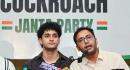
LIVE: CJP to meet JP Nadda at Constitutional Club of India
New Delhi: Cockroach Janta Party has announced that its spokespersons Ashutosh Ranka and Saurav will meet Union Minister JP Nadda at 12:30 pm on Friday, July 24, with the Constitutional Club of India chosen as a neutral venue. CJPs resolve remains firm as they demand the resignation of Union Education Minister Dharmendra Pradhan over NEET Get the latest updates in Hyderabad City News , Technology , Entertainment , Sports , Politics and Top Stories on WhatsApp & Telegram by subscribing to our channels. You can also download our app for Android and iOS .

Amitabh Bachchan to start shooting for
Mumbai, July 24 (IANS) Megastar Amitabh Bachchan is all set to return as the host for the 18th edition of the quiz-based reality show Kaun Banega Crorepati for which he
Om Birla urges cooperation as Lok Sabha adjourned amid opposition protests
The News Mill

Rahul Gandhi condemns Delhi University for advisory on Jantar Mantar protests
The News Mill

Coforge secures $230+ million five-year contract with European client
Aims to combine modern Low-Code/No-Code platforms with AI-powered automation and accelerated, AI-infusedsoftware developmentpractices to transform business operations for the client

Despite a price increase, Indian smartphone consumers ready to spend more: Counterpoint report
This behaviour is primarily driven by consumers aged 25-30 and they are willing to stretch their budgets, opt for affordability-driven payment options or even switch ecosystems

Iran Strikes Kuwaiti Military HQ 'Used by' American Troops After Deadly U.S Attacks On Iranian Sites
Iran has reportedly expanded its retaliatory campaign by launching fresh attacks on Kuwait, one of Washington's closest Gulf allies, as tensions with the United States continue to escalate. According to reports, Iranian strikes targeted the Kuwaiti Ground Forces Headquarters, which was allegedly used by U.S. forces during operations against Iran. The reported attack came a day after a U.S. strike near Iran's Shalamcheh border crossing, where casualties were reported. Meanwhile, Iran has vowed to continue its military campaign until U.S. attacks on its territory come to an end.
Sonam Wangchuk Ends Fast After Centre's Written Assurances As Delhi Remains Under Lockdown Measures
Activist Sonam Wangchuk has ended his fast after the Centre reportedly gave written assurances on withdrawing cases against non-violent student protesters and considering compensation for NEET aspirants who died by suicide. Prime Minister Narendra Modi also addressed the NEET paper leak controversy, calling it a grave injustice and highlighting arrests made so far. Meanwhile, Central Delhi remained under tight security, with internet services suspended, Connaught Place shutting early, metro stations closed, and UPI payment failures causing massive inconvenience across the capital.

Why tribal communities in Kerala are at the receiving end of digital disconnect
Digital divide threatens their access to essential government services. Many tribal residents lack mobile phones or reliable network coverage, preventing them from obtaining crucial benefits like health cards and pensions. Activists warn that uniform digital policies overlook the unique challenges these communities face

Bandh call shuts educational institutes in Telangana on July 24
Left-affiliated student organisations demand Union Education Ministers resignation

Bandh call shuts educational institutes in Telangana on July 24
Left-affiliated student organisations demand Union Education Ministers resignation

Stock markets tumble in early trade as crude oil prices hit $100 per barrel mark
The 30-share BSE Sensex tumbled 512.07 points to 75,869.38 during initial deals; The 50-share NSE Nifty declined 153 points to 23,713.60
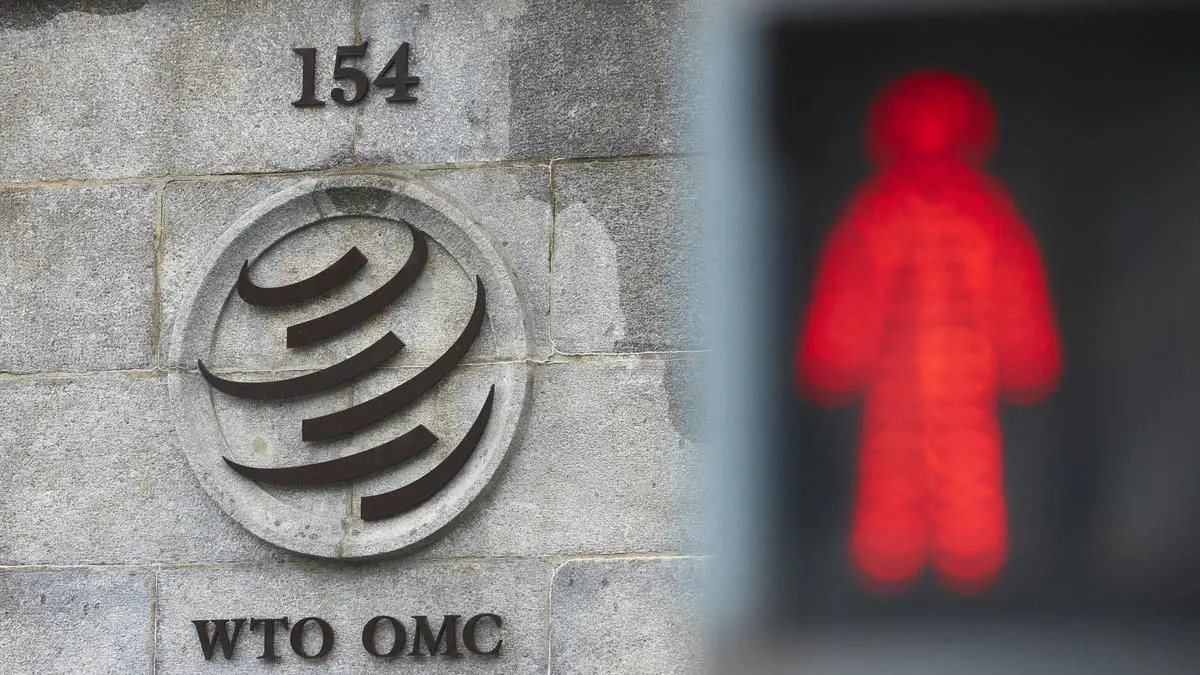
Quality control orders intended to achieve public policy objectives: India at WTO
India's tariff reforms, customs simplification measures and ambitious Free Trade Agreement (FTA) strategy have steadily strengthened the country's integration with the global economy: Commerce Secretary
India post News Service What an incredible start to FOG Idol! Round 1 was a tremendous success, showcasing outstanding talent, passion, and enthusiasm from participants of all ages. A heartfelt thank you to our talented contestants, dedicated judges, volunteers, and the wonderful audience for making the event so memorable. Congratulations to everyone who auditioned. We []

Hina Khan To Enter Lock Upp 2, Reunite With Rival Shilpa Shinde
Hina Khan is set to make a special appearance on Lock Upp Season 2, with the actors entry promising a tense reunion with contestant Shilpa Shinde. A newly released promo shows Hina entering the reality show, while the makers also tease the arrival of Uorfi Javed as a special guest. The promo has already sparked []

Echoes of Aazadi: The Flame of Freedom, the Power of Purpose, and the Legacy We Inherit
Remembering two freedom fighters- Chandrashekhar Azad and Lokmanya Tilak who lead the country on the path of freedom

Public health experts, government representatives, psychologists, HR leaders, child welfare professionals and reproductive medicine specialists come together to discuss why family building in India is becoming harder and what society can do to address it. Hyderabad/Visakhapatnam/Vijayawada/Hanamkonda, 23 July 2026: Oasis Fertility successfully hosted Janani Dialogues 2026 simultaneously across Visakhapatnam, Vijayawada and Hanamkonda, as part of a nationwide public-interest initiative focused on reproductive wellbeing, preventive awareness and informed family building. The discussions were held under the theme The Parenthood Paradox: Building a Family-Friendly India. The main national dialogue, anchored in Hyderabad, was streamed live to multiple cities, creating a unified
'Dismiss Pradhan': Opposition MPs stage protest at Parliament over NEET paper leak
Opposition MPs continue protests demanding Union Education Minister's resignation. They cite three demands including the minister's dismissal and an apology. Prime Minister Modi stated stricter actions would be taken against offenders. He also announced a draft bill for fast-track courts and severe punishment. The government has met student protests with force, according to one leader.
Senior IAS officer Naresh Pal Gangwar now leads the Department of Higher Education. He replaces Vineet Joshi, who has been transferred to another ministry. Gangwar brings extensive administrative and education sector experience to his new role. His appointment occurs during ongoing student protests concerning the NEET-UG examination. The department faces demands for greater transparency and system reforms.
2 Nepal Nationals Held at RGIA for Trying to Travel with Fake Tickets
The airline staff checked the tickets of two Nepalese and found that they were possessing duplicate tickets

July 24, 2026 (Conversation) Many of us have grown up with the mantra that breakfast is the most important meal of the day. But whether its snatching an extra half hour of sleep, or focusing on getting the kids out of the house, there are various reasons why assembling a healthy breakfast might slip down your list of priorities especially on a weekday. So, is it worse to eat unhealthy foods first thing, compared to later in the day? And what about skipping breakfast altogether? Its not just about calories You probably know eating foods high in sugar, salt

Hyderabad: Minor driving auto with woman on lap penalised
Hyderabad: A video showing a juvenile driving an autorickshaw on Hyderabads Chaderghat Bridge while a woman sat on his lap inside the moving vehicle has gone viral on social media, drawing attention to an incident that occurred in November 2025. According to Chaderghat police, the video was first noticed by officers on Patrol Car-I duty Get the latest updates in Hyderabad City News , Technology , Entertainment , Sports , Politics and Top Stories on WhatsApp & Telegram by subscribing to our channels. You can also download our app for Android and iOS .
Trump Says Xi Jinping to Visit White House in September
US President Donald Trump has said Chinese President Xi Jinping is expected to visit the White House in September, signalling another round of high-level engagement between Washington and Beijing.reports Asian Lite News Desk US President Donald Trump has said Chinese President Xi Jinping is expected to visit the White House in September, signalling plans for another high-level meeting between the leaders of the worlds two largest economies amid continued competition over trade, technology and security. Trump disclosed the planned visit on Thursday while hosting the 2025 World Series champion Los Angeles Dodgers at the White House, where he gave players

Enhance Blood Circulation and Concentration with Sarvangasana
New Delhi, July 24: Yoga is an ancient and effective method for maintaining balance in our body, mind, and spirit. Among the various yoga poses, Sarvangasana holds special significance. Regular practice of this asana not only improves physical health but also enhances mental peace and concentration. The term Sarvangasana is derived from two words: Sarv, ... Read more Enhance Blood Circulation and Concentration with Sarvangasana