
 27 C
27 C Phys.org
Elections 2026Internet / Phys.org

The way Australians consume news has been changing for the past 30 years, ever since internet use became widespread.

For 30 years, the World Wide Web has run on a surprisingly profound social contract: Most sites are free for search engines to access, but if you use their content, you give credit by linking to the source.

Inside every electronic device, the flow of electricity is controlled by a switch called a transistor. For decades, these switches were made from silicon. More recently, engineers have turned to a material called gallium nitride (GaN), which enables small, efficient devices like smartphone chargers.

Gold has been the safe choice for perovskite solar cells. We found a way to stop needing it.

Metals, semiconductors and insulators are fundamental components of modern electronics. However, efforts to improve device performance have largely focused on semiconductor quality, while metal crystallinity has received far less attention.

A new set of modular components allows users to create reconfigurable smart devices with electrical connections that keep working no matter what shape the structure forms.


In a landmark development, Meta reached a proposed settlement Wednesday with U.S. states over claims that it designed Facebook and Instagram to hook children.
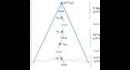
Model checking helps automatically verify whether hardware and software systems satisfy specified requirements. It has become an important formal verification technique, but two major challenges remain: state-space explosion, which limits the size of systems that can be checked, and long verification times.

Meta agreed to pay a coalition of U.S. states as much as $16.7 billion and to impose sweeping new limits on how teenagers use Facebook and Instagram, according to a court filing Wednesday that ends a landmark trial in California.

A research team has developed a flexible near-infrared (NIR) photodetector that delivers photoresponsivity more than five times higher while maintaining its performance under repeated bending. The technology is expected to serve as a core platform for next-generation flexible optoelectronic devices, including wearable health care devices, medical diagnostic sensors and optical communication receivers.

Fuel cells, devices that generate electricity by converting the chemical energy of hydrogen or other fuels via electrochemical reactions, are promising solutions for powering large electric vehicles, industrial sites and remote facilities. To drive the necessary reactions, solid oxide fuel cells rely on ceramic, heat-resistant electrolytes, solid materials that transport ions between two electrodes.

Researchers at Princeton Engineering have created a semiconductor with unique properties: It is just a few molecules thick and can repeatedly change its properties in response to light. This is a step toward building more energy-efficient sensors, optoelectronic devices and computing technologies.

Semiconductor devices such as LEDs and transistors generally consist of two halves: an n-type, which carries negative charge via electrons, and a p-type, which moves positive charge carriers called holes that are essentially electron voids. Both halves rely on contacts that allow electric current to flow in and out with minimal energy loss. These connections, known as ohmic contacts, have been an efficiency bottleneck in thin p-type GaN semiconductors for decades because of their high resistance

For more than two decades, silicon carbide (SiC) has been promoted as the key to developing extreme-environment electronics. Yet despite its promise, the field has remained stuck at the stage of basic research, failing to result in the development of practical devices. Now, a team of researchers at Kyoto University has set out to change that.


As transistors inside microchips continue to shrink, the metal wiring that connects them is becoming a growing obstacle to faster, more energy-efficient chips. Narrower wires have greater electrical resistance, while smaller gaps between them increase interference between adjacent signals. These effects impede data transfer and raise energy consumption

Imagine finding a very old family photograph that has faded over time. Parts of the image are missing, the faces are blurry, and years spent inside a cardboard album have erased many details. Restoring such an image traditionally would require painstaking manual work or specialized software trained on thousands of examples.

MIT researchers have overcome a major challenge holding back the real-world deployment of microwave quantum technologies for advanced signal processing and secure communications.

Proteins form complex three-dimensional shapes and can join together to create larger structures. Researchers want to use these properties to make artificial materials. However, arranging proteins and synthetic molecules together with a high level of structural precision is no easy task. This is partly because of the lack of large, clearly defined contact surfaces between the two components.

Researchers from the National University of Singapore (NUS) have developed a method to turn waste from the tough, lightweight composites used in aircraft and other high-performance structures into aerogels that could be used for thermal insulation, sound absorption and oil spill cleanup.

In the coming years, increasingly larger and more powerful quantum systems are expected to tackle problems that are difficult or impossible to solve using conventional computers. However, the more powerful quantum simulations become, the more difficult it is to independently verify their results. Where classical simulation is still feasible, results can be cross-checked directly; beyond that regime, other methods are needed.

Decommissioning pipelines used by the oil and gas industry could result in substantial quantities of microplastics being released into the UK

For many parents, keeping their children safe online is a top priority. But now there
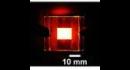
From a skin patch that changes color to flag abnormal blood sugar to a diver
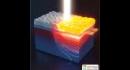
A flash of light lasting a fraction of a millisecond could help create better materials for solar energy. Researchers used ultrafast heating at rates of up to 10 million degrees Celsius per second to rearrange the atoms inside a semiconductor, producing a version that generated up to 50 times more electrical current from light than the same material in its ordinary form.
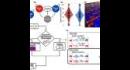
From searching disaster zones and responding to chemical spills to monitoring fragile ecosystems, future robot swarms may have to act in places where direct human control is difficult or dangerous. To operate autonomously, the robots must be able to decide together which problem to address and where to go next. But collective decision-making creates its own vulnerability: Robots improve their decisions by sharing information, yet faulty machines, inaccurate observations or manipulated messages c
MIT researchers have engineered bacteria that can function as transistors, allowing the team to create living