



College student dies after being knocked down by truck in Manali
Peechi Dam in Thrissur to open four spillway shutters on August 31
District Collector has warned residents along the Manali and Karuvannur rivers to remain vigilant as the water level in the rivers could rise by up to 30 cm from the present level following the release of water from the dam

14 Karnataka cyclists set out on Srinagar-Leh Adventure
Srinagar: A 14-member cycling group from Karnataka has embarked on an adventurous Srinagar-Leh expedition, combining a passion for fitness and exploration with a journey through some of the Himalayas most challenging terrain. The group, comprising experienced cycling enthusiasts from different parts of Karnataka, began its journey from Srinagar and is scheduled to reach Leh after covering several high-altitude stretches. Among the riders are cyclists aged 61 and 62, who say age should not prevent people from remaining active or pursuing adventure. Lokesh, one of the senior members of the group, said the cyclists regularly undertake long-distance and adventure expeditions and have previously covered routes such as Manali-Leh and Spiti Valley, besides cycling in other countries. We are from Karnataka and there are totally 14 cyclists. We are active cyclists and do adventure cycling every year, he said. He said the Srinagar-Leh route had been on their list for several years and they decided to undertake it as a group this year. For the cyclists, the expedition is as much about fitness and connecting with nature as it is about adventure. Cycling is a form of exercise for everyone. Apart from that, there is nature. We are very passionate about cycling and we love nature, Lokesh said. Nagendra Rao, 62, from Mysore, said the expedition was his first cycling experience in Kashmir. He plans to cover around 100 kilometres a day during the cycling stretches of the 10-day trip. Never give up in life. You have to explore life too, Rao said, encouraging people to take up cycling without worrying about expensive equipment or long distances. Another senior cyclist, aged 61, said he had been cycling regularly for around a decade and became more active after retiring from the private sector. Vinay, a 45-year-old cyclist from Mangaluru, said he had been cycling for around 12 years and joined the expedition to experience Kashmir and Ladakh. He said the group visited Dal Lake and Lal Chowk after arriving in Srinagar and praised the hospitality of local residents. Kashmir was on my to-do list for a long time. Today, it has been fulfilled. We are all happy, he said. The cyclists said the landscape and people of Kashmir had left a strong impression on them, with several members describing the region as scenic and welcoming. The expedition is being supported by MTB Kashmir. According to the cycling guide, the tour has been planned over nine days, with the opening leg from Srinagar to Sonamarg covering around 96 kilometres. The subsequent route includes Sonamarg-Dras, Dras-Kargil, Kargil-Nurla and onward to Leh. The group includes 13 men and one woman, with the average daily cycling distance expected to be around 9092 kilometres, depending on weather and riding conditions. The support team is assisting riders with equipment, gear management, riding techniques and safety, besides conducting evening briefings and stretching sessions. For the cyclists, the demanding gradients and high-altitude terrain are part of the attraction, turning the expedition into both a test of endurance and an opportunity to explore Kashmir and Ladakh on two wheels.

Four killed, 7 injured in two-truck collision in Hanogi Tunnel in Himachal Pradesh's Mandi
Four people were killed and seven others injured after two trucks collided head-on inside the Hanogi Tunnel on the Chandigarh-Manali National Highway in Himachal Pradesh on Thursday morning. The accident took place at around 7:45 am,...
Gang carries out deadly attack on 27-year-old man near Manali
Delhi-based Gen Z creator Ajay Sharma returned from Manali after 71 days, saying mountain living proved more difficult than expected despite becoming deeply meaningful. He spent Rs 21,000 a month, documented his experience in nearly 55 videos and faced network outages, rain, poor roads, isolation and demanding treks. His experience sparked mixed reactions online about mountain versus city life.

CM Sukhu Pays Tribute to Former PM Vajpayee on His Death Anniversary
Shimla, August 16: On the death anniversary of former Prime Minister Atal Bihari Vajpayee, Chief Minister Sukhu paid his respects. He also responded to yoga guru Baba Ramdevs comments regarding corruption and paper leaks in government recruitment. CM Sukhu told the media, Atal Bihari Vajpayee often stayed at his residence in Prini, Manali during his ... Read more CM Sukhu Pays Tribute to Former PM Vajpayee on His Death Anniversary

Manali Petrochemicals consolidated net profit rises 348.81% in the June 2026 quarter
Sales rise 17.07% to Rs 274.72 crore

Manali Petrochemicals Q1 FY27 consolidated net profit rises over 4x
Consolidated revenue rose by 17 per cent to 275 crore, up from 235 crore
Living near the picturesque Manali in Himachal Pradesh, a couple detailed their monthly expenses. Their rent for a spacious 4BHK property consumes a substantial chunk of their budget. Monthly costs for groceries and dining out hover around fifteen thousand rupees. Thanks to walking and free water, their fuel and electricity expenses remain low. Overall, their serene mountain lifestyle costs about fifty thousand rupees every month.

Chennai Launches Drive to Vaccinate 2 Lakh Stray Dogs Against Rabies
The first phase of the campaign began in the Tiruvottiyur, Manali and Tondiarpet zones

Schools closed in Himachals Kullu in view of heavy rains; orange alert issued in three districts
The Mandi-Manali stretch of the Kirathpur-Manali National Highway was closed to vehicular traffic following a landslip near the Jhalogi tunnel in Mandi district. The road will be opened after the rain stops and the situation is normalised, says officials

Kashmir is entering a new phase of tourism development. For decades, destinations such as Gulmarg, Pahalgam, and Sonamarg have attracted visitors from across the country and abroad. Today, many lesser-known valleys, forests, alpine meadows, lakes, and mountain peaks are also being promoted as new tourist destinations. Improved roads, ropeway projects, eco-tourism initiatives, homestays, adventure tourism, and better public facilities are helping visitors explore these untouched areas. The Governments efforts to diversify tourism deserve appreciation, as they reduce pressure on traditional destinations while creating new livelihood opportunities for people living in remote areas. Tourism is one of the strongest pillars of Jammu and Kashmirs economy. It supports hotels, transport services, handicrafts, restaurants, local guides, farmers, pony owners, and thousands of small businesses. Programmes such as the promotion of homestays, rural tourism, eco-tourism, and the development of tourism infrastructure under schemes like Swadesh Darshan have created new opportunities for balanced regional growth. However, while expanding tourism is important, it is equally important to ensure that development does not weaken the natural environment on which tourism itself depends. Most of the newly emerging tourist destinations are not ordinary pieces of land waiting to be developed. They are fragile mountain ecosystems that provide much more than scenic beauty. These landscapes support forests, wildlife, grazing lands, medicinal plants, wetlands, and alpine vegetation. More importantly, they protect Kashmirs water resources, regulate the local climate, and reduce the risk of floods and soil erosion. Nature is the foundation Healthy forests and mountain slopes act as natural water reservoirs. Rainfall and melting snow slowly seep into the ground through forests and meadows, recharging springs, streams, and groundwater aquifers. These water sources supply drinking water to villages, support agriculture, and maintain river flows during dry months. As a hydrogeologist, one lesson repeatedly emerges from field studies: wherever natural recharge areas remain healthy, springs continue to flow and groundwater remains sustainable. But when forests are cleared, hills are cut indiscriminately, or construction spreads without planning, this natural balance begins to change. Rainwater flows rapidly downhill instead of entering the ground. Soil erosion increases, springs gradually lose discharge, and groundwater recharge declines. The effects may not become visible immediately, but over time they become difficult and expensive to reverse. Protecting groundwater recharge zones should therefore become a central part of tourism planning rather than an afterthought. Scientific planning should begin long before construction starts. Every major tourism project should be supported by environmental, geological, hydrogeological, biodiversity, and slope stability studies. Modern tools such as Geographic Information Systems (GIS), remote sensing, drone surveys, and terrain mapping can identify environmentally sensitive areas, groundwater recharge zones, unstable slopes, wetlands, and wildlife habitats. This information helps planners avoid costly mistakes while protecting natural resources. Another important concept is the carrying capacity of a destination. Every mountain ecosystem has a limit to the number of tourists, vehicles, hotels, and commercial activities it can support without suffering environmental damage. Ignoring this limit leads to traffic congestion, water shortages, pollution, waste accumulation, and a decline in the quality of the tourist experience. Development also requires sound engineering practices. Hill cutting should be minimised, and unnecessary blasting should be avoided because it weakens fragile slopes. Proper retaining structures, bio-engineering techniques, slope stabilisation, and scientifically designed drainage systems should be incorporated into every project. Natural drainage channels should never be blocked, as they help safely carry rainwater and reduce the chances of erosion, landslides, and flash floods. Hotels, restaurants, and tourist facilities should also adopt environmentally responsible practices. Rainwater harvesting, sewage treatment plants, wastewater recycling, energy-efficient buildings, and scientific solid waste management should become standard features rather than optional measures. Building tourism that lasts Tourism development should not stop at building roads and hotels. It should also focus on protecting public health, maintaining hygiene, and reducing pollution. Clean surroundings are just as important as beautiful scenery. Visitors expect safe drinking water, clean public toilets, proper waste disposal, and hygienic food facilities. Unfortunately, many tourist destinations struggle with littering, overflowing dustbins, open dumping of waste, and inadequate sanitation during peak tourist seasons. The Government has already taken several positive steps, including promoting eco-tourism, home-stays, rural tourism, and better visitor facilities. National initiatives such as the Swachh Bharat Mission and Mission LiFE (Lifestyle for Environment) also encourage cleanliness, responsible waste management, and environmentally friendly lifestyles. These initiatives can make a significant difference if they are effectively implemented at tourist destinations. Waste management should become an integral part of every tourism project. Separate bins for biodegradable and non-biodegradable waste, recycling facilities, composting of organic waste, and regular waste collection should be mandatory. Plastic bottles, disposable plates, and single-use plastic bags are becoming common sights in many scenic locations. If this trend continues, it will damage the very landscapes that attract visitors. Sewage management deserves equal attention. Hotels, restaurants, and guest houses should have properly designed sewage treatment systems before becoming operational. Untreated wastewater should never be allowed to enter streams, wetlands, or lakes, as it not only pollutes water bodies but also affects aquatic life and public health. Water quality should be monitored regularly, especially in popular tourist destinations where demand increases sharply during the tourist season. The increasing number of private vehicles contributes to air pollution, traffic congestion, and higher carbon emissions. Noise from traffic and tourist activities can disturb wildlife and reduce the peaceful environment that visitors seek. Wherever possible, authorities should encourage electric shuttle buses, cycling, walking trails, and designated parking areas outside environmentally sensitive locations. Such measures have been successfully adopted in several hill stations and can improve both environmental quality and the visitor experience. Learning from experience Other Himalayan states provide valuable lessons. Shimla, Manali, and Mussoorie have witnessed rapid tourism growth, but they also face recurring problems such as water shortages, traffic congestion, and increasing waste during peak seasons. These challenges show that tourism can outgrow the capacity of local infrastructure if planning does not keep pace with development. Similarly, the Kedarnath disaster and land subsidence in Joshimath highlighted the importance of respecting the fragile nature of Himalayan terrain. While these events had multiple causes, they reinforced an important message: development in mountain regions must be guided by scientific investigations and careful engineering. Tourism planning must therefore include climate-resilient infrastructure, improved drainage systems, protection of wetlands, and conservation of forests that naturally regulate water and climate. Way forward The future of tourism in Kashmir depends on finding the right balance between development and conservation. Every emerging tourist destination should have a comprehensive management plan that covers environmental protection, engineering safety, water security, sanitation, waste management, transport, disaster preparedness, and regular environmental monitoring. Local communities should remain at the centre of this process. Their knowledge of forests, springs, grazing lands, and local traditions can help make tourism both sustainable and inclusive. Promoting community-based tourism, homestays, local handicrafts, village tourism, and trained local guides ensures that economic benefits remain with local people while encouraging them to conserve their surroundings. Government departments, engineers, environmental scientists, hydrogeologists, forest officials, tourism planners, local bodies, and community representatives should work together from the planning stage itself. Development decisions based on scientific evidence are always more sustainable than those driven solely by short-term economic considerations. Kashmir has a unique opportunity to become a model for sustainable mountain tourism in India. Its forests, rivers, lakes, wetlands, alpine meadows, springs, and groundwater systems are not merely tourist attractions; they are natural assets that support biodiversity, agriculture, water security, and the livelihoods of thousands of families. The real success of tourism should not be measured only by the number of visitors, hotels, or roads constructed each year. It should be measured by whether future generations continue to enjoy clean rivers, healthy forests, flowing springs, rich biodiversity, and the breathtaking landscapes that have made Kashmir famous across the world. Development and conservation are not competing priorities. They complement each other. With scientific planning, responsible engineering, effective pollution control, better sanitation, active community participation, and strong environmental safeguards, Kashmir can expand its tourism sector without compromising its natural heritage. Protecting nature is not an obstacle to development, it is the foundation on which the future of tourism in Kashmir must be built. Pir Rayees Ahmad, Sr. Scientist (Hydrogeologist), Government of India, Ministry of Jal Shakti, Central Ground Water Board.
Kashmir route outpaces Manali as Ladakh tourism surges
In the period from January to July, Ladakh has welcomed a remarkable 330,332 tourists. Air travel continues to be the favored mode of access to this stunning union territory. Among road travelers, the route through Kashmir is increasingly popular over the Manali path. Enhanced infrastructure and well-planned events have fueled this tourism surge, with burgeoning homestays offering fresh job opportunities for the local community.
Kangana Ranaut's Manali mansion, reportedly acquired for Rs 30 crore, sits 2,000 metres above sea level in the Himalayas and features eight bedrooms, a rooftop glass conservatory, a yoga room, and mountain views from every room. Designed by Shabnam Gupta, the property was featured in Architectural Digest and has drawn wide attention on social media.

Tourists Witness Massive Himalayan Avalanche
What seemed like a distant waterfall soon revealed itself to be a massive avalanche as tourists watched from the balcony of their homestay in Shugu village near Manali, Himachal Pradesh. Captured on July 7, the breathtaking moment has gone viral, leaving social media users stunned by the sheer power and unpredictability of the Himalayas
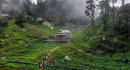
Travel Tips: If you haven't seen this new place yet, then reach here this time
The rainy season has begun, and if you're planning a trip with your kids in August, then this news is useful for you. Yes, if you're tired of visiting famous hill stations like Manali and Shimla, we're telling you where to go.Tirthan ValleyIf you're looking for peace and quiet away from the crowds,...
Manali hotel denied booking: A Gurgaon consumer commission has ordered The Allure Grand Resort in Manali to pay Rs 31,000 in compensation and litigation costs after it denied stay to a guest despite a confirmed booking, leaving him stranded in an unfamiliar hill station. The court ruled that returning the advance alone does not erase the mental harassment caused.
Manali emerges as India's adventure capital, sets global benchmark for heli-skiing, paragliding
Once known primarily as a honeymoon and sightseeing destination, Manali has repositioned itself as India's trendsetter in adventure tourism, offering all-weather and around-the-year adventure activities. Rock climbing, ice climbing, bungee jumping, zipline, and mountain biking are a few more to mention.
TheKiratpurManali four-lane highway was promoted as an engineering marvel that would reduce travel time, boost tourism, and accelerate economic development in Himachal Pradesh. Instead, it is increasingly becoming an example of how poorly conceived infrastructure...

Asian seafarers fear return to Gulf after months trapped in war zone
INDIAN sailors who spent months trapped in the Gulf during the Middle East war are wary of returning to the region, even as an interim ceasefire has allowed commercial traffic to resume through the Strait of Hormuz. India sends out hundreds of thousands of seafarers each year and is one of the largest contributors of crew to global merchant shipping. More than 320,000 Indians (nearly 12 per cent of the global workforce) were working in the sector in 2025, according to the shipping ministry. War between the US and Iran, which began in February, turned the Gulf into a flashpoint for commercial shipping. Several vessels came under attack, killing crew members and leaving thousands of sailors stranded for weeks, sometimes months, at anchor. At least seven Indian seafarers have lost their lives during the conflict, while more than 1,100 Indian sailors aboard at least 37 Indian-linked vessels remain in the Strait of Hormuz, one of the worlds most dangerous shipping routes. Since the fighting began in February, more than 40 commercial ships have come under attack, which claimed the lives of at least 14 foreign seafarers and 44 Iranian maritime workers. More than 3,600 Indian seafarers were evacuated from the region with help from the shipping ministry. Many who returned home say they remain reluctant to go back, despite the truce. Sitaram Tandel, 31, from a fishing village in Gujarat, was aboard a Marshall Islands-flagged bulk carrier, when his vessel was struck. Days earlier, another ship owned by the company, the crude tanker Safesea Vishnu, had been hit in a separate attack that killed an Indian crew member. Tandel said, Our luck ran out. It was early morning, I was getting ready for my shift when we were struck. He said his family was relieved he was back home safely, but added that the crews ordeal had left a mark. No one died, but the entire crew slipped into depression after that. It was a life-changing experience, unimaginably scary, he said. I dont know what lies next. The attack has left me shaken and too scared to go back to the Gulf, but I also have a family to feed. Ratheesan Kuttiyan, 45, from Kerala, in south India, joined Marshall Islandsflagged cargo vessel in March. The previous crew refused to cross. We tried hard to cross, but the fighting was too intense,and another vessel from the company was attacked, he said. Crew members were asked to sign documents confirming they were willing to make the crossing. Finally, in the dead of the night we sailed through the danger zone, he said. Vessels in the Strait of Hormuz on July 1, 2026 Reuters Kuttiyan said he would return only if conditions improved. Another sailor from Kerala, Haridas Puthiyakodi, 49, was aboard a cargo ship heading towards Hormuz when the vessel ahead came under attack, forcing his ship to turn back to Abu Dhabi. I didnt tell my wife I was in the war zone, he said after returning home. Now that she knows finally, she says I should never go to the Gulf. If I had my way, I wouldnt either but then, I know as a seafarer, you have to sail everywhere. Tanel Hirenkumar Praveenbhai, 42, a veteran seafarer with more than two decades at sea, joined the crew of a Panamaflagged oil tanker in Dubai in February. His crew remained at anchor for close to three months. Of course, we were scared, but there was nothing we could do, he said. I am never going back to Hormuz again. No money is worth more than my life. More than 8,000 seafarers from outside the region remained stranded in the Gulf as of early July, according to the International Maritime Organisation (IMO), the United Nations body that regulates global shipping. At the peak of the crisis, roughly 11,000 non-regional seafarers were trapped, the IMO said. Captain Abhijit Chopra, who oversees a 21-strong crew on a crude oil tanker, has been at anchor since late January. His crew, mostly Indian with one Ukrainian national, marked the festival of Holi on board, painting each others foreheads with turmeric taken from the ships kitchen. When they said the Strait of Hormuz was open, we were a bit optimistic that the vessel might transit, Chopra told Bloomberg , recalling repeated false dawns. There was a little bit of disappointment, he added, after fresh attacks dashed hopes of an early departure. Chopra described the toll of the long wait on his crew. Ultimately, we are just ordinary people. We are fathers, we are sons, we are husbands who are staying for months out at sea carrying out a duty, he added. Oceangoing vessels carry more than 80 per cent of global goods by volume, according to World Bank estimates. Nearly 2.6 million seafarers serve on the worlds merchant fleet, with India and the Philippines together supplying around 30 per cent of that workforce, according to a joint report by BIMCO and the International Chamber of Shipping. Captain Raman Kapoor, whose Suezmax tanker had just finished loading crude oil at Basra in Iraq when the war broke out in February, said the entire shipping schedule changed overnight. Our processes, whats our next port, the ships schedule, everything changed. All of a sudden we found that we were inside a war zone and there was no safe way out. His ship was anchored close to the Safesea Vishnu when it caught fire after being struck in March, an incident that killed one crew member. Kapoor was relieved by a Romanian replacement captain in mid-May and travelled home via Basra, Doha and Delhi before reaching his hometown of Manali. At least 14 civilian seafarers from countries other than Iran have been killed during the war, according to industry estimates. Iran has said around 50 of its own mariners died. One seafarer remains unaccounted for, and the IMO has recorded at least two further non-combat deaths. According to reports, the IMO launched a plan to evacuate strandedships and crew in June, which was suspended within days after Iran attacked vessels transiting Hormuz. Also, evacuation effort was paused again after a container ship came under attack in the strait in late June, close to Omans coast. IMO secretary general Arsenio Dominguez said the evacuation plan had been paused to reconfirm that the necessary safety guarantees continue to be in place for the ships on our evacuation list. Bloomberg reported that sailors serving in the Gulf during the conflict received a pay boost under global bargaining arrangements, with some monthly salaries rising as high as $30,000 (22,443. Even so, crewing agencies struggled to find mariners willing to sail into the region. The Philippines, one of the largest source countries for seafarers, briefly asked agencies to stop sending its nationals to the Gulf, before easing the restriction later. Indias prime minister Narendra Modi raised the safety of Indian seafarers with US president Donald Trump during a meeting on the sidelines of the G7 summit in France in June. Crew aboard the Indian-flagged tanker Desh Garima after transiting the strait in April Punit Paranjpee/AFP via Getty Images You are aware that hundreds of thousands of Indian seafarers are working across the world, performing their duties along international maritime trade routes including the Strait of Hormuz and their safety is of utmost importance to us, Modi told Trump. You have made tremendous efforts to reach this understanding, and I am confident the issue of seafarers will receive the highest priority during the implementation of this agreement, he said, referring to the US-Iran peace accord. Asked about the deaths of Indian sailors in earlier strikes, Trump said, Its a rough profession, theres no question about it, and we work together on it... We love all of those people, theyre great people. He also said Washington would come to Indias defence, if needed. Ben Bailey, programme director at the Mission to Seafarers, a maritime welfare charity, said the decentralised structure of global shipping leaves seafarers most exposed when crises occur. Global shipping is almost set up to provide multiple, different channels for ownership and operation, where I can be a shipowner sitting in London and flag it to Liberia and register it in Greece and I sit back and earn revenue from the ship, Bailey told Bloomberg. It is the seafarers that risk falling through the gaps and not have their rights met. He added that repeated exposure to danger appeared to be breeding acceptance, rather than alarm. The plight of seafarers trapped by the war has drawn wider attention to conditions across the shipping industry. IMOs Dominguez said shipping should not be used as collateral in any geopolitical conflict, adding that seafarers feel forgotten by global media even as the conflict dominates headlines over its impact on fuel prices and the world economy. Union figures revealed that Indian seafarers were the most abandoned nationality worldwide for a second consecutive year in 2025, with 1,125 cases logged by the London-based International Transport Workers Federation. ITF general secretary Stephen Cotton said abandoned seafarers were far from home and often without any clear resolution in sight, and called for the IMO to be given greater power to hold shipowners accountable .

Though Eitan Gilboa has now fled India, he was traced by pro-Palestinian activists and the HRF in Old Manali and Gondla Village of Himachal Pradesh, which are popular spots among Israelis along the Hummus trail

CBI arrests military engineer in Manali for demanding Rs 93,000 bribe
Manali, July 4 (IANS) The Central Bureau of Investigation (CBI) arrested an Assistant Garrison Engineer, Military Engineering Services, in Manali, Himachal Pradesh, for demanding a bribe of Rs 93,000 and

Uttar Pradesh Tourism: But if you think Uttar Pradesh is only home to religious sites, you need to change that notion. There are many such places here as well.Hill Stations of Uttar PradeshMini Hill Stations In Uttar Pradesh You Must Visit: When planning a hill station trip, most people...

Scorpio Falls Into Under-Construction Bridge Near Atal Tunnel, Tourist Killed
According to police, the tourists were travelling from Manali to Lahaul on Tuesday night when the accident occurred.
Tourist rush leads to heavy traffic congestion on MandiKulluManali highway; police deployed
How Much Does It Cost To Live Alone In Manali? Remote Worker Breaks It Down
According to Ajay, his total monthly cost of living in Manali comes to around Rs.21,000, making mountain life relatively affordable for remote workers seeking a peaceful lifestyle.

Power cuts leave Chennai residents fuming; protests erupt across city
At around 2.30 a.m., nearly 100 residents laid siege to the EB office in Arumbakkam, demanding immediate restoration of power; similar protests were witnessed in Washermenpet, Tiruvottiyur, Ambattur, Madhavaram, Manali, Avadi, Poonamallee, Thirunindravur, Medavakkam, and Velachery
Nihang Sikhs impose symbolic 'Khalsa tax' on HP vehicles at Punjab border point
Nihang Sikhs staged a protest on the Kiratpur Sahib-Manali highway. They collected a symbolic 'Khalsa tax' from Himachal-registered vehicles entering Punjab. This action was a demonstration against Himachal Pradesh's entry tax on out-of-state vehicles. The Nihang leader stated the collected funds would be used for the welfare of the poor.