
 27 C
27 C Phys.org
Elections 2026Sports / Phys.org

As space missions become longer and ambitions for deep-space travel grow, scientists are working to understand how life beyond Earth may affect every system in the human body. Two years after her initial study took flight, Begum Mathyk, MD, and collaborators are continuing to push the frontier of women
The European flat oyster (Ostrea edulis) was once widespread but has now become so scarce in the North Sea that it no longer forms ecologically functioning reefs. Along with the demise of the flat oyster, the three-dimensional structures that provide habitat for more than 100 marine species have disappeared. Restoration therefore focuses not only on the return of the European flat oyster itself but also on the reef and its associated biodiversity.
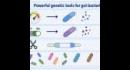
Weill Cornell Medicine investigators have developed a set of molecular tools to regulate the activity of specific genes in one of the most common classes of intestinal bacteria. The ability to genetically manipulate these microbes could lead to a better understanding of the role they play in human physiology and disease.

New research from QUT challenges a common assumption in social media marketing: For fast-food brands, social media posts that signal expertise and competence are shared more often than those focused on warmth and friendliness.

Researchers at Princeton Engineering have created a semiconductor with unique properties: It is just a few molecules thick and can repeatedly change its properties in response to light. This is a step toward building more energy-efficient sensors, optoelectronic devices and computing technologies.

With no tall trees reaching to the sky, Alaska

A Chinese humanoid robot set a new 100-meter sprint record of 8.86 seconds in Beijing on Tuesday, beating its robot competitors
Every high-energy nuclear collision leaves behind a trail of clues about the structure of atomic nuclei. Deciphering those clues, however, depends on the accuracy of the underlying theory. Physicists at Osaka Metropolitan University have now performed a full calculation within Glauber theory, a cornerstone framework for describing high-energy nuclear collisions.

Researchers at the University of the Witwatersrand (Wits) and the University of Bordeaux in France have demonstrated a new way to send information through the atmosphere without correcting for the distortions that normally disrupt optical communication.

Safety protections built into some of the world