
 27 C
27 C Phys.org
Elections 2026Hardware / Phys.org

The next generation of microelectronics relies on radical improvements in transistor switching performance to advance computing power. However, conventional semiconductor technology has hit a physical limit known as the

Texas engineers teamed up with the world

Consumer sentiment dropped about 6% from last month, landing around 11% below a year ago amid continued worries that inflation will remain elevated for the foreseeable future, according to the University of Michigan Surveys of Consumers.

Generative AI tools such as ChatGPT make it easier for business owners to produce polished pitches, business plans and other communications, but according to new research from The University of Manchester and Canada


Inside every electronic device, the flow of electricity is controlled by a switch called a transistor. For decades, these switches were made from silicon. More recently, engineers have turned to a material called gallium nitride (GaN), which enables small, efficient devices like smartphone chargers.

Researchers from North Carolina State University have created teardrop-shaped soft robots that leap upward or forward when exposed to infrared light

While it may sound like science fiction, earbuds that read brain activity are already on sale. Wearable technology company Neurable claims that its headphones, equipped with electroencephalography (EEG) sensors, can track your fatigue and reduce burnout. At night, NextSense

For robots to be successfully deployed in real-world environments, humans should trust them enough to cooperate with them. Some roboticists have been trying to determine whether users perceive robots that exhibit socially expressive behaviors, such as gestures, eye contact and nodding, as more trustworthy.

Australia said Friday it would evacuate workers from a research station on a remote island over the

Two recent events should dramatically alter thinking and decision-making about the use of overseas AI models in the UK

Gold has been the safe choice for perovskite solar cells. We found a way to stop needing it.

An AI assistant helped University of Colorado Boulder researchers solve a mathematical problem that had challenged their lab for a year and a half, though it made subtle errors along the way. The breakthrough could improve how scientists study nanoparticles

A face-recognition system that can identify people even if they are wearing a face mask covering their nose and mouth is discussed in the International Journal of Computational Vision and Robotics. The new system uses biometrics from around the eyes and forehead.

A new set of modular components allows users to create reconfigurable smart devices with electrical connections that keep working no matter what shape the structure forms.


Do you ever see an ant skittering across your kitchen counter and wonder how this little bug overcame all the obstacles in your home just to get there? Insects use their tiny nervous systems to walk with surprising dexterity

Legged robots, robotic systems with legs that typically resemble those of animals or humans, could be advantageous for completing tasks in home environments or populated, dynamic spaces. These robots may look like humans or animals, yet they often cannot reliably replicate complex whole-body movements in a short time.

Researchers from the National University of Singapore (NUS) have developed a method to turn waste from the tough, lightweight composites used in aircraft and other high-performance structures into aerogels that could be used for thermal insulation, sound absorption and oil spill cleanup.

In the coming years, increasingly larger and more powerful quantum systems are expected to tackle problems that are difficult or impossible to solve using conventional computers. However, the more powerful quantum simulations become, the more difficult it is to independently verify their results. Where classical simulation is still feasible, results can be cross-checked directly; beyond that regime, other methods are needed.

Decommissioning pipelines used by the oil and gas industry could result in substantial quantities of microplastics being released into the UK

For many parents, keeping their children safe online is a top priority. But now there
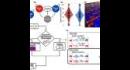
From searching disaster zones and responding to chemical spills to monitoring fragile ecosystems, future robot swarms may have to act in places where direct human control is difficult or dangerous. To operate autonomously, the robots must be able to decide together which problem to address and where to go next. But collective decision-making creates its own vulnerability: Robots improve their decisions by sharing information, yet faulty machines, inaccurate observations or manipulated messages c