



Women's T20 Asia Cup: Muneeba, Sadia Lead Pakistan To Winning Start
Dubai International Cricket Stadium: Muneeba Ali scored her fourth T20I half-century while Sadia Iqbal claimed three wickets as Pakistan women defeated Thailand women by 35 runs in their opening match of the ACC Womens T20 Asia Cup at the Dubai International Cricket Stadium (DICS) on Tuesday. Electing to bat first in the eight-team tournament, Pakistan posted a modest total of 119/9, with Muneeba Ali scoring 54 off 52 balls, while Sadaf Shamas contributed a run-a-ball 20 in the low-scoring encounter. However, Pakistan made a strong comeback in the match as they defended the modest score. Chasing 120 to win, Thailand were never able to get going in the run-chase as they lost two wickets in the second over with six runs on the board. Both wickets went to left-arm spinner Sadia, who bowled a double-wicket maiden over. Sadia returned in the final over of the match to bag her third wicket and finished with match figures of 4-1-11-3. Another left-arm spinner, Nashra Sundhu, was the most economical bowler for the winning side, conceding just six runs and taking one wicket in four overs. Right-arm leg-spinner Tuba Hassan was also among the wicket-takers, taking two wickets for 17 runs from her four overs. Earlier, opening batter Muneeba was the top run-getter for Pakistan with 54 off 52 balls, which included four fours. Sadaf Shamas was the other notable run-getter with a run-a-ball 20. She struck three boundaries and added 54 runs for the fourth wicket with Muneeba. For Thailand, Suleeporn Laomi and Thipatcha Putthawong took two wickets each. Pakistan will now take on India in their second group match on Saturday at the DICS. For Thailand, Suleeporn Laomi and Thipatcha Putthawong took two wickets each. Also Read: Special Cricket Stories Pakistan 119/9 in 20 overs (Muneeba Ali 54, Sadaf Shamas 20; Suleeporn Laomi 3-14, Thipatcha Putthawong 3-18, Phannita Maya 2-34) beat Thailand 84/8 in 20 overs (Chanida Sutthiruang 25; Sadia Iqbal 3-11, Tuba Hassan 2-17) by 35 runs. Article Source: IANS

DC Srinagar reviews drug rehabilitation scheme at IMHANS
Srinagar, Aug 31: Deputy Commissioner (DC) Srinagar, Akshay Labroo, on Monday visited Institute of Mental Health and Neurosciences (IMHANS) to review the preparedness for implementation of the Phase-I rollout/Pilot of the Rehabilitation & Socio-Economic Reintegration Scheme for Drug Abuse Victims, 2026. The pilot programme is being coordinated by Social Welfare Department aimed at testing the rehabilitation model on ground, identify operational gaps, refine Standard Operating Procedures (SOPs) and generate necessary learnings for its subsequent expansion across Jammu and Kashmir. During the visit, the Deputy Commissioner took detailed stock of the arrangements for implementation of the pilot phase in Srinagar District and reviewed the availability of rehabilitation services, coordination mechanisms among the concerned Departments and institutions and other necessary arrangements to ensure effective implementation of the programme and its successful execution in the district. The DC emphasised the need for a holistic, coordinated and outcome-oriented approach towards rehabilitation of drug abuse victims, with focused attention on their recovery, rehabilitation and socio-economic reintegration into mainstream society. He stressed that all concerned Departments and Institutions must work in close coordination to ensure seamless delivery of services to beneficiaries. He also underscored the importance of registration of the affected persons of the drug abuse, proper documentation of field experiences, identification of implementation challenges and timely corrective measures so that the learnings from the pilot can contribute towards strengthening the programme before its wider rollout. The DC further called for effective monitoring and regular assessment of the rehabilitation interventions to ensure that the intended objectives of the scheme are achieved and beneficiaries receive sustained support throughout the rehabilitation and reintegration process. The visit was a part of the Government initiative and the District Administration's ongoing efforts to ensure effective preparedness and coordinated implementation of initiatives aimed at addressing drug abuse and strengthening rehabilitation and reintegration services in the district. The Deputy Commissioner was accompanied by the Additional Deputy Commissioner, Aadil Fareed, IAS Probationer, Aakash Garg, Tehsildar South, Sajad Rasool Shah, Prof. (Dr) Arshid Hussain Head of Department, Dr Ajaz, Medical Superintendent SMHS Hospital, Dr Andleeb, In-charge Drug De-Addiction Centre, SMHS Hospital, Dr. Yasir Hassan Rather and other concerned Officers and Officials.
Advocate Syed Raziya joins Apni Party
Srinagar, Aug 31: Prominent socio-political figure from Anantnag, Advocate Syed Raziya, formally joined the Apni Party on Monday. In a statement, the party said Raziya joined the party during a special event held at the party headquarters in Srinagar, where she was welcomed by Apni Party President Syed Mohammad Altaf Bukhari and other senior party leaders. Besides the Party President, those present on the occasion included Senior Vice President Ghulam Hassan Mir, State Organisation and Spokesperson Dr Harbaksh Singh, District President Anantnag Mufti Sarwar, Provincial Head of the Legal Cell (Kashmir) Advocate Sajad Ibrahim, Advocate Heena Sultan, and other party leaders and workers.
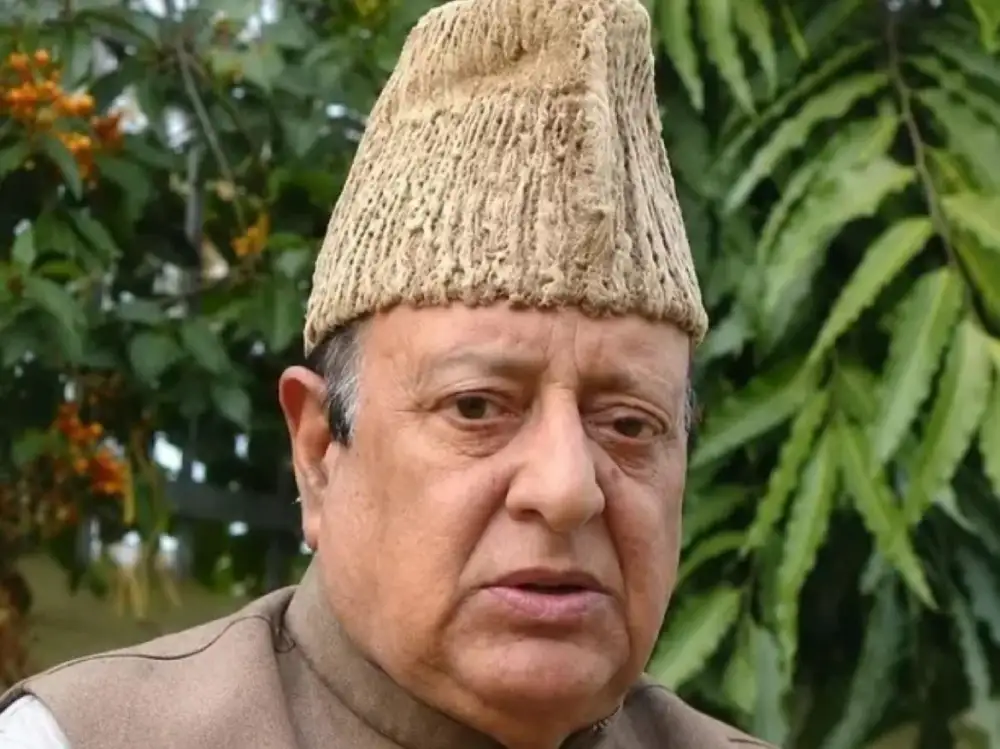
SRINAGAR :The Chaharam of former Jammu and Kashmir minister and senior political leader Ghulam Hassan Khan will be observed on Tuesday, September 1, in Shopian, as political leaders and associates continued to mourn his death. Khan died in Shopian on August 29 after a prolonged illness. He was a former member of the Jammu and []
CII J&K concludes 3rd edition of Health Conclave 2026 in Srinagar
Srinagar, Aug 30: The Confederation of Indian Industry (CII) J&K successfully concluded the 3rd Edition of the CII J&K Health Conclave 2026 at SKICC, Srinagar, under the theme Advancing Healthcare Excellence: Innovation, Resilience & Inclusive Growth. The conclave brought together policymakers, healthcare leaders, medical professionals, industry experts, academicians and innovators to deliberate on emerging trends, opportunities and priorities shaping the future of healthcare in Jammu & Kashmir. The event was graced by Manoj Sinha, Lieutenant Governor, Union Territory of Jammu & Kashmir, as the Chief Guest. Welcoming the distinguished guests and delegates, Iqram Ali Shafiee, Chairman, CII J&K UT Council, highlighted the importance of building a resilient, technology-driven and patient-centric healthcare ecosystem in Jammu & Kashmir. He reiterated CII's commitment to fostering collaboration among government, healthcare institutions and industry stakeholders to strengthen healthcare delivery and improve healthcare outcomes across the Union Territory. The conclave featured three focused sessions addressing key priorities for the healthcare sector. The first session, Building Jammu & Kashmir as the Healthcare Capital of the Himalayas, explored strategies for positioning the region as a leading healthcare destination through enhanced infrastructure, investment, medical excellence and medical value travel. The second session, Preventive Healthcare: Moving J&K from Treatment to Wellness, deliberated on the importance of preventive healthcare, early diagnosis, healthy lifestyles and community participation in improving health outcomes. The third session, Technology & AI: Shaping the Next Era of Healthcare, examined the transformative role of artificial intelligence, digital health technologies, telemedicine and advanced diagnostics in enhancing service delivery and patient care. Prominent speakers at the event included Prof. (Dr.) Altaf Umar Ramzan, Vice Chairman, Neurosurgery, Paras Health; Dr Shuchin Bajaj, Founder and Director, Ujala Cygnus Healthcare Services; Prof. (Dr.) M. S. Khuroo, Former Director, SKIMS and Director, Digestive Disease Centre; Dr Qazi Haroon, Deputy General Manager, Jammu & Kashmir Medical Supplies Corporation Limited (JKMSCL); Sajad Hussain Lone, Convener, CII J&K Healthcare Panel and Managing Director, Tehqeeq Diagnostic & Dialysis Centre; Stanley Mathew, Head - Sales Operations, India, SAARC, Middle East, Africa & CIS, AAF International; Dr Sandeep Mengi, Director, Maharishi Dayanand Hospital & Medical Research Centre; Dr Masood-ul-Hassan, General Secretary, J&K Private Hospitals & Dialysis Centres Association; Dr Nikhil Mahajan, Member, J&K Private Hospitals & Dialysis Centres Association; Dr Ubaid Hamid, Regional Director, Ujala Cygnus Amandeep Group of Hospitals, J&K; Dr Sabhiya Majid, Chairperson, State Allied and Healthcare Council; Abdul Rasheed Shah, Managing Director, Helpline Medical Systems; Dr Pervez Ahmed Sofi, Managing Director & Unit Head, Ujala Cygnus Kashmir Super Speciality Hospital and General Secretary, Association of Healthcare Providers India (Kashmir Chapter); Dr Rachit Negi, Partner, MAXINOR; Dr Shafat Ahmad Kenu, Medical Superintendent, Paras Health Srinagar; and Khurshid Dar, Director, CII J&K. Siddhant Chowdhary, Vice-Chairman, CII J&K UT Council, proposed the Vote of Thanks and expressed gratitude to the Chief Guest, speakers, partners, delegates and participants for their valuable contributions towards the success of the conclave. The conclave witnessed meaningful deliberations on strengthening healthcare infrastructure, promoting preventive healthcare, accelerating technology adoption, harnessing the potential of artificial intelligence and fostering stronger public-private partnerships. The discussions reinforced the importance of innovation, resilience and collaborative action in building a future-ready, accessible and inclusive healthcare ecosystem for Jammu & Kashmir.
KPs homecoming vital to shared culture, harmony: Bukhari
Srinagar, Aug 30: Apni Party President Syed Mohammad Altaf Bukhari on Sunday made a heartfelt appeal to Kashmiri Pandits to return to the Valley, saying their homecoming was essential to reclaiming the shared cultural heritage and restoring the peace, prosperity and harmony that once characterised life in Srinagar. Bukhari made the remarks while addressing a workers convention in Habba Kadal, Srinagar, attended by a large gathering of local residents and party workers. Recalling his childhood memories of living alongside Kashmiri Pandits, Bukhari said Muslims and Pandits had shared a close bond of mutual respect, trust and brotherhood. I vividly remember the days when, as children, we used to attend tuition classes taught by some of the finest Pandit teachers. I also fondly remember the time when Muslims and Kashmiri Pandits lived together happily and prosperously, sharing a bond of mutual respect, trust, and brotherhood, he said. Making a direct appeal to the displaced community, Bukhari said, I urge my Kashmiri Pandit brethren to return so that, together, we can rediscover the past glory of our beautiful shared culture and work towards restoring peace, prosperity, and harmony. His remarks came as he spoke about what he described as the prolonged developmental and economic challenges facing Srinagars Shehr-e-Khaas. He urged residents not to remain dependent on traditional political parties and instead become more aware of their political and democratic rights. Bukhari expressed concern over the condition of Srinagar city and the difficulties faced by its residents, including inadequate basic amenities, housing shortages, unemployment and limited livelihood opportunities. He said that despite the city having around nine lakh residents, many people continue to struggle with basic necessities, while educated youth face unemployment and are often compelled to take up petty jobs. He also criticised the existing reservation policy, claiming that it had adversely affected employment opportunities for residents of the city. Bukhari blamed successive political leaderships for what he termed the prolonged lack of development in Srinagar and cited the filling up of the historic Nallah Mar as an example of damage to the citys natural and historical infrastructure. He said the waterway had historically connected Dal Lake and the Brari Nambal lagoon with the River Jhelum and Anchar Lake, and argued that its filling had damaged Srinagars drainage and waterway system while also eroding an important part of its heritage. Bukhari also urged residents to participate responsibly in the electoral process and vote wisely whenever the Urban Local Bodies polls are held, saying elected representatives should be chosen on the basis of their ability to address developmental concerns. Speaking on the occasion, former Cabinet Minister and Apni Party Senior Vice President Ghulam Hassan Mir said the people of Srinagar were facing severe hardships due to inadequate housing, limited livelihood opportunities and a chronic developmental deficit. Mir also criticised restrictions faced by residents in constructing houses and commercial establishments on their own land, saying such issues had added to the difficulties confronting people in the city. He expressed concern over the problems faced by youth, including limited employment opportunities and difficulties related to passport issuance and verification processes for jobs and passports, Questioning the government over its response to public grievances, Mir said people had placed their trust in elected representatives and expected them to address their concerns. Apni Party Provincial President Mohammad Ashraf Mir also addressed the gathering and appealed to residents to support the party, saying it was not controlled by any particular family or individual and that its primary agenda was to serve the people. He said strengthening the party would enable it to pursue its stated agenda of peace, prosperity and development in Jammu and Kashmir.

CAIT Kashmir expands leadership structure to strengthen traders voice across J&K
The Confederation of All India Traders (CAIT) Kashmir Chapter has expanded and strengthened its organisational structure with the constitution of a new core team and an advisory and coordination mechanism aimed at ensuring wider representation of the trading community across J&K. The move is intended to take CAITs trader-focused initiatives to the grassroots and establish a structured platform through which issues, suggestions and concerns of traders from different districts and markets can be represented before the concerned authorities. The chapter will be headed by Farhan Kitab as President, while Peer Imtiyaz Ul Hassan has been appointed Secretary General. The executive committee comprises Omer Bhat as Senior Vice President, Parvez Ahmad Bhat as Additional General Secretary, Farooq Ahmad Rangrez as Treasurer and Mohammad Altaf Dar as Publicity Head. To strengthen regional representation, Tariq Ahmad Magaloo has been appointed Vice President for North Kashmir, Mohammad Shafi Vice President for South Kashmir and Wasim Afrooz Vice President for Central Kashmir. Mohammad Ashraf Ganie has been appointed Chief Coordinator, while Fayaz Ahmad Wani will serve as District President, Pulwama, and Spokesperson. Speaking about the organisational expansion, CAIT Kashmir Chapter President Farhan Kitab said the objective was to build a stronger, more inclusive and responsive organisation that remained connected with traders at every level. Our strength lies in our unity. Every trader, whether from a major market or a small town, must have a voice and a platform. Through this expanded structure, we want to ensure that the concerns of traders reach the right forums systematically and effectively. We will work collectively to find solutions and create new opportunities for the business community of J&K, Kitab said. He said the new team would focus on strengthening district-level coordination, empowering market associations, addressing issues faced by traders, improving the ease of doing business, facilitating dialogue with government authorities and creating opportunities for the growth of trade and commerce in Jammu & Kashmir. Kitab also highlighted the potential of Jammu & Kashmir in sectors including handicrafts, handloom, horticulture, saffron, dry fruits and tourism. He said greater efforts were needed to provide local businesses with improved market access, branding, technology and opportunities in national and international markets. He reiterated that the CAIT Kashmir Chapter remained committed to the vision of Vocal for Local, Local to Global, with a focus on empowering MSMEs, manufacturers, wholesalers, retailers, artisans and traditional businesses and helping them become more competitive in the national and global marketplace. We want to transform the trading community from being merely a stakeholder into an active partner in Jammu & Kashmirs economic development. CAIT Kashmir will continue to work as a bridge between traders, industry and the government, while ensuring that no trader or market is left behind, Kitab added.
Former Jammu Kashmir Minister Dies After Prolonged Illness in South Kashmir
SRINAGAR: Former Jammu and Kashmir minister and political leader Ghulam Hassan Khan died after a prolonged illness in south Kashmirs Shopian district on Saturday evening. Khan, a former Peoples Democratic Party (PDP) leader, was elected to the Jammu and Kashmir Legislative Assembly in 2002 and later served as Minister of State for Social Welfare. He []
Former J&K minister Ghulam Hassan Khan dies after prolonged illness
Shopian, Aug 29: Former minister Ghulam Hassan Khan died after a prolonged illness in south Kashmirs Shopian district on Saturday evening, a family member said. Khan, a former Peoples Democratic Party (PDP) leader, was elected to the Jammu and Kashmir Legislative Assembly in 2002. He later served as Minister of State for Social Welfare. Khan later parted ways with the PDP and fought 2008 elections independently. He will be laid to rest in his ancestral garveyard in Shopian.

Scuffle in Hassan prison, two including staff member suffer injuries
MLA Budgam Aga Muntazir calls for united action against hate speech, hate crimes
New Delhi, Aug 29: A call for collective action to safeguard communal harmony and counter hate speech and hate crimes was made at an intellectual round table in an event organised by PUCL People's Union for Civil Liberties Delhi, with emphasis laid on Kashmir's long tradition of coexistence and the need for coordinated efforts by the government, civil society, religious leaders, educational institutions, media, and youth. Addressing the gathering of scholars, religious leaders, civil society members, media representatives, and participants, MLA Budgam said Kashmir's history was rooted in syncretic traditions and the values associated with Kashmiriyat, marked by shared cultural practices and coexistence among communities. Referring to the teachings of Lal Ded and Sheikh Noor-ud-Din Noorani, popularly known as Nund Rishi, he said Kashmir's spiritual and cultural heritage had historically promoted human values, tolerance, and communal harmony. If there is communal harmony, peace and compassion in Kashmir, it is because of the sacrifices and contributions of our religious leadership, especially the MMU leadership, including Aga Syed Hassan Mosavi, Grand Mufti Nasir-ul-Islam and Mirwaiz Molvi Umar Farooq and many more who have always carried forward the banner of compassion, tolerance and peaceful coexistence, said Aga Muntazir. The address also referred to historical accounts of Kashmir as a land where different religious communities lived together and recalled Mahatma Gandhi's remarks about Kashmir being a ray of hope during the communal violence surrounding Partition. Hate speech had emerged as a serious contemporary challenge, particularly because of its rapid spread through social media and other digital platforms. Inflammatory statements, misinformation, and provocative online content, it was said, could damage trust between communities and potentially contribute to violence, said Aga Muntazir. Hate crimes, Muntazir said, often followed prolonged attempts to dehumanise communities and therefore required timely intervention through legal action, public awareness, and responsible communication. Speaking in the context of Jammu and Kashmir, he said the region's experience of conflict had demonstrated the consequences of the breakdown of trust and the importance of rebuilding relationships between communities. Communal harmony in Jammu and Kashmir was reflected in the everyday lives of people from different faiths who shared public spaces, institutions and common aspirations, he said. Calling for strict and impartial enforcement of laws against hate speech and incitement, the speaker said action should be taken irrespective of the identity or affiliation of those responsible. The address also called for better coordination between police, district administrations and community leaders to identify and address early warning signs, including rumours and provocative content, before they escalate into violence. Emphasis was laid on strengthening education about Kashmir's shared history and promoting digital literacy among young people to help them identify misinformation and online manipulation. He also called for greater accountability from digital platforms, saying online spaces had increasingly become vehicles for the spread and amplification of divisive content. Scholars, academics and researchers were urged to counter propaganda through knowledge and documentation of the region's shared history, while religious leaders were asked to continue promoting the values of compassion and peaceful coexistence associated with their respective faiths, he said. Talking about media and its role, he urged the media persons to exercise responsibility while reporting sensitive issues, with emphasis on verification and avoiding the amplification of provocative content. Addressing young people, he called upon them to verify information before sharing it and to reject prejudice and suspicion. The round table concluded with a call for sustained efforts to challenge hate speech, ensure accountability for hate crimes and preserve the traditions of communal harmony and coexistence in Jammu and Kashmir and across the country.

BJP leader booked for duping youth
SRINAGAR: A BJP leader was booked on cheating and fraud charges in Jammu and Kashmirs Anantnag district on Friday, police said. Anantnag Police has registered the case based on a written complaint filed by Waheed Ahmad Itoo, a resident of Hassan Noor in Aishmuqam, who is currently residing at Government Degree College Boys Hostel in [] The post BJP leader booked for duping youth appeared first on Northlines .
Hassan CPM condemns Nishchalananda Swamy for calling leftists most dangerous, selfish
Article 370 abrogation inflicted deep wound on J&K peoples emotions: Altaf Bukhari
Srinagar, Aug 28: Apni Party President Syed Mohammad Altaf Bukhari on Friday said that the abrogation of article 370 inflicted a deep wound into the emotions of the people of Jammu and Kashmir. He said that Congress and BJP are equally responsible because Congress had already hollowed this article out over the years while BJP revoked it completely. He made these remarks today while addressing a public convention in Tral today. The event, organised by the party, attracted a large gathering of local people, besides party workers from across the town. Apni Party leader further said that the people of Jammu and Kashmir had a deep emotional attachment to Article 370, despite the fact that its provisions had already hollowed out and eroded over the decades. Article 370 provided constitutional protection to our land and jobs, and that is why, following its abrogation along with Article 35A on August 5, 2019, the Apni Party pursued the matter with the Centre and ensured that the people of J&K must retain exclusive rights over land and employment in J&K. We succeeded in convincing the Centre and protected these rights, resulting in the introduction of the domicile law, he said. However, Bukhari said that there is a need for a dialogue between the Centre and the people of Jammu and Kashmir to address their issues. He said, There is an urgent need to make New Delhi understand the importance of initiating a dialogue with the people of Jammu and Kashmir, especially the youth, to address their genuine issues and concerns. This is imperative to bridge the existing trust deficit. Since the elected government has failed to address the pressing issues being faced by the people here, we will urge the Centre to engage directly with them to ensure that these issues are addressed effectively. We hope that our frequent appeals in this regard reach the Centre and that it initiates a dialogue with the people of Jammu and Kashmir, as it had promised, he added. He also take a dig at the ruling NC and said that this party has always prioritised its power on the interests of the people in Jammu and Kashmir. He further said, NC has never fulfilled the promises it has made to the people. Its poll promises are the most recent example of this. It sought votes by promising to provide one lakh jobs soon after assuming power. It had also promised 200 units of free electricity, free gas cylinders, the regularisation of daily wagers, and much more. However, all these promises have proved to be hollow and remain unfulfilled. He urged the people to rid themselves of these traditional parties, which have always misled and deceived them with false promises and emotional slogans. He went on the say, During its election campaign, the NC had claimed that, after assuming power, it would ensure the restoration of Articles 370 and 35A. However, it has now reduced its demand to the restoration of statehood alone. This is nothing but political drama, and they have always resorted to such tactics. In his speech, Bukhari also highlighted the local pressing issues that the people in Tral are facing. He expressed grave concern over the lack of adequate facilities and infrastructure at local hospitals and schools. He said, I dont know what the local MLA, who has been given the mandate to ensure that such issues are addressed, is doing. Since he is a public representative, he must ensure that these issues are properly addressed. He should speak to the concerned Minister, and if that doesnt work, he must take the people who voted for him out in protest. This is not about anything personal; it is about the public mandate. Apni Party President Syed Mohammad Altaf Bukhari said that Tral has great potential for tourism, which, if properly explored and developed, can bring economic benefits to the local people and create much-needed employment opportunities for the youth. He said the area is blessed with abundant natural resources and scenic beauty, which should be utilised effectively for sustainable development, livelihood generation, and the overall prosperity of the local population. Bukhari expressed concern over the arrests of youth and said that the Apni Party is continuously striving to ensure that random arrests are stopped and that those detained are released so that they can return to a normal life. Talking about the Sikh community, Bukhari demanded political reservation for the community to ensure that its rights are fully protected. He said that the Sikh community has always stood shoulder to shoulder with the Muslim community, even during the most challenging times of violence and bloodshed in J&K. Addressing the gathering, former Cabinet Minister and Apni Party Senior Vice President Ghulam Hassan Mir said that Apni Party is a party of the masses and will always remain the voice of the people. He said this party will continue to raise genuine public issues and grievances with the concerned authorities to ensure their timely redressal. He said, We are not here today to seek your votes, as there are no elections scheduled in the near future. We are here to tell you that Apni Party is truly a peoples party and will always stand by the people, no matter what. We need your support. Join hands with Apni Party and help strengthen it. Together, we can ensure that the rights and interests of our people are protected, while working collectively for sustained peace, prosperity, and development in Jammu and Kashmir. He further said, The difference between Apni Party and the traditional political parties is that Apni Party focuses on genuine public issues and works to address the concerns of the people, while traditional parties continue to mislead and befool the public with false promises and emotional slogans. Apni Party is here to prevent exploitative political forces from misleading our youth and pushing them towards a path of jails and graveyards. We envision a peaceful, prosperous, and dignified future for our youthone where they have opportunities to grow, succeed, and contribute positively to the future of Jammu and Kashmir, he added. On this occasion, NC worker Karan Singh, PDP worker Mohammad Amin, Social Activist Muzafar Bhat, Mohammad Younis Dar from congress joined Apni Party. The party leaders greeted these new entrants into the party fold. Besides Syed Mohammad Altaf Bukhari and Ghulam Hassan Mir, the prominent party leaders who were present on the occasion included partys Chief Spokesperson & State Secretary Muntazir Mohiudin, District President Kupwara Raja Manzoor, State organisation & Spokesperson Dr Harbaksh Singh, District President Budgam Advocate Owais Ashraf Shah, District Vice President Pulwama Sofi Akbar, District Vice President Pulwama Abdul Qayoom Mir, Secretary Pulwama District Syeed Tajala Andrabi, Youth President District Pulwama Junaid Mir, Abdul Rahman Gojir, Ghulam Hassan Goursi, Ghulam Hassan Choupan, Abdul Majid, Rashid Gojir, Youth Leaders Huq Nawaz, Zahid Bhat, Sajad Naikoo, Bita, Imtiyaz Mulvi, Irfan, Junaid, Javeed,Amir Reshi, Asif, Nirmal Singh, Abdul Rashid, Lucky Singh, Mohammad Shafi, Gul Dar, Shabir Baba, Yusuf Gojir, Mushtaq , Nund Kak, Bashir Ahamed , Jangi Singh, and others.

Minister to focus on completing four pending projects in Hassan

Hassan District Court Peon Recruitment 2026 - Apply Online for 48 Posts
The Principal District and Sessions Court, Hassan, has invited online applications for 48 Peon (Sevaka/Attender) posts. Applications can be submitted online at hassan.dcourts.gov.in from 19 August 2026 to 17 September 2026, 11:59 PM.
Rocking Star Yash has a lesser-known connection with farming and rural life. He owns around 80 acres of farmland near Thimlapura in Hassan, Karnataka, where he reportedly wanted to pursue model agriculture. In 2021, he also oversaw water-restoration work and planned lakes to improve groundwater levels. His Bengaluru farmhouse has hosted family moments too, including Yash and daughter Ayra feeding a cow.
Woman dies after falling from hillock in Reasi
A 29-year-old woman died after slipping and falling from a steep hillock while cutting grass for livestock in the Chassana area of Reasi district on Wednesday, officials said. According to officials, the incident occurred when the woman was engaged in cutting grass on a hillside in the Chassana area. She reportedly lost her footing and plunged approximately 200 to 300 metres down the steep slope, sustaining critical injuries. The woman died on the spot due to the impact of the fall, officials said. The deceased was identified as Sajo Begum (29), a resident of Manjikote Morha Balsaran in Mahore tehsil of Reasi district. Following the incident, locals and concerned authorities reached the spot and took necessary steps. The circumstances surrounding the incident are being ascertained. Police have taken up an investigation into the matter and are carrying out the necessary legal formalities.
Snakes disappearing from Kashmir
Anantnag, Aug 26:Nisar Itoo stands on a concrete bridge in Hassanoor village of Anantnag and points to tyre marks crisscrossing the road. We used to see snakes here every day, he said. Now, maybe one in a year. Villagers here say snakes that once slithered across this road are now rarely seen, a change they link to expanding orchards, pesticides and traffic, even as rescuers in Srinagar report more snake encounters than ever. Nisar, who has lived in Hassanoor since before proper roads reached the village, remembers walking to school while his parents warned him to watch out for snakes on the way. Now, he said, pesticide runoff and household waste from orchards and homes flows into the water under the bridge, eroding the habitat. Hassanoor and Mythology Older tales invoke Zainuddin Wali of Aishmuqam, the saint whose shrine overlooks the landscape. Residents repeat that he once ordered snakes and scorpions not to harm humans unless attacked. Many insist snakes here have never killed anyone and rarely bit someone, despite the presence of venomous species like the Levantine viper, locally called Gunas or Puhur, which can cause severe necrosis and bleeding disorders. That belief sits uneasily with everyday practice. Snakes are still often treated as enemies. Killing one can be seen as a good deed, a way to protect children and livestock. On orchard paths, near irrigation channels and around homes, some people strike first and ask questions later. South Kashmir and Forests Three or four years ago, I would have argued that some people just dont notice the change, said Muhammad Altaf, a forest ranger from south Kashmir, in an interview with Greater Kashmir. But now it is everywhere. The vanishing. Altaf said snakes have not only moved closer to human settlements but have also disappeared from wild spaces where they were once common. He links this to habitat fragmentation, agriculture and human expansion, but also to the quiet, unrecorded deaths that happen when a snake is spotted near a home or an orchard. Srinagar and the Wider Kashmir Just over an hour away, the story is different. Wildlife SOS, one of South Asias largest rescue organisations, has documented a considerable increase in snake sightings across parts of the Valley, including species not previously considered native to J&K. Aaliya Mir, Jammu and Kashmir Programme Head for Wildlife SOS, said her team has been rescuing more snakes in Srinagar than before, many in residential areas near the Zabarwan range, according to the organisations monthly rescue summaries. According to Wildlife SOS monthly rescue summaries, the J&K team handled 21 reptile rescues in May last year, including Himalayan trinket snakes, Levantine vipers and Indian rat snakes. In August that year, the team attended to 20 rescues across the region. In May the following year, rescuers pulled two mating pairs of snakes from kitchen gardens in Awantipora and Wathora, underlining how often snakes are now turning up in human spaces. In an interview with Greater Kashmir, Mir said deliberate killing of snakes happens widely in Kashmir. In a lot of places, people still see snakes as a threat or enemies that must be removed, she said. Some areas now rarely have certain species because they have been killed off over time. This has been happening for a very long time. Her team tries to calm people, give instructions on what to do and what not to do, and encourage villagers to rely on professional expertise instead of killing snakes themselves. But the impulse to strike first remains strong, especially in orchard belts and rural pockets where myth, memory and fear shape everyday decisions. Across the Valley, the story of snakes is no longer just about habitat loss or roadkill. Aaliya says it is about how people see them, and how they are spoken about in homes and orchards. In some places, rare snakes are no longer found because they have been killed off over time. In others, like Hassanoor, the reptiles that once formed part of the background of daily life are thinning out, leaving behind a landscape that feels quieter and, in some ways, more fragile. The Anantnag forest division did not respond to questions about plans for wildlife signage or monitoring on the Hassanoor bridge, where no sign warns drivers to slow down and no government noticeboard acknowledges this as a wildlife crossing. If this thing is not controlled in the area, then my grandchild will need to be told that once upon a time this area had snakes, but we wont have anything to show them practically, Nisar told Greater Kashmir.

Karnataka books 10,237 cases against school vehicles in three years; Bengaluru tops list
Bengaluru Urban recorded the highest number of cases at 3,244, followed by Hassan with 1,169 cases and Kolar with 674 cases

Eid Milad-un-Nabi procession held in Hassan with focus on peace and equality
The News Mill
Revanna accuses Hassan DC of ignoring elected representatives

Lady Dies After Falling from Hillside in Reasi
SRINAGAR: A 29-year-old lady died after slipping from a hill while cutting grass in the Chassana area of Reasi district on Wednesday, officials said. An official said that the lady was cutting grass on a hillside when she slipped and fell around 200300 metres, resulting in her death on the spot. She was later identified []
Handwara children park without basic amenities, safety measures
The Childrens Park in Handwara continues to lack basic facilities despite attracting families from across the subdistrict, residents said. The park is frequently visited by children and their families, but the absence of drinking water, adequate dustbins and proper lighting has caused inconvenience to visitors. Since there is no other park in the main town, people bring their children here. But the lack of facilities causes inconvenience. The absence of drinking water adds to their woes, said Showkat Hassan, a local. Residents have also raised concerns over an uncovered drain passing through the park, saying it poses a safety risk to children. Parents remain apprehensive about their children because of the uncovered drain. Some toddlers have fallen into it in the past and suffered injuries, but no concrete step has been taken to cover it, said Mohammad Rustam, another resident. The residents said more than 6 crore had been spent on construction of the park, but basic amenities were still lacking. They urged the authorities to provide essential facilities and address the safety concerns. Tehsildar Handwara Zeeshan Khan told Greater Kashmir that he would take up the matter with the concerned department and hoped concrete steps would be taken soon.
CM Omar Abdullah lays foundation stone for Fruit & Vegetable Mandi at Tangmarg
Chief Minister Omar Abdullah today laid the foundation stone of a modern Fruit & Vegetable Mandi at Wussan Bangil, Karhama, Tangmarg, marking the beginning of a long-pending demand of the area and a significant step towards strengthening the horticulture marketing infrastructure in the Tangmarg-Gulmarg belt. The proposed mandi will be developed on 50 kanals of land, with direct access to the Tangmarg-Gulmarg Road. Envisaged as a modern and organised marketing facility, the mandi will cater to the major horticulture belt of Tangmarg and adjoining areas and is expected to benefit around nine lakh people across 19 blocks in Baramulla and Budgam districts. The facility will provide growers with an organised platform for the handling, grading, sorting, packaging and marketing of fruit and vegetable produce, besides strengthening market linkages and logistics in the region. It is expected to bring buyers closer to producers, improve price realisation for farmers and reduce post-harvest losses through better handling, storage and supply-chain facilities. Addressing a large public gathering after laying the foundation stone, the Chief Minister said the project represented the fulfilment of a major and long-standing demand of the people of the area and underlined the need to look beyond tourism while assessing the economic potential of Kashmir. Often, when we speak to people outside J&K, they feel that there is nothing but tourism in Kashmir and that our entire economy revolves around tourism. But when I explain to them that agriculture, horticulture, fruits, dairy and other sectors contribute much more, they are surprised, he said. The Chief Minister said the establishment of the mandi was particularly important for Tangmarg because the area is a major horticulture-producing belt. Your fruits and vegetables were being grown here, but to take them to the market you had to travel to far-off markets. You did not always get buyers. Now, through this market, the buyers will come here and, through the buyers, you will get a better rate, he said. He said the modern infrastructure would also help ensure better quality of produce and facilitate its access to wider markets. The project, he added, would create a new source of income for the area and give a major boost to the rural economy. Emphasising that the success of the mandi would also depend on connectivity, Omar Abdullah directed that the road leading to the facility be improved and widened. Along with this fruit market and vegetable market, we will have to fix this road as well. Even if it is a 1.5 to 2 km stretch, we will have to widen it and improve its condition so that people do not face any difficulty, he said. The Chief Minister said the government had initiated development works across sectors in the constituency, including drinking water, healthcare, education, roads and horticulture infrastructure. He said the focus was on taking development works to the ground and addressing the demands of people through concrete projects. The Chief Minister, however, assured the people that the government would make every effort to avoid any further increase during its present term. I assure you that I will try my best not to increase the electricity tariff during this government, he said. Chief Minister Omar Abdullah reiterated the governments commitment to fulfilling the promises made to the people and said the next three and a half years would witness accelerated development across J&K. God willing, in the next three and a half years, we will fulfil all the promises we have made to the people and present ourselves before you. I say with confidence that after three and a half years, if you look at all the Assembly constituencies, among the most developed, if not the most developed, will be the Gulmarg-Tangmarg constituency, because here not only has work started, it is progressing rapidly, he said. The Chief Minister also announced that the Mini Secretariat at Tangmarg, whose work had been initiated during his earlier government but could not be completed, would be completed and handed over to the people during the current year. He congratulated the people of Tangmarg, particularly the residents of Wussan, on the foundation stone laying of the Fruit and Vegetable Mandi and said the project would create a stronger and more organised horticulture marketing ecosystem in the area. Earlier, the Chief Minister visited the Kisan Mela showcasing key government initiatives and innovations in agriculture and horticulture. Minister for Agriculture Javid Ahmed Dar and Advisor to the Chief Minister Nasir Aslam Wani spoke on the occasion and highlighted the achievements and initiatives undertaken by the government in agriculture and allied sectors. MLA Gulmarg-Tangmarg Pirzada Farooq Ahmed Shah said that since assuming office, Chief Minister Omar Abdullah had left no stone unturned in accelerating development across Jammu and Kashmir, with particular focus on the Gulmarg-Tangmarg constituency. He said the pace of development under the present government was evident on the ground and alleged that the opposition was unable to accept the reality of ongoing development process. Member of Parliament (Rajya Sabha) Gurwinder Singh Oberoi, MLA Beerwah Dr Shafi Ahmed Wani, MLA Baramulla Javed Hassan Beigh, MLA Pattan Javed Reyaz Bedar, MLA Uri Dr Sajjad Shafi and MLA Kreeri-Wagoora Irfan Hafiz Lone were present on the occasion. Director, Horticulture, Planning and Marketing, J&K, Ghulam Jeelani Zargar, Director Agriculture Kashmir Sartaj Ahmed Shah, Director Horticulture Kashmir Vikas Anand, besides senior officers of the Agriculture and allied departments, were also present.
Beyond the Classrooms of OTC: Memory, Camaraderie, and the Lessons of Jaipur (1998)
Looking back at a photograph from May 1998 brings me straight to the Rajasthan Institute of Public Administration (RIPA)formerly known as the Officers Training College (OTC) in Jaipur. With its sprawling campus and fine accommodation, it closely mirrored our own IMPA back home in Jammu & Kashmir. Our delegation had gathered for specialised training in satellite imagery for land records and modern surveying, transitioning away from traditional manual mapping. We were also trained in Disaster Managementa subject rendered unforgettable by Prof. Hassan, the Head of Department, whose mesmerising lectures left an enduring mark. Over the years, Prof. Hassan became a dear family friend. I remain deeply indebted to his immense kindness in 2014 when, upon my request, he and a team of notable Jaipur business figures personally travelled to Kashmir during the devastating floods to distribute relief items across parts of Dal Lake and beyond. Beyond the formal curriculum, in-service training programs serve an irreplaceable purpose. They grant mid-career professionals a vital interlude to refresh their technical skill set while fostering cross-cultural exposure through regional exploration. We learned directly from distinguished officers of the Rajasthan cadreincluding Commissioners and District Collectorsand spent a remarkable day engaging with the late Professor Dhawan, former ISRO Chairman. Our field studies split us into small teams across Collector offices and record centers. To our surprise, much of Rajasthans historical land settlement record was preserved in Urdu, almost identical to our J&K records save for a few regional designations. However, during our visit to the Jaipur District record room, the registers were so thick with dust that we had to abandon our study of the Jamabandi (record of rights). Deeply embarrassed by the inconvenience caused to visiting officers, the young IAS Deputy Commissionerhimself a native of Kashmirsuspended the record keeper on the spot. Then came the sweltering May heat, an overwhelming shock to those of us accustomed to the cooler Valley breeze. Four of us were sharing an air-conditioned hut. One morning, my colleague Mr. Maqbool Wani (then Assistant Commissioner) caught me in a rather ridiculous struggle: attempting to shave with my body inside the air-conditioned bedroom and my face leaning into the sweltering washroom, whose exhaust fan had broken down. Taking pity on me, Mr. Wani went to the local market, bought a small handheld mirror, and solved our daily dilemma. That trip also bore witness to a quiet personal triumph inside our shared hut. Our colleague Mr. Hafiz was a heavy smoker, and during the early hours of the morning, the closed AC room would fill with thick smoke, leaving a stale air that made me feel deeply nauseous. Realising the intense discomfort it caused us, Hafiz Sahaba true gentlemandecided then and there, on my insistence, to give up smoking entirely. He made a solemn promise that morning, and remarkably, that truce holds to this very day. Our weekends offered rich cultural excursions across Rajasthans heritage landscape. We embarked on a full-day trip to Ajmer Sharif Dargah, the celebrated 13th-century shrine of Sufi saint Khwaja Moinuddin Chishti. Renowned for its breathtaking Indo-Islamic architecture, grand deg-chi (cauldrons) for community feasts, and spiritual serenity, the shrine attracts millions seeking peace. As we gathered for Friday Jumu'ah prayers, I was momentarily startled by the sudden, sharp boom of a cannon shota traditional local custom fired to notify devotees that prayer is commencing. Unfamiliar with this practice, I stood numb for a second until my colleague, Mr. Hafiz Bakhshi, clarified the source of the bang. From Ajmer, we proceeded to the serene shores of Pushkar Lake and visited the sacred Brahma Templeone of the extremely rare shrines in the world dedicated to Lord Brahma. Other holidays were spent exploring Jaipurs majestic hill forts, the iconic facade of the Hawa Mahal, and the legendary Raj Mandir Cinemaa movie palace world-famous for its opulent, meringue-style interior architecturewhere we enjoyed Dilip Kumars film Qila. We also visited Jaipurs famed Albert Hall Museum, a masterpiece of Indo-Saracenic design opened in 1887. Housing rare Persian carpets, intricate metalware, and ancient stone sculptures, its grand halls provided us with a vivid window into Indias rich artistic history. The trip yielded curious memories tooincluding a colleague who purchased a massive, monolithic marble replica of the Taj Mahal and arranged for its transport back home to Jammu. Looking at the photograph today brings both warmth and a touch of sadness. Time has claimed several dear colleagues pictured there: Mr. Hafiz-ur-Rehman (retired Assistant Commissioner), a gentleman par excellence; Mr. Katoch and Sardar Mohan Singh Wazir, both retired Tehsildars; and Dr. Kavida, the then-Director of RIPA. May their souls rest in eternal peace. None of these transformative experiences would have been possible without the vision of our then Financial Commissioner, Madam Sushma Choudharythe first lady IAS officer of the erstwhile Jammu & Kashmir state. She was instrumental in arranging multiple specialised training programs for young revenue officers of our batch, continually pushing us toward modern administrative excellence. We remain deeply grateful to her for her foresight and leadership. May her legacy live on. Decades later, that Rajasthan journey stands as a testament to the fact that while professional courses sharpen our careers, it is the shared laughter, unexpected discoveries, and enduring camaraderie that truly stand the test of time. (The author is a former civil servant. He can be reached at: nisargilani57748@gmail.com )
Over 800 Devotees Participate In Annual Kousar Nag Yatra
SRINAGAR: The annual Kousar Nag Yatra-2026 concluded on Monday after more than 800 devotees from different parts of Reasi district participated in the three-day pilgrimage, with the administration maintaining elaborate arrangements along the challenging mountainous route. The yatra commenced from Reasi on August 21 and passed through Arnas, Dharmari, Mahore, Sungri, Chassana and Sarsote before []

The Labour Department, on May 22 this year, issued a notification revising the minimum wage, which had been a long-standing demand of the workers.

In Hassan, 79,778 to get notices as part of SIR
They include 23,641 people whose names could not be mapped, while discrepancies were found with regard to 56,137 names.
Convention of pensioners, senior citizens, civil society held in Kulgam
A one-day Convention of pensioners, senior citizens and members of civil society was held today at Kings Palace, Kulgam under the chairmanship of Shri Lenin Sampat, State President. The District President of Kulgam, Abdu Hamid Mir, and District General Secretary, G. M. Parwana, extended a warm and cordial welcome to the State President, State General Secretary Gh. Mohi-ud-din Bhat, senior trade union leaders, and pensioners from across District Kulgam. Chief Patron of the Central Body, Nisar Ali Mir, addressed the gathering. He paid rich tributes to the late Shri Sampat Ji for his dedication and hard work, and urged all present to carry forward and complete his unfinished mission. Several dignitaries addressed the Convention, including Ab. Majid Dar (District President, Anantnag), Mr. Yayah Shafi (Namaji) (District President, Ganderbal), Mansoor Ahmad Magray (District President, Shopian), Malik Gh. Hassan (District Budgam), G. Nabi Bhat (Khanyari) from Srinagar, and Nisar Ahmad Tarfarosh from Srinagar. State President Lenin Sampat and State General Secretary Gh. Mohi-ud-din Bhat assured the pensioners that their legitimate demands would be pursued vigorously. These include: Enhancement of Medical Allowance at par with the Union Territory of Ladakh Enhancement of pension by 5% at the ages of 65, 70, 75 and 79 years respectively Immediate release of 18 months DA withheld during the COVID-19 period Provision of Vaqar houses in all districts of Jammu & Kashmir The Convention also expressed strong resentment over the non-release of balance leave salary of pensioners of J&K Industries (JKI) from 2023 onwards by the present Managing Director, despite repeated requests. The organisation warned that it would be left with no option but to launch a protest if the genuine dues of JKI pensioners continued to be ignored. Members of civil society further demanded a reduction in electricity charges, recalling the assurance given by the Honble Chief Minister during the election campaign. The Convention concluded with a vote of thanks proposed by Mr. Ab. Gani of Frisal, Yaripora.
Hassan DC rebuts Revannas remarks
Hassan Deputy Commissioner takes exception to JD(S) leader Revannas remaks

JD(S) leader Revanna reacts to Hassan Deputy Commissioners comments
Kashmir: 60-Year-Old Woman Dies in Road Mishap
SRINAGAR : A 60-year-old woman, who was injured in a road accident in the Uri area of Baramulla district on Monday, succumbed to her injuries at Government Medical College (GMC) Baramulla. Quoting officials, news agency GNS reported that Soni Begum, wife of Noor Hassan and a resident of Dulanga, Uri, sustained injuries in the road []

Karnataka: Hassan DC reacts to MLA Revanna
Bengaluru, Aug 24 (IANS) A war of words broke out between Hassan Deputy Commissioner K.S. Latha Kumari and JD(S) MLA H.D. Revanna, son of former Prime Minister H.D. Deve Gowda, following the latters remarks questioning the officers posting and functioning in the district. Revanna is the brother of Union Minister for Heavy Industries and Steel []
Child starts unattended tractor, kills man in Hassan

H.D. Revanna makes allegations against Hassan DC
J&K Pensioners Welfare Federation, Senior Citizens Civil Society hold key meeting
A significant meeting of J&K pensioners welfare federation/senior citizens civil society was held in Srinagar under the Chairmanship of Lenin Sampat State President. The meeting was attended by the District Presidents Secretaries and members from across the Valley. The agenda of the meeting was presented by Ghulam Mohi-ud-din Bhat, State General Secretary. District Presidents and Senior Trade union leaders who actively participated and addressed the gathering included Nisar Ali Mir, Chief Patron, Haji Gh. Mohi ud din Wani district President Baramulla, Yayha Shafi, district President Ganderbal, Raja Majeed District President Anantnag, Gh. Hassan Malik District President Budgam, Aftab Ahmad Nehvi, Srinagar Gh. Nabi Bhat Khanyari Srinagarand Mir Mohd Shafi Kupwara. The speakers unanimously re-affirmed their complete commitment to the J&K pensioners welfare federation senior citizens under the leadership of Lenin Sampat. The key Demands raised are Issuance of Pensioners/Senior citizen Cards on the signatures of District Development commissioners of J&K UT . Enhancement of Medical allowance from Rs. 300 to Rs 1500 per month in favour of pensioners of J & K. The State President assured the gathering that their demands will be brought to higher authorities of J&K UT government. The meeting concluded with vote of thanks by the State General Secretary.
Foreign Ministers of Pakistan and Syria discuss bilateral ties, regional and global developments
Islamabad, Aug 20: Pakistan on Thursday reaffirmed its support for Syria's sovereignty and territorial integrity, as the foreign ministers of the two countries held wide-ranging talks focused on regional and global developments and efforts to promote security and stability in West Asia. Asaad Hassan al-Shaibani, the first Syrian foreign minister to visit Islamabad in 19 years, met his Pakistani counterpart Ishaq Dar and exchanged views on international developments, including Palestine, the Golan Heights, Afghanistan, and the situation in South Asia and West Asia. The two sides reaffirmed the longstanding brotherly ties between Pakistan and Syria and agreed to further strengthen bilateral cooperation across areas of mutual interest, the Foreign Office said in a statement. The ministers also exchanged views on regional and international developments, including Palestine, the Golan Heights, Afghanistan, the situation in South Asia, and developments in West Asia, it added. His visit comes amidst Israels ongoing incursions into Syria since the fall of the Bashar al-Assad regime in December 2024. Dar, who is also Deputy Prime Minister, eaffirmed Pakistans support for Syrias sovereignty, unity, and territorial integrity, the FO said. The Syrian minister welcomed the signing of the trilateral defence pact by Pakistan, Saudi Arabia and Turkiye and commended Pakistans constructive role in promoting regional peace and stability, including its efforts towards de-escalation in the US-Iran context, it said. Both sides reaffirmed their commitment to continued engagement and cooperation for peace, stability, and prosperity in the region and beyond, the FO said. The two sides also discussed regional and international developments and efforts to promote security and stability in the region, Syria's state-run SANA news agency reported. The Syrian foreign minister also called on Prime Minister Shehbaz Sharif, who reaffirmed Pakistan's support for Syrias position on the Golan Heights -- a Syrian-claimed territory occupied by Israel since 1967. Sharif emphasised the need to translate the longstanding Pakistan-Syria friendship into enhanced cooperation across politics, defence, trade, investment, education, and human resource development, his office said in a statement. He said the resumption of direct flights between the two countries would enhance people-to-people exchanges and facilitate a large number of pilgrims who undertake religious visits to Syria from Pakistan. Al-Shaiban thanked Pakistan for its consistent support to Syria and expressed his government's keen interest in revitalising bilateral engagement, including through early institutional mechanisms for cooperation. Sharif also invited President Ahmed al-Sharaa to undertake an official visit to Pakistan at a mutually convenient date. Then Foreign Minister Walid al-Mouallem travelled to Pakistan in May 2007.

Students stage protest in Hassan demanding basic facilities in girls hostel
AIDSO district secretary Sushma D.S. said that windows in the hostel, which houses 110 students, opened onto the main road, but did not have curtains, denying minimum privacy to the inmates

Mother, baby found dead in Alur in Hassan district of Karnataka
The police suspect that the woman ended her life after killing her son

Mother, baby found dead in Alur in Hassan district of Karnataka
The police suspect that the woman ended her life after killing her son
Hassan City Corporation issues notices over garbage dumping

Cancellation, partial cancellation and regulation of trains connecting Mysuru and Shivamogga
Due to essential maintenance work at Hassan and Holenarsipur yards, South Western Railway has cancelled and regulated the services of some trains
Rs 300-cr Nhava Sheva drug haul in Mumbai puts ISI-linked trafficker Hussain Dad in focus
New Delhi, Aug 19 (IANS) The seizure of 55 kg of methamphetamine, valued at around Rs 300 crore, from a Container Freight Station (CFS) facility near Mumbais Nhava Sheva port has once again turned the spotlight on notorious drug trafficker Mohammad Hassan Hussain Dad. An old hand in the international drug trade, Hussain is believed []
Student Induction Programme-2026 begins at IUST
Awantipora, Aug 18: The Islamic University of Science and Technology (IUST) today started its annual Student Induction Programme, being organised by the Dean of Students, IUST, to welcome the fresh batch of students. The programme is held in collaboration with the Dean Academic Affairs and the Directorate of Internal Quality Assurance (DIQA), to enlighten the new students about the Universitys academic environment, student support system, facilities, and opportunities. The Dean Academic Affairs, Prof. Sheikh Ajaz Bashir, formally welcomed the students and called on them to focus on academic excellence and comprehensive learning. His talk underlined the need for a value-based development of students and how they could contribute to nation-building. In her Introductory remarks, the Dean of Students, Dr. Monisa Qadiri, introduced the induction programme and outlined the various student welfare and extracurricular activities and engagement initiatives of the university. The induction programme will run through the week for different Schools of the University; School of Engineering and Technology, School of Business Studies, School of Humanities and Social Sciences, School of Sciences, School of Architecture and Planning. The different sessions during the induction programme were conducted by Controller of Examinations Dr Peer Bilal, Director IT & SS, Dr. Zahoor Ahmad Ganie, Dean Outreach, Ruheela Hassan, I/C Rumi Library Dr. Sheikh Shueb, Officer-in-Charge Dr. Directorate of Physical Education & Sports, S. Iqbal Quraishi, Alumni Connect Coordinator Dr. Hilal A Makroo. The sessions enlightened freshers with IUSTs examination procedures, academic regulations, outreach and community engagement activities, library affairs, sports facilities and activities, alumni connect etc. Besides, departmental-level visits and orientation is also part of the general induction programme. The departmental participation of the new batch is being coordinated by various coordinators and co-coordinators from different schools.

Minor sexually assaulted, two arrested in Hassan
Her mother learnt of the assault only when her daughter delivered a baby earlier this month.
Hundreds attend congregational Fateha, condolence meeting for Er. Mohammed Anwar Ashai
Hundreds of people from different walks of life today joined congregational prayers for Er. Mohammad Anwar Ashai, noted engineer and social activist, who passed away on August 11. Anwar Ashai belonged to a generation that carried an extraordinary memory of Kashmirs twentieth-century history. Through his father, Khwaja Ghulam Ahmad Ashai, he inherited first-hand accounts of Kashmirs early educational and political awakening, while from the 1960s onwards he himself witnessed and participated in important political and social developments. In later decades, his professional experience and civil-society engagement made him a valuable repository of Kashmirs institutional and social memory. The congregational prayers were held at his ancestral graveyard at Ashai Kocha, Fateh Kadal, and were led by prominent Islamic scholar Moulana Showkat Hussain Keng. Later, a large gathering comprising political, religious, social and business personalities, besides academics, professionals, relatives, colleagues and friends, participated in a condolence meeting and special supplications for the deceased at his residence at Raj Bagh. Moulana Showkat Hussain Keng spoke about the ancestry and distinguished legacy of the Ashai family and reflected upon the qualities and values Anwar Sahib had imbibed from his forefathers. Speaking on behalf of Mirwaiz Omar Farooq, Moulana Syed-ur-Rehman Shams described his demise as a loss to Kashmiri society as a whole, while Bashir Ahmad Wani gave a detailed account of Anwar Sahibs spiritual journey and his close association with revered Qari Mohammad Shafi Sahib of Naqashbandiya order. . The Sajadah Nisheen of Darul Shareefia, Tral, Mir Syed Mehmood-ul-Hassan Andrabi, read out a citation honouring the deceased and presented it to his son, Dr. Zubair Ashai, who was also honoured with a dastarbandi as a mark of respect. Former Information Commissioner Sofi Ghulam Rasool recalled his personal and family association with Anwar Sahib and acknowledged his valuable contribution to Kashmirs civil-society movement. Ajaz Ahmad Kakroo described Anwar Sahibs passing as a colossal loss, observing that he carried within him a living archive of Kashmirs history, institutions and society, much of which remained undocumented. Moulana Masroor Abbas Ansari described the demise as a personal loss, recalling Anwar Sahibs friendship with his father. He particularly hailed Anwar Sahibs sustained efforts towards unity within the Ummah and his role in discouraging sectarian discord in Kashmir. Speaking on behalf of the family, Dr. Zubair Ahmad Ashai expressed profound gratitude to everyone who stood by the family from the time of Anwar Sahibs demise through his burial and the subsequent days of mourning. He thanked all those who participated in the Namaz-e-Janazah, congregational prayers and condolence meeting, as well as those who visited, telephoned, sent messages or conveyed their condolences through newspapers and other media. He particularly acknowledged the overwhelming solidarity extended by prominent personalities from the political, religious, social, educational, medical and technological communities, business fraternity, civil-society organisations and other sections of society. The proceedings of the condolence meeting were conducted by Syed Shakeel Qalander.
DIG Rajiv Pandey, SSP Showkat Shah, Mushtaq Choudhary among 38 awarded on Independence Day
Two Deputy Inspectors General, two Senior Superintendents of Police and two Superintendents of Police figure among 38 personnel of the Jammu and Kashmir Police who have been awarded the Medal for Gallantry (GM) and President's Medal for Distinguished Services on the occasion of Independence Day 2026 for acts of conspicuous courage in the line of duty. The senior officers named in the list are DIGs Shiv Kumar Sharma and Pande Rajiv Omprakash, SSPs Shobhit D. Saksena and Mushtaq Ahmad, and SPs Nasir Ahmad and Divya D. SSP Showkat Shah has been awarded the Presidents Medal for distinguished Services. Among the other recipients of Gallantry Medal are Deputy Superintendents of Police Sarfaraz Bashir, Mohd Usman, Khurshid Ahmed Wani, Dheeraj Kumar, Shakir Hassan and Vikram Nag; Inspectors Javid Iqbal Jan, Kalu Din and Abdul Rashid; Sub-Inspector Ashak Hussain; Assistant Sub-Inspectors Mohinder Singh and Zahoor Ahmad; Head Constables Rayeesh Ahmad Reshi, Manzoor Ahmad, Mudaisir Ahmad, Sheeraz Ahmad, Surinder Paul and Mushtaq Ahmad; Selection Grade Constables Ishtiaq Ahmed Khan, Ishtiyaq Ahmad Reshi, Adit Kumar Nad, Shabir Ahmad Malik, Manzoor Ahmad Ganie, Zahoor Ahmad, Mushtaq Ahmad Khan and Tariq Ahmad; and Constables Waseem Mohi-Ud-Din Lone, Tanveer Hussain Lone, Mudassir Ahmad Shah, Ab. Rashid Mir and Mohamad Shafi Banday. Notably, DSP Sarfaraz Bashir has been awarded a second Bar to the Medal for Gallantry, while Head Constable Rayeesh Ahmad Reshi and Selection Grade Constable Ishtiaq Ahmed Khan have received their first Bars, underscoring repeated acts of bravery under challenging circumstances. The awards form part of the larger national list of 301 Medals for Gallantry conferred this Independence Day on police and fire service personnel across the country. Of these, 51 personnel from the Jammu and Kashmir region have been recognised for gallant actions, reflecting the difficult operational environment in which J&K Police personnel continue to serve. Separately, 13 other J&K Police personnel have been selected for the Medal for Meritorious Service in recognition of dedicated and distinguished service. The gallantry and meritorious service awards together bring the total number of J&K Police personnel honoured on this occasion to 51. The Medal for Gallantry is awarded for a conspicuous act of gallantry in saving life and property, or in preventing crime or arresting criminals, with the risk involved assessed in relation to the officers duties and obligations. The recognition of officers and personnel across ranksfrom DIGs to constableshighlights the collective contribution of the force in maintaining security and public order in the Union Territory.
GMC Srinagar condoles demise of medical intern
Srinagar, Aug 14: The Principal and Dean, Prof Iffat Hassan along with the faculty, staff, and students of Government Medical College, Srinagar, mourns with profound sorrow the sudden and untimely passing of Ahiazul Islam, son of Tanweer Ahmed of Surankote, Poonch. Prof Iffat said that he was dedicated medical intern of the MBBS Batch of 2021 at this Institution. His passing is a deeply painful loss to our entire GMC Srinagar family, the Principal said. Prof Iffat said that beyond his role as a young medical professional, he was a valued member of our community and his absence will be deeply felt by his colleagues, teachers, friends, and all who knew him. At this moment of unimaginable grief, we extend our heartfelt and deepest sympathies to his bereaved family, the Principal said. We hope they may find strength in the love and support of those around them and comfort in the memories of a life that touched so many, Prof Iffat said. May the Almighty grant eternal peace to the departed soul and give his family the courage, strength and fortitude to bear this profound and irreparable loss. The entire GMC Srinagar community stands with the bereaved family and his friends in this hour of sorrow, the Principal said. Our thoughts, prayers, and heartfelt support remain with them, Prof Iffat said.

Bengaluru-Mangaluru Vande Bharat completes successful trial run
Hassan: The prospect of a high-speed Vande Bharat Express connecting Bengaluru with the coastal region has moved a step closer with the successful trial run of the train through the Shiradi Ghat section. The trial operation was conducted from Sakleshpur railway station towards Kukke Subrahmanya in Dakshina Kannada. The movement of the semi-high-speed train through Get the latest updates in Hyderabad City News , Technology , Entertainment , Sports , Politics and Top Stories on WhatsApp & Telegram by subscribing to our channels. You can also download our app for Android and iOS .

DG Prisons orders probe into source of mobile phone used by Prajwal Revanna inside Bengaluru jail
Director-General of Prisons and Correctional Services Alok Kumar has ordered a departmental inquiry to trace the source of the mobile phone and SIM card allegedly used by former Hassan MP and convicted sexual assault accused Prajwal Revanna inside Bengaluru Central Prison at Parappana Agrahara.
Baramulla MLA stresses need to revisit Wildlife Policy, flags issue before Estimates Committee
The MLA Baramulla, Javed Hassan Beig, has asked the Estimates Committee of the Jammu and Kashmir Legislative Assembly to recommend a comprehensive review of the existing wildlife policy, particularly in view of the growing instances of wild animals straying into human settlements and posing a threat to public safety. The issue came up during discussions on forest, environment, wildlife and tribal affairs on Tuesday, with the MLA stressing the need for a comprehensive approach to deal with increasing human-wildlife conflict in Jammu and Kashmir. He said while wildlife conservation remains important, there is equally an urgent need to put in place effective mechanisms to prevent wild animals from entering residential areas and creating fear among people. While highlighting the importance of revisiting the wildlife policy, Beig said that the government should revisit the existing wildlife policy and formulate measures to strike a balance between wildlife protection and the safety of people living in populated areas where animals are now frequently venturing. The issue assumes particular significance in Baramulla, where the repeated movement of leopards in the town has triggered widespread fear among residents. For nearly 20 days, two leopards have been roaming in areas including Microwave Kanlibagh, Upper Sangri, Bowli Kanlibagh and adjoining densely populated areas. The leopard's presence has caused considerable panic, with residents, particularly children and elderly people, reluctant to venture out during the morning and evening hours. Residents said the repeated sightings have disrupted normal life in the affected areas, with many people avoiding outdoor activities and exercising extra caution while travelling through the neighbourhood. The Wildlife Department has been making efforts to locate and capture the animal. However, officials have so far been unable to trap it, with manpower constraints adding to the difficulties faced by the department. The situation has also highlighted the challenges confronting the wildlife authorities, who are required to respond to increasing human-animal encounters while simultaneously managing limited manpower and resources. The MLA Baramulla also raised concerns over the wild boars that according to him have been introduced into the area and are causing immense loss to paddy fields and orchards, and called for appropriate measures to address the ecological and public-safety concerns associated with them.
Altaf Bukhari urges authorities to give Kashmir youth space to move forward
Apni Party president Syed Mohammad Altaf Bukhari on Tuesday urged authorities not to harass or intimidate young people in Kashmir ahead of Independence Day celebrations, saying even those who may have been involved in past activities should be allowed to move on and lead peaceful and dignified lives. Even those who may have been involved in activities in the past have suffered enough over the years and should be allowed to move forward and lead a peaceful and dignified life, Bukhari said while responding to reporters after a party workers convention at Wailoo Tangmarg. He said Kashmirs youth had endured immense hardships and suffering over the years and deserved to live with dignity. Asked about apprehensions of security threats to certain sections of people, Bukhari said the possibility of attempts to disrupt peace could not be ruled out and called for vigilance. Our enemy will certainly try to disrupt the prevailing peace and calm, but with our vigilance and collective resolve, we have to foil any such attempt, he said. Bukhari also used the occasion to respond to a recent political controversy involving Chief Minister Omar Abdullah and the events surrounding the fall of the Farooq Abdullah government in 1984. Asked about Omars remarks regarding his alleged role in the political developments, Bukhari said Omar was only a child at the time and appeared to have been told a particular version of the events. Because maybe at that time, he was not even more than a child. He was 12 or 13 years old. Maybe someone told him, as they say, sleep, child, Gabbar Singh will come. Someone told him the same story, Bukhari said. He declined to engage Omar through the media over the issue. I will never solve this issue with Mr Omar. I will not talk to him through the press. I will not talk to the press about this, he said. Bukhari, however, did not directly address the substance of the allegation in his latest remarks and instead questioned Omars ability to have personally understood events that occurred when he was a child. On restoration of statehood, Bukhari said the Apni Party would continue to pursue the strategy it adopted in 2020dialogue with New Delhi. At that time too, we chose dialogue with New Delhi to ensure that the people of J&K continued to retain their exclusive rights over land and jobs, he said. He claimed the party had succeeded in convincing the Centre in 2020, months after the abrogation of Articles 370 and 35A, to introduce a domicile framework requiring residency in Jammu and Kashmir. Bukhari said the Apni Party would seek to increase the existing 15-year residency requirement for domicile status to 50 years and pursue a constitutional guarantee for such protection. On the pending Panchayat and Urban Local Bodies elections, Bukhari accused the National Conference government of delaying the polls. It appears that as long as the NC remains in power, Panchayat and ULB elections will not be held, he said, alleging that the ruling party did not want people to exercise their democratic right to elect representatives at the grassroots. He also attacked the NC government over what he described as failures to deliver on promises made during the 2024 Assembly elections. Bukhari cited promises relating to one lakh jobs, free electricity and gas cylinders for domestic consumers, additional ration, regularisation of daily wagers and enhancement of old-age pensions, alleging that the government had failed to fulfil them despite receiving a strong mandate. The Apni Party chief also criticised traditional political parties for what he called a politics of allegations and counter-allegations, saying such exchanges were being used to divert public attention from issues affecting ordinary people. The youth remained a central theme of the convention, with Bukhari urging people to support a political approach that would allow young people to move beyond the violence and restrictions of the past. Addressing the convention, Apni Party senior vice president Ghulam Hassan Mir also sought a change in political discourse, saying the party did not want to lead young people towards graveyards or jails but towards peace, prosperity and development. Mir also criticised the Peoples Democratic Party, saying that although he and his colleagues had helped establish the PDP as a political alternative to the NC, it eventually became a family-run party. He said the Apni Party was being built as an alternative to dynastic politics and claimed it would provide opportunities to people on the basis of talent and ability. Mir also urged the Centre to initiate dialogue with the people of Jammu and Kashmir, warning that the government should not test their patience. Talk to them, listen to them, understand their concerns, issues and apprehensions, and address them, he said, describing dialogue as necessary to bridge the trust deficit and restore public confidence. The convention was organised by Apni Partys Wailoo block president Mohammad Akbar. Social and political figure Bashir Ahmad Dar of Pariswani, Kunzer, also joined the party during the event.

Karnataka Forest Department fits elephant with radio-collar in Hassan to track movement of herd
The department had fitted a radio collar on an elephant from the same herd three years ago, but the battery had since expired, making it difficult for staff to track the herd.
ICC Rankings: Nashra Sandhu among notable gainers as Pakistan
Dubai, Aug 11 (IANS) Pakistans consolation victory in the final T20I against Sri Lanka has translated into significant movement in the latest ICC Womens T20I Player Rankings, with Nashra Sandhu, Shawaal Zulfiqar and Tuba Hassan among those making notable gains despite Sri Lanka claiming the three-match series 2-1. Sandhu emerged as Pakistans biggest mover among []
GCC pays tributes to former PCCF Ghulam Hassan Kangoo
The Group of Concerned Citizens, J&K (GCC) has expressed sorrow at the passing away of a GCC stalwart , Ghulam Hassan Kangoo-- former Principal Chief Conservator Forests. Describing GH Kangoo as one of the foremost forest conservation experts of J&K and a highly dedicated social activist, GCC recalled Kangoo's contribution to the working of GCC and his strong commitment to public welfare and public interest. Kangoo sahib will be greatly missed in GCC as in society at large, said a statement issued by the Group. GCC has also lauded the outstanding services rendered by late GH Kangoo over about four decades to the erstwhile state of Jammu & Kashmir as a forest officer from ACF to PCCF and conveyed its heartfelt condolences to the bereaved family.
Dr Farooq, CM Omar condole demise of Ghulam Hassan Kangoo
National Conference President Dr Farooq Abdullah and Vice President and Chief Minister Omar Abdullah have expressed deep sorrow over the demise of former Principal Chief Conservator of Forests (IFS) Ghulam Hassan Kangoo. Dr Farooq visited the residence of Ghulam Hassan Kangoo at Rajbagh to offer his condolences to the bereaved family. Kangoo, a native of Sopore, passed away on Saturday. Dr Farooq Abdullah conveyed his heartfelt sympathies to the family, particularly his sons, Ajaz Ahmed Kangoo and Dr Adil Ahmed Kangoo, and prayed for strength and fortitude for them to bear the irreparable loss. He also offered Fateha Khawani and prayed to Almighty Allah to grant the departed soul eternal peace and the highest place in Jannat-ul-Firdous.
Engaging with youth pivotal for J&Ks growth: Ghulam Hassan Mir
Former Cabinet Minister and Apni Party Senior Vice President Ghulam Hassan Mir on Monday said that the Apni Party is keen to engage with the younger generation, as young people are key stakeholders and the future of society. He said that the youth must be taken on board and actively involved in the process of shaping a better and brighter future for themselves. Mir made these remarks today while addressing a party event at its headquarters in Srinagar. The event was organised to welcome a large number of young people from Srinagars Bemina area. Among the prominent entrants were Mohsin Saqib Wani, Akeed Mushtaq, Danish Mushtaq, Umeed Bazaz, Junaid Muzaffar Bhat, and others. They joined the party along with their respective teams. Addressing the occasion, Ghulam Hassan Mir said, Apni Partys policies and agenda are primarily aimed at striving for a better future for our youth. Our vision is to build a future that offers greater prospects, prosperity, and better livelihood opportunities. However, to achieve this, we must create an environment that enables our youth to realise their potential, pursue their aspirations, and build a secure and prosperous future. We need to create the right conditions for our youth to grow, prosper, and contribute meaningfully to the development of Jammu and Kashmir. He further said, When the Apni Party said that our politics is rooted in truthfulness, our opponents made fun of it. But when we speak of the politics of truthfulness, we mean that we do not want to mislead our younger generation with emotional slogans and unattainable goals. The fact is that the older generation bears much of the responsibility for the miseries our youth are facing today. Traditional political parties failed to create a conducive environment for our young people. Instead, they led them down a path where the choices before them were often either imprisonment or death, Mir added. Ghulam Hassan Mir said that Apni Partys politics is about breaking away from that cycle. We believe our youth deserve a future built on opportunity, dignity, peace, and realistic aspirationsnot empty slogans and promises that can never be fulfilled. He further said that there was a time when our youth were pushed towards violence and a culture of guns. Many years have passed since then, but those who were young at the time are still suffering the consequences. Some remain in jails, while others continue to face difficulties because they are repeatedly summoned to police stations. Taking a dig at the government, Mir said, Unfortunately, our elected government has failed to deliver effective governance. The ruling party sought votes from the people by promising to address their pressing issues and grievances. However, after receiving a massive mandate from the people, they now claim that they do not have the power to address public concerns. The fact is that they lack the will, rather than the ability, to address the issues confronting the people. The people gave them a clear mandate and placed their trust in them, but instead of taking responsibility and working to resolve their problems, they have chosen to make excuses and shift the blame, Mir added. Why is it that this government does not even talk about detainees or do anything to stop the harassment of our youth? Why doesnt it take concrete steps to ensure that young people are able to obtain passports without unnecessary difficulty? And why is it not doing anything substantial to create meaningful job opportunities for our youth? Mir asked. When an elected government fails to care for the future of its youth and does not provide them with the necessary facilities, opportunities, and avenues for growth, it loses its moral right to continue in office. He added. Ghulam Hassan Mir reiterated his demand for the Government of India to engage with the youth of Jammu and Kashmir through a meaningful dialogue aimed at understanding their issues and concerns and addressing them effectively. He said that such a dialogue between the Central Government and the youth of J&K is imperative to rebuild trust and bridge the prevailing trust deficit. Speaking on the occasion, parties Chief Coordinator & District President Kulgam Abdul Majeed Paddar, assured the new entrants that Apni Party would provide them with ample opportunities to contribute towards building a better future and serving the people. He appealed to the younger generation to support Apni Party so that, together, we can strive for a brighter, more prosperous, and secure future for the youth and generations to come. Besides Mir and Paddar, the prominent party leaders who were present on this occasion included State Vice President Mohammad Syed Akhoon, Provincial President Kashmir Mohammad Ashraf Mir, and others.
Jal Jeevan Mission has become a dead body: Baramulla MLA tears into Jal Shakti Department
Member of Legislative Assembly (MLA) Baramulla Javid Hassan Baig Monday launched a sharp attack on the functioning of the Jal Shakti Department, questioning the implementation of the Jal Jeevan Mission in J&K saying the government must find a way to give the dead body a new life. During a joint review meeting called by MLA Baramulla and MLA Uri Dr Sajad Shafi, Javid Hassan Baig urged Prime Minister Narendra Modi to ascertain what had happened to the scheme in Jammu and Kashmir over the past six years. Has the slogan of Har Ghar Jal reached every house hold,? Baig asked. MLA Baramulla urged the Chief Minister Omar Abdullah to intervene and find a solution to the problems plaguing the implementation of the scheme. If the Prime Minister Narendra Modi comes to know what has happened to JJM in J&K over the last six years, heads will roll here, MLA Baramulla said. Taking a dig at the much-publicised Har Ghar Jal objective, he said the slogan was yet to translate into access to drinking water for every household. He said merely holding meetings and constituting committees would not resolve the issue. We have to find a way to save its life, he said He urged the administration to revive the scheme and ensure that its benefits reach people on the ground. MLA Baramulla also questioned the preparedness of officials attending review meetings, alleging that several officers were unable to provide basic information about ongoing works and projects in their respective areas. What is the fun of holding such a meeting when you dont know anything? he asked the officials. He directed the officials to come prepared for the next review meeting. The MLA said he could identify the status of development works in villages across his constituency and challenged officials to provide details of projects of their respective departments under their jurisdiction. MLA Baramulla Javid Hassan Baig expressed strong displeasure over what he termed as lack of preparedness and said officers should not attend review meetings without having complete information about the works being executed in their areas. He also raised questions over the functioning of the department, promotions and accountability of officials. Incompetent officers are being rewarded while basic issues remained unresolved, he said. The MLA further questioned delays in water-related works, including tenders and execution of projects, and sought greater accountability from officials and contractors. The administration must ensure that contractors entrusted with water supply works actually deliver on the projects for which tenders have been issued, he said.

Karnatakas Hassan District Implements Radio Collar on Elephant to Monitor Activities
Mysuru, August 11: The Forest Department successfully fitted a native radio collar on an elephant from the Bhuwaneshwari wild elephant herd in the Belur range of Hassan district on Monday. This initiative aims to monitor elephant activities and reduce human-elephant conflicts. The radio collaring operation was conducted to allow forest officials to continuously track the ... Read more Karnatakas Hassan District Implements Radio Collar on Elephant to Monitor Activities

Indigenously Made Radio-Collars Replace African Collars In Hassan
Chief Technology Officer (CTO) of Infiction Labs, Bengaluru Gurudeepa G. explained the African wildlife tracking collars came with sealed batteries while indigenous made radio-collars can undergo repair of battery modules.

Irans Parliamentary Committee Approves Strategic Security Plan for Hormuz Strait
Tehran, August 10: Irans parliamentary committee on national security and foreign policy has approved a strategic action plan aimed at ensuring security and sustainable progress in the Hormuz Strait and the Gulf region. According to the official news agency IRNA, spokesperson Hassan Kashkavi stated that the plan was discussed in a committee meeting and was ... Read more Irans Parliamentary Committee Approves Strategic Security Plan for Hormuz Strait
Grand Majlis-e-Aza, Alam Sharief procession held in Dargund Bemina
Srinagar, Aug 9:A grand Majlis-e-Aza and Alam Sharief procession was held today, 25th Safar al-Muzaffar, at Dargund Bemina with profound devotion and reverence under the auspices of the Jammu and Kashmir Anjuman-e-Sharie Shian and under the leadership of its President, Hujjat-ul-Islam wal-Muslimeen Aga Syed Hassan Mosavi Al-Safavi. The gathering continued from morning till evening, with the organisations Zakireen reciting marsiyas and paying rich tribute to Imam Hussain (AS) and the martyrs of Karbala. A large number of mourners participated in the gathering, expressing their deep devotion and attachment to the martyrs of Karbala and the teachings of Ahl-e-Bayt (AS). Addressing the Majlis, President Anjuman-e-Sharie Shian, Hujjat-ul-Islam wal-Muslimeen Aga Syed Hassan Mosavi Al-Safavi, said that the Holy Quran and the Ahl-e-Bayt (AS) constitute the two inseparable sources of guidance for the Muslim Ummah, as explicitly emphasised by the Holy Prophet Muhammad (PBUH). He stressed that love and devotion towards the Ahl-e-Bayt (AS) should not remain confined to verbal claims or formal religious observances. Rather, he said, genuine love must be reflected through adherence to their teachings, exemplary character, commitment to truth, and practical dedication to justice and righteousness. Highlighting the timeless message of Karbala, Aga Syed Hassan said that the supreme sacrifice of Imam Hussain (AS) represented a decisive stand against oppression, falsehood and moral compromise. He said the purpose of Azadari is to keep this message alive while cultivating self-reform, truthfulness, steadfastness and religious consciousness among believers. He urged the faithful to further strengthen their bond with the Holy Quran and the Ahl-e-Bayt (AS), uphold the sanctity and dignity of Azadari, and translate the message of Karbala into practice in both their individual and collective lives.
Apni Party leaders pay obeisance at Hazrat Nanga Baji Sahib shrine in Bandipora
Srinagar, Aug 9:Apni Party President Syed Mohammad Altaf Bukhari, along with several senior party leaders, today paid obeisance at the revered shrine of Syed Ghulam Rasool Shah, popularly known as Hazrat Nanga Baji Sahib, in the Malangam area of north Kashmirs Bandipora district. On the occasion, the Apni Party leaders prayed for lasting peace, prosperity, and harmony in Jammu and Kashmir. During their visit, Syed Mohammad Altaf Bukhari and the accompanying party leaders were warmly received by the shrine management and local residents. It is pertinent to mention that the annual Urs is currently being observed at the Nanga Baji Sahib shrine, with devotees thronging the shrine to offer prayers and pay obeisance. The prominent party leaders who accompanied Syed Mohammad Altaf Bukhari during this visit included the party's Senior Vice President Ghulam Hassan Mir, General Secretary Rafi Ahmed Mir, Chief Coordinator & District President Kulgam Abdul Majeed Paddar, Chief Spokesperson & State Secretary Muntazir Mohiudin, District President Kupwara Raja Manzoor, District President Bandipora Syed Shafat Kazmi, Constituency In-charge Sonawari Imtiyaz Paray, Nasir Ahmed Mir, Sameer Iqbal, Basharat Najar, Abdul Rashid Ashna, and others.
BJP suspends 9 functionaries over derogatory slogans during Anantnag rally
Amid outrage over defamatory slogans by BJP leaders and workers, the party has suspended the primary membership of nine of its functionaries in Anantnag and removed them from all organisational posts. However, no action has been taken against former MLC and senior BJP leader Sofi Yousuf. Sofi was leading the Tiranga rally in south Kashmir on August 5, in which the BJP leaders and workers used derogatory slogans targeting Kashmiri women. In an office order issued by BJP Anantnag district president Rakesh Koul, the party said the rally was organised at Housing Colony Khanabal without the requisite permission from the district administration or authorisation from the BJP district unit. The party also took serious note of the slogans raised during the procession, describing them as contrary to its values, organisational discipline and principles. Following consultations with senior party functionaries, including BJP General Secretary (Organisation) Ashok Koul, State General Secretary (Organisation) Lal Mutha, State spokesperson and district in-charge Altaf Thakur and district president Rakesh Koul, the party ordered disciplinary proceedings against those found responsible. The nine functionaries facing action are Nisar Ahmad Bhat of Wangam, Shangus; Khursheed Ahmad Sofi of Hassanpora, Bijbehara; Aabida Rafiq of Achabal; Irshad Ahmad Malik of Gopalpora, Mattan; Mohammad Maqbool Ganie of Achabal; Waheed Ahmad Itoo of Hassannoor, Ashmuqam; Nisar Ahmad Hakeem of Dehwatoo, Pahalgam; Feroz Ahmad Hajam of Kherchi, Larnoo; and Sabroza Akhtar of Tajiwara, Anantnag. The order said their removal from party posts and suspension of primary membership would remain effective immediately, pending completion of the inquiry. The BJP also clarified that Alveer Ahmad Dar of Batengoo, Anantnag, and Fancy Akhter of Hangulund, Kokernag, were not associated with the BJP District Unit Anantnag in any capacity and did not hold any organisational position in the party. The controversy erupted after a video of the procession circulated widely, with participants allegedly raising slogans referring to popular Kashmiri names Aazi and Fazi. The slogans were criticised for allegedly mocking the dignity and honour of Kashmiri women, triggering public outrage and political condemnation. On August 6, BJP spokesperson Altaf Thakur said the remarks made by some individuals could not be attributed to the party as an organisation and asserted that the BJP did not endorse defamatory or derogatory comments against anyone. The party has always upheld the dignity and honour of women, Thakur said, pointing to the BJPs support for womens political participation and the 33 per cent reservation for women as evidence of its commitment to womens empowerment. He said the partys policies and public conduct were guided by respect, democracy and constitutional values, adding that action would be taken against those responsible for the controversial slogans. The BJPs subsequent disciplinary order has now formally followed up on that assurance, with the party initiating action against its own functionaries and ordering an inquiry into their alleged role in the rally. The controversy also drew sharp criticism from the ruling National Conference, which rejected the BJPs clarification as inadequate. NC leader and legislator Tanvir Sadiq said the slogans were not merely directed at individuals but amounted to an insult to Kashmiri society and its cultural identity. Aazi and Fazi are not just names; they are our mothers, our sisters, our identity, Sadiq said, demanding a public apology from BJP leader and Leader of Opposition Sunil Sharma. The episode has added a political controversy to the already charged atmosphere surrounding August 5, which marked the seventh anniversary of the Centres 2019 decision to abrogate Article 370 and reorganise the erstwhile state of Jammu and Kashmir into two Union Territories. While the BJP observed the anniversary as a celebration of what it calls the full integration of Jammu and Kashmir with the Union, opposition parties continued to oppose the 2019 decisions and raise demands including restoration of statehood.
Apni Party has a vision and will ensure J&Ks lost rights, dignity is restored: Altaf Bukhari
Apni Party President Syed Mohammad Altaf Bukhari on Friday said that Apni Party is coming forward with a new vision and strategy to ensure that Jammu & Kashmirs lost dignity, status, and respect are restored, and that a brighter, more prosperous, and dignified future for its youth is secured. He made these remarks today while addressing a workers convention in Hajin Sonawari in Bandipora district. The event, which was attended by a large number of peoplemen and women, young and oldwas organised by the partys in-charge for the Sonawari constituency, Imtiyaz Paray. The partys Senior Vice President, Ghulam Hassan Mir, Provincial President for Kashmir, Mohammad Ashraf Mir, and several other leaders also addressed the convention. Addressing the gathering, Syed Mohammad Altaf Bukhari said that he feels pained to see the helplessness of people, especially the youth in Jammu and Kashmir. He said, I wonder how long our people will have to suffer. How long will FIRs continue to be registered against our youth, and how long will they be repeatedly summoned to police stations? On the one hand, our youth are living under a sense of insecurity; on the other, they are grappling with the lack of livelihood opportunities and rising unemployment. Our youth deserve a life of dignity, security, and hope for the future. Taking a dig at the National Conference for making people suffer by repeatedly changing its political positions and slogans over the past seven decades, Syed Mohammad Altaf Bukhari said, In 1947, the National Conference leadership took a decision and was rewarded with power. But just six years later, when that power was taken away, the same leadership backtracked from his own earlier decision. Then, another 22 years later, in 1975, it made yet another U-turn. For decades, this changing politics and constant political wandering came at a heavy cost to the people. They were left to suffer while the party kept changing its positions and slogans according to the political situation. But the story did not end there. Even after 1975, the NC continued to raise different slogans, at one time demanding autonomy and at another time taking a different position. At the same time, it did not hesitate to support New Delhi in gradually weakening Article 370, which had provided Jammu and Kashmir with special constitutional status, he added. He also lashed out at the PDP, saying that another family-based party later came up with a different slogan, calling it Self-Rule. He said that over the years, these family-based parties built political empires for themselves and enjoyed power, while the people were left to suffer. How long will the people continue to suffer? he asked. Speaking about the Apni Partys vision, Syed Mohammad Altaf Bukhari said, We want to give solace to the people and help them come out of this miserable situation. People are made to suffer every now and then, and this must end. Apni Party is coming forward with a new vision and strategy to restore Jammu and Kashmirs lost dignity, status and respect, and to secure a brighter, more prosperous and dignified future for its youth. Talking about the 2024 Assembly elections, he said, Apni Party could not make it in these elections because, unlike other parties, we did not lie to the people. Our politics is rooted in truthfulness and integrity. Despite the fact that August 5, 2019, will remain a black day for the people of Jammu and Kashmir, and despite the wounds inflicted on us by New Delhi, we have maintained that the solutions to our problems will also come from New Delhi and not from anywhere else. We will continue to say this. He said that traditional political parties have always misled the youth with deceptive slogans and continue to push them towards the same path that brought misery and bloodshed in the past, simply because such politics serves their political interests and yields electoral dividends. Syed Mohammad Altaf Bukhari explained how and why the Apni Party was established. He said that after the events of August 5, 2019, when the entire J&K was under continuous lockdown, thousands of people were detained in jails, and traditional political parties chose to remain silent during those challenging times, we, like-minded leaders, decided to come forward and stand by our people. At that time, people were frustrated and deeply distressed, especially as their children were being arrested. Orchardists were equally worried because their fruit-laden trucks were not being allowed to move on the highways, and their produce had started to rot. We stepped forward, spoke to the Government of India, and worked to secure relief for the people. As a result, fruit-laden trucks were allowed to move towards mandis outside J&K, more than 3,000 youth were released from jails, and we also worked to ensure that the people of J&K retained their exclusive rights over land and jobs, he said. He further said that traditional political parties chose to remain silent at that time, just as they have recently chosen to remain silent after the violent incidents in south Kashmir, when thousands of people were called to police stations and detained. These parties have once again chosen to remain silent on the issue, he said. On the occasion, Syed Mohammad Altaf Bukhari also highlighted the local issues faced by people in Hajin and the adjoining areas. He urged the administration to take concrete measures to improve basic public infrastructure. He said it was unfortunate that people were still being denied basic amenities such as a reliable water supply and uninterrupted electricity, while hospitals continued to lack adequate infrastructure and the required professional manpower. He said that once the Apni Party comes to power, it will ensure that the residency requirement for obtaining a domicile is increased from the existing 15 years to 50 years. He also said that the Apni Party will ensure that local people who have traditionally earned their livelihood through the manual extraction of minerals from rivers are given this right back, instead of allowing outsiders to extract minerals worth millions of rupees from these rivers. Syed Mohammad Altaf Bukhari reiterated his appeal to the Prime Minister and the Home Minister of the country to fulfil their promise of engaging with the people of Jammu and Kashmir, particularly the youth, in a meaningful dialogue to understand and address their issues and concerns. He said, The people of Jammu and Kashmir deserve the same constitutional rights as people in any other part of the country. It is imperative for the Honble Prime Minister and the Honble Home Minister to fulfil their promise of engaging with the people, especially the youth, through a meaningful dialogue aimed at understanding their genuine concerns and finding ways to address them. Speaking on the occasion, Ghulam Hassan Mir lashed out at the government for its failure to address the growing unemployment crisis in Jammu and Kashmir. He said, Two years have passed since they took over the government. Can they point to a single project or any concrete initiative undertaken by this government to create employment opportunities for our youth? They sought peoples votes by making a number of promises, including a commitment to provide jobs to unemployed youth, but they have miserably failed to deliver on those promises. I want to tell this government that it has miserably failed on every front to provide effective governance. The ruling party misled the people with false promises during the 2024 election campaign. Now, it should be prepared for the consequences. The very youth who trusted you and gave you their mandate, believing that you would fulfil your promises, will hold you accountable and vote you out of power. Mir also accused the government of depriving people of their democratic right to choose their representatives at the grassroots level by delaying the ULB and Panchayat elections. He said that by failing to hold these elections, the government was effectively disempowering people and denying them their right to participate in local democratic governance. He appealed to the people to free themselves from traditional political parties like the NC, which have been exploiting them for decades. Addressing the gathering Mohammad Ashraf Mir said that those who have remained at the helm of affairs for years and decades have failed to fulfil their responsibilities towards Jammu and Kashmir and its people. Had they been sincere and genuinely committed leaders, the people of J&K would not have been facing the situation we are grappling with today. Besides Syed Mohammad Altaf Bukhari, Ghulam Hassan Mir and Mohammad Ashraf Mir, the prominent party leaders who were present on the occasion included District President Ganderbal Javaid Mir, State Secretary Irshad Wani, Senior Vice District President Bandipora Ghulam Mohammad Mir, District Vice President Bandipora Abdul Raheem, Joint Secretary Bandipora Mir Muzaffar, Youth District President Bandipora Shiraz Wani, Senior Leader Bandipora Constituency Naseer Ahmad Mir, Party Leader and Former Chairman Municipal Committee Bandipora Bashrat Najar, Zonal President Sonawari Habibullah Sheikh, Block President Ajas Manzoor Ahmad, Block President Hajin Ghulam Mohammad Dar, Block President Nowgam Sajad Ahmad Dar, Block President Ganistan Muzaffar Ahmad, Block President Naidkhai Abdul Qayoom, Vice Block President Hajan Farooq Ahmad Dar, Former DDC Hajin (B) Nazia Begum, Former DDC Hajin (C) Farzil Ahmad Dar, Former BDC Nahidkah Ghulam Nabi Ganaie, Former Vice Chairman MC Hajin Waseem Yusuf Paray, Block President Youth Ajas Mohammad Iqbal, Block President Youth Sumbal Ishfaq Ahmad, Dice In-charge Sarfaraz Ahmad Paray, Nasir Ahmad Mir, office In-charge Sonwari Fayaz Ahmad, and others.

Why Kashmiri artist Azim Hassan paints home, memory and loss from China
From his studio in China, Azim Hassan paints Kashmirs changing landscapes, fading traditions and the emotional echoes of conflict


Baramulla, Srinagar crowned champions at J&K Subroto Cup
Srinagar, Aug 5:In a thrilling showcase of youth talent and athletic excellence, District Baramulla and District Srinagar emerged victorious at the Inter-District UT Level Football Championship under the prestigious 65th Subroto Mukherjee Football Cup 2026, seizing top honours in the boys' and girls' categories. The high-powered competition concluded at the iconic Rugby Field, Polo Ground, here. As per a DGYSS statement, over 100 elite young footballers across the U/15 and U/17 divisions representing districts from across J&K competed for top honours. The finals delivered high-octane sporting drama, with District Baramulla clinching the title in the boys' category and District Srinagar securing the championship in the girls' division through remarkable teamwork, technical finesse, and competitive spirit. The championship was organised by the Directorate of Youth Services and Sports J&K under the flagship Nasha Mukt J&K Abhiyan, leveraging sports as a vital instrument for youth empowerment, character building, and promoting a drug-free society. Highlighting the broader social impact of sports, Director General Youth Services and Sports J&K, Anuradha Gupta, emphasised the crucial role of field activities in shaping the future generation. Engaging our student players in football and allied sports goes far beyond winning trophies it is essential for their overall personality development, said Director General Anuradha Gupta. In an age dominated by screen exposure, sports provide a constructive outlet that protects youth from the ill effects of excessive mobile phone usage and negative social influences, instilling lifelong discipline, physical fitness, and resilience. The prize distribution ceremony was attended by District Youth Services and Sports Officer Srinagar, Ghulam Hassan Lone, who presented the trophies to the winning squads. Expressing appreciation for the athletes, he remarked, The extraordinary talent on display underscores the vast potential of our youth. The seamless execution of this tournament is a credit to the hard work of our players, coaches, technical officials, and media partners. The sports momentum in the summer capital continues to build as the Inter-School District-Level Thang-Ta and Judo Championships for boys and girls are currently underway at the Gindun Ground, Rajbagh, and the Indoor Sports Hall, Polo Ground, Srinagar, drawing energetic participation from across the district.

Shivalinge Gowda visits fields in Hassan, assures drought-hit farmers relief
This isnt a hypothetical question: Hassan clashes with CDC nominee over flu vaccines

13-year-old dies by suicide after father refuses to buy phone
Bengaluru: A 13-year-old boy allegedly died by suicide after his father refused to buy him a mobile phone in Yediyur village on the outskirts of Hassan on Sunday, August 2. The deceased has been identified as Preetham, son of Srinivas and Gouramma, natives of Chitradurga district. The family had recently moved to Hassan to work Get the latest updates in Hyderabad City News , Technology , Entertainment , Sports , Politics and Top Stories on WhatsApp & Telegram by subscribing to our channels. You can also download our app for Android and iOS .
Kochi, July 30 (IANS) In a significant order, the Kerala High Court on Thursday admitted actor Ansiba Hassans petition challenging a Magistrates refusal to direct the police to register an
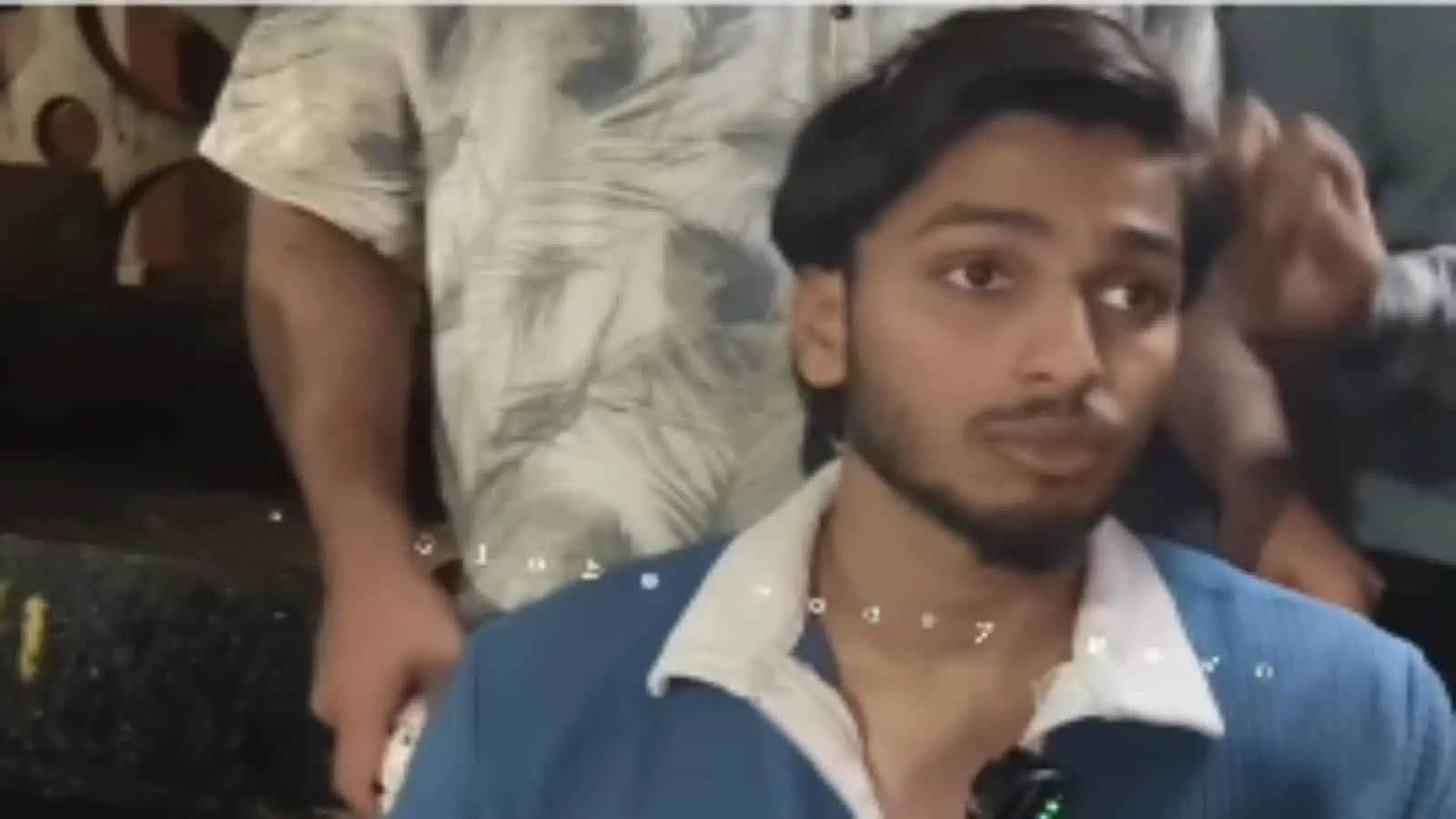
Man steps out for namaz in Hyderabad
Hyderabad: A man was injured in a knife attack in Hyderabads Hassannagar under Bahadurpura police limits on Wednesday, July 29. The injured was identified as Mohammed Mubeen, a resident of Shastripuram. The incident occurred when Mubeen stepped out of his office for the evening namaz and was intercepted by the accused, Nizam. They argued, and Get the latest updates in Hyderabad City News , Technology , Entertainment , Sports , Politics and Top Stories on WhatsApp & Telegram by subscribing to our channels. You can also download our app for Android and iOS .
Traffic Curbs, Shuttle Services as Hassan Hosts Chennamma Deve Gowda's Final Rituals
Extensive arrangements have been made for the ceremony, including separate parking areas, seating and food counters for the public and dignitaries

Kerala HC seeks States response on actor Ansiba Hassans petition against Magistrates order
HC admits petition by Ansiba Hassan challenging order of Judicial First Class Magistrate Court, Ernakulam, which refused to register a case based on her complaint against a video allegedly containing sexually coloured and defamatory statements made against her

Karnatakas Water Crisis: Kumaraswamy Calls CWRC Order Unscientific
Hassan, July 30: Central Minister H.D. Kumaraswamy has labeled the order from the Cauvery Water Regulation Committee (CWRC) as unscientific and a death warrant for Karnataka. The directive requires the state to release 3,500 cusecs of water daily to Tamil Nadu for 15 days, despite Karnataka facing severe drought conditions. Speaking to reporters in Hardanahalli, ... Read more Karnatakas Water Crisis: Kumaraswamy Calls CWRC Order Unscientific

BJP delegation visits farm fields in Hassan

AMMA crisis: Four women members call for seizure of documents from Shwetha Menons panel
Maala Parvathi, Ansiba Hassan, Usha Haseena, and Ponnamma Babu have urged Registrar of Co-operative Societies to seize books of accounts and financial documents that continue to be under the possession of the panel led by Shwetha Menon that had announced its resignation at general body meeting on June 21

Writer Banu Mushtaq joins a night-long protest extending support to students in Hassan

Writer Banu Mushtaq joins a night-long protest extending support to students in Hassan

Ikroop Teaser : Mithila Palkar, Gauahar Khan and Taha Shah Badussha Starrer Ikroop Official Teaser
Ikroop : Watch the Official teaser from hindi Web movie 'Ikroop' starring Mithila Palkar, Gauahar Khan and Taha Shah Badussha. Ikroop is directed by Akram Hassan. To know more about Ikroop , watch the video. Check out the latest hindi teaser, new movie teaser, trending hindi movie teaser, Mithila Palkar, Gauahar Khan and Taha Shah Badussha's videos at ETimes - Times of India Entertainment.
Mysuru, Hassan To Be Satellite Flying Training Bases In Karnataka
The Deputy Chief Minister reviewed the Schools activities and he pointed to the Government Flying Training School established in 1940 has trained thousands of pilots over the years.

PM Modi Expresses Condolences on the Passing of Former PM Deve Gowdas Wife, Chenamma
New Delhi, July 21: Former Prime Minister H.D. Deve Gowdas wife, Chenamma, was laid to rest with full state honors on Monday at the foothills of Ranganathaswamy Hill in Mavinakere village, Hassan district. Several senior leaders from both the central and Karnataka governments paid their respects during the ceremony. Prime Minister Narendra Modi spoke with ... Read more PM Modi Expresses Condolences on the Passing of Former PM Deve Gowdas Wife, Chenamma
Son murders father over property, dies by suicide in Hassan
Hassan: A family dispute over money and property ended in tragedy in Karnatakas Hassan district, where a 42-year-old man allegedly murdered his retired headmaster father before dying by suicide at their residence in Channarayapatna taluk, police said. The deceased have been identified as retired headmaster BN Channegowda (73) and his son Bindukumar (42). According to Get the latest updates in Hyderabad City News , Technology , Entertainment , Sports , Politics and Top Stories on WhatsApp & Telegram by subscribing to our channels. You can also download our app for Android and iOS .

Crime Branch seizes Rs 1.5 crore worth of liquid gold, arrests two
NT Reporter Panaji In a major anti-smuggling operation, the Goa Crime Branch foiled an alleged gold smuggling attempt and arrested two men from Kerala after recovering around 1.300 kg of liquid gold, valued at approximately Rs 1.5 crore,concealed in specially stitched cavities intheir undergarments. The accused Hassan Niyaz (35) and Muhammed Khunhi (57), both from []

AIDSO stage protest in Hassan condemning action on Wangchuk