


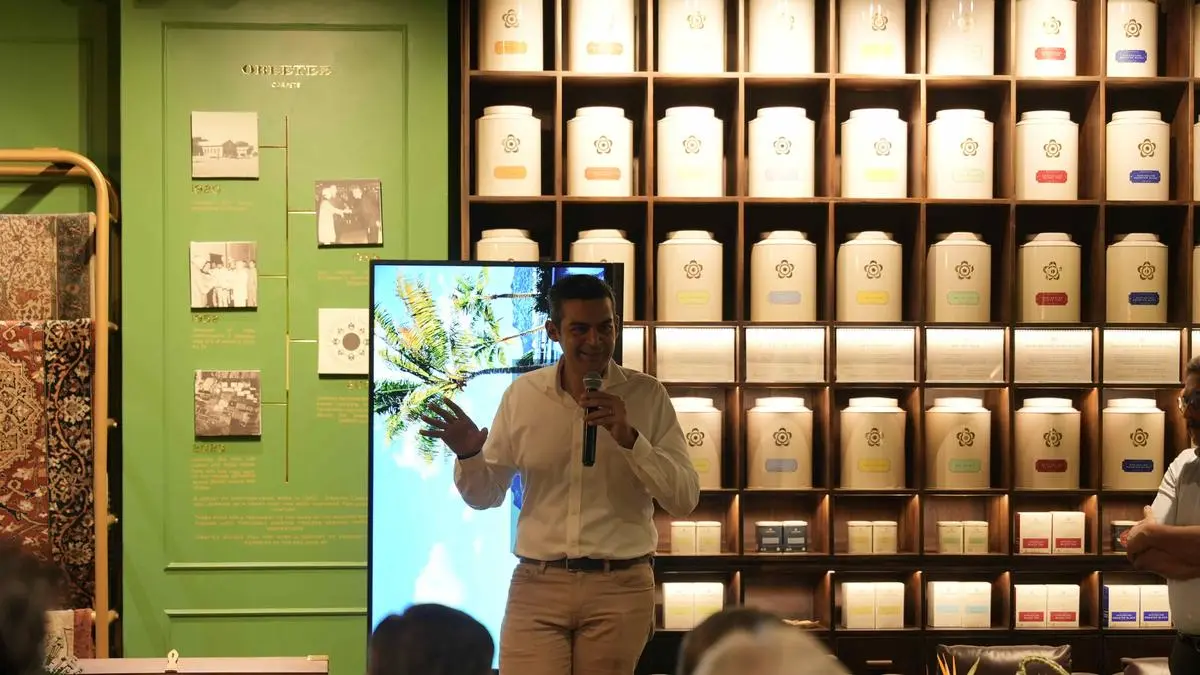
From Darjeelings hillside plots to wider markets: Makaibari Collective takes root
The initiative connects trusted branding with livelihoods, resilience and organic cultivation locally
Darjeeling cops reach out to Tripura Police to reunite trafficking victims with kin
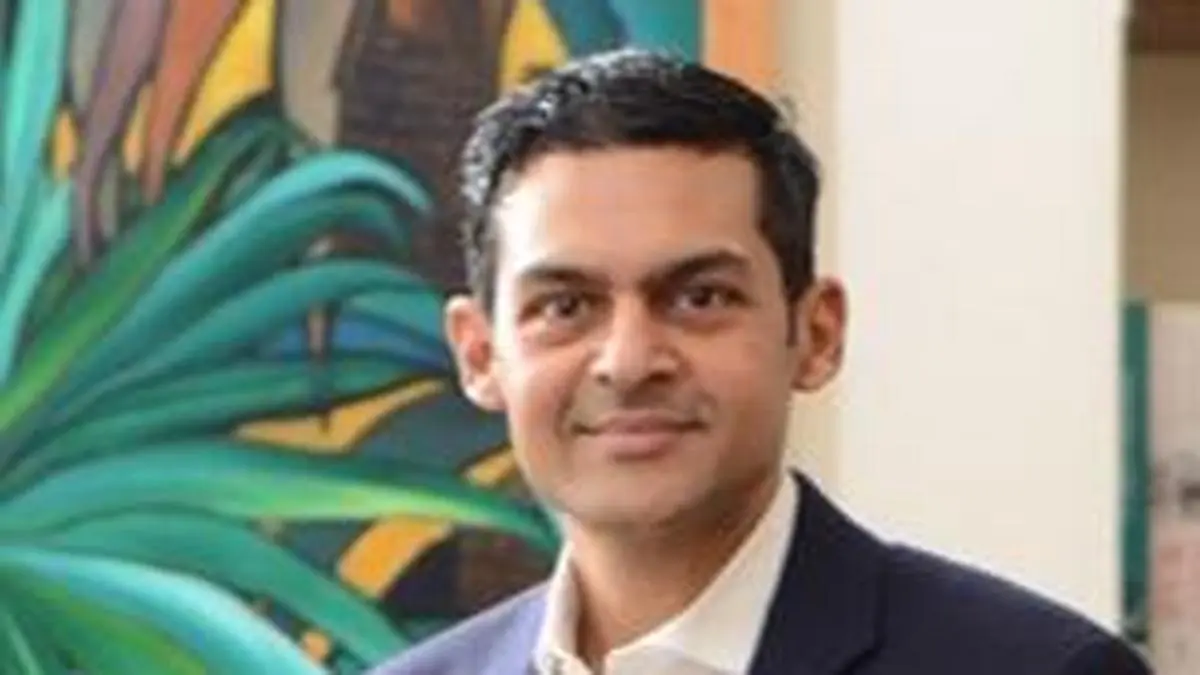
Luxmi Group to launch Makaibari Collective with Darjeeling small tea growers
The initiative will combine tea from Makaibari and independent growers, while helping farmers receive better prices and a share of profits

Makaibari unveils Collective model for Darjeeling's small tea growers
The Makaibari Collective will source organically grown tea from small farmer cooperatives, with profits shared among growers in proportion to the quantity supplied

Low-pressure area to bring heavy rain in Bengal till Sep 4: IMD
Very heavy rainfall is also likely in Darjeeling and Jalpaiguri districts till Tuesday morning due to the weather system
Makaibari Tea partners with Darjeeling small tea growers for new blended tea brand
ITA seeks West Bengal tea policy push for Darjeeling, Dooars-Terai
White papers seek financial support, tea-area rejuvenation, factory modernisation and trade reforms to revive production, protect livelihoods and attract investment in North Bengal
Tea body submits white papers, seeks govt intervention for Darjeeling, Dooars tea revival
Tea industry seeks Rs 113 crore annual package to revive Darjeeling sector
The Indian Tea Association seeks government aid for tea industry revival. Financial and regulatory reforms are proposed for Darjeeling and Dooars regions. The association requests support for production and modernization efforts. Measures aim to protect employment and rural livelihoods across North Bengal. Time-bound implementation of policies is crucial for sector sustainability.

PM Modi's expression of 'Dimagi-Naxals' begins to expose all elements of this category
FRAGRANCE OF IDEAS On every Republic Day and the Independence Day of the nation, the President of India addresses the nation on the eve of the most important two days of the Republic. However, in regard to the Independence Day, the whole focus of the nation remains on the address of the Prime Minister from the ramparts of the Lal Qila in Delhi. Prime Minister Narendra Modi addressed the nation consecutivelyfor the 13th time from the ramparts of the Lal Qila on the Independence Day this year. Keeping in view the current socio-political scenario and the background of the parliament's stormy monsoon session thatended two daysearlier to the IndependenceDay, the address received great attention this time from all quarters. Besides the usual referencesto the advancemarch of the nation, the security related issues and the welfare measures of the government (both currently in vogue and those to be taken up in future) the Prime Minister in his speech referred to the finish of the armed Naxalite movement in the countryfor which 31st March 2026 was the deadline fixed by the government.In connection with the successful annihilation of the violent Naxalism, PM Modi made a very pointed reference to those who still keep on harnessing Naxalismin their thoughts and continue to pursue the divisivetheory in the society. He categorizedthem as the 'Dimagi-Naxals'. Hewarned the country against theseDimagi Naxals(intellectual or mental Naxals), stating that while armed Naxalism has been largely eradicated from the forests, its hidden ideological backers and mindset particularly in urban areas still pose a threat by trying to create societal unrest. These peoplecontinue to operate within intellectual spaces, media and power corridors and leave no opportunity to influence people to keep on makingefforts to stage anarchy on streets and in the important institutions of the country. PM Modiurged the public to identify and isolate these ideological elements to keep the youth aligned with national development, its civilizational ethos and the mainstream. In order to add their bit, the Congress leaders Mallikarjun Kharke, President of Congress Party and the leader of opposition in the Rajya Sabha, Rahul Gandhi, LoP in Lok Sabha and Sonia Gandhi, Chairperson of Congress Legislature party in parliament didn't attend the main function of the Independence Day at Delhi. They virtually 'boycotted' the most important national function echoing their conduct in the recently held monsoon session of the parliament which created a very bad taste on an occasion of national prestige and honour. On the same day, all these three leaders of the Congress party were seen attending a programme at the Congress headquarters in New Delhi wherein they were seen objecting to the recitation of full national song -Vande-Mataram! This further added to the already existing distaste in this connection. The whole nation witnessed how the Congress top leadership in presence of their workers at their main office insulted the national song. This is indeed the lowest level of position that the Congress stooped to publicly in regard to Vande-Mataram that has been accorded the status of national song by the Indian constitution. In the recently held monsoon session of the parliament, Prevention of Insults to National Honour (Amendment) Bill 2026 was duly passed by the Rajya Sabha and the Lok Sabha. The legislation amends the 1971 Act to place the national song -Vande-Mataram, on par with the National anthem, making intentional interruptions or insults a punishable criminal offense. Intentionally preventing the singing of the song or disturbing an assembly reciting it carries up to three years in prison, a fine or both. Any second or subsequent conviction mandates a minimum jail term of one year. The government of the day in recognition of the people's wishes, sentiments and the pent-up feelings for a long time, took this step to honour the national heritage and provide legal sanctity to the complete song as was written by its author Bankim Chandra Chatterji during its 150th anniversary milestone. The aspirations in this regard were expressed by the people immediately after passing the Bill and particularly during the Tiranga Yatra conducted on the sacred occasion of this year's Independence Day. What Congress leadership did, unfortunately, reflects the mindset that the Prime Minister in his address to the nation referred to when he talked about the Dimagi-Naxals active in the country. A number of politicians, the so-called intellectuals, activists and anti-Modi elements came out declaring that they are 'proud of being Dimagi-Naxals'. These elements included P. Chidambaram, Arvind Kejriwal, Mehbooba Mufti, Renuka Chaudhary and others of their ilks. Though the Union Minister Kiran Rejiju clarified that the label wasn't meant for the general political rivals, but for those who reject the constitution or back separatism and support anarchy and violence in this regard. All the above mentioned characters fit in the definition as recommended by both the Prime Minister and the Union Minister. Here it will be importantto go to some facts of history in this connection. Naxalism in its violent form began in India around 1967 during the peasant uprising in Naxalbari-Darjeeling, West Bengal. It followed the Maoist revolutionary ideology and was led by Charu Majumdar and Kanu Sanyal. Naxalism expanded through violent land seizures, guerilla type attacks on the state forces and preaching pseudo-socialism. They later joined with the Communist Party of India (Maoist) and formed a number of splinter groups to pursue their agenda of armed activity against the landlords and the state of India. The leaders of this extreme-left oriented ideology argued that the socio-economic change required armed revolution and encouraged the extremist ideas in remote villages and tribal areas in a number of states. Though police and paramilitary deployments and actions suppressed the expansion of the revolt, however, it emerged as a major security threat internally. They grew support from some key urban intellectuals and other politically connected activists and leaders and emerged as a real threat in states like Bihar, Chattisgarh, Jharkhand, Orissa and parts of Telangana. The high intensity violence unleashed by these Naxal-terrorists peaked around the year 2010 with nearly 2,000 violent incidents and hundreds of security and civilian deaths recorded in that single year.The active and passive support by the Urban-Naxals to this violence and the extremists involved in this carnage created a number of problems on ground for the State. On the one hand, the coordinated counter-insurgency measures, effective and aggressive camp setups by the security forces, road building and intelligence tracking reduced major rebel strongholds and on the other hand, the Urban-Naxals put all efforts to protect them legally, politically and by building a false narrative in their favour. On 25th May 2013, the Maoist insurgents in a deadly attack ambushed a full convoy of Congress leaders and workers in Jiram Ghati-Bastar region in Chhattisgarh. The ambush killed around 30 people, virtually wiping out the entire top leadership of the state Congress party. The dead included among others VC Shukla, Nand Kumar Patel, Mahendra Karma and Uday Mudliyar. The government of India in an affidavit to the SC during the UPA rule in November 2013 said that academicians and activists in urban centres had come to control 'mass organisations' organically linked to Maoists under the cover of human rights indicating how governments irrespective of political cover have seen 'urban-naxals' as a threat and noted hat these cadres are in many ways more dangerous than the cadres of the People's Liberation Guerrilla Army (PLGA). Sushil Kumar Shinde (UPA) led Home ministry in 2013 had clearly said 'how urban-naxal warfare was part of a strategyof CPI (Maoist) to mobilise opinion throughbodies tied to the party structure but which maintained a separate identity to avoid legal liability'. It is very unfortunate that P. Chidambaram, Renuka Chaudhary of the same Congress party and others are taking pride in being 'Dimagi Naxals' about which their own government had in the Supreme Court declared the intent and the strategy of these anti-social and anti-national elements. Salwa Judum was introduced as a state-sponsored vigilante movement against the Naxalites isome states in rural India. It was like a counter-insurgency operativein the hands of the local people that had gained bipartisan supportfrom the ruling as well as the opposition parties. Unfortunately, on thepetition filed by one Nandini Sundar, a sympathiser of the Naxals in the Apex Court, Justice B. Sudershan Reddy and Justice S.S.Najjardisbanded the Salwa Judum to the detriment of the anti-Naxal operations initiated by the then government. It was the same Justice Reddy who was later, after his retirement, sponsored by the Congress party and the other opposition parties as a candidate for the President's post. This invariably is a fit case of Dimagi-Naxal that was referred to by the Prime Minister in his speech. The BJP led NDA government immediately after assuming office in 2014 took very serious note of the activities of the Naxals and the Urban-Naxals both. Time specific plans were made to eradicate the Naxal groups. Time-scale strategy and planning was devised to organise large-scale surrenders of these extremists; and security pressure reduced their active zone significantly by the year 2026, marking a sharp decline in their geographic spread and active armed conflicts. As a travesity of justice in this regard, there are still many forces which continue to pursue the Naxal agenda in one or the other form. The expression of Dimagi-Naxals used by PM Modi has surely unmasked these elements and forced them to get exposed before the nation. It is just the beginning in this regard; more to follow in the very near future. (The author is a senior BJP & KP leader, Human Rights Defender and a columnist and can be at: reached at ashwanikc2012@gmail.com )
Raksha Bandhan 2026 falls on a Friday: 6 best places to celebrate Rakhi with siblings this year
Raksha Bandhan 2026 falls on a Friday, giving siblings across India a rare three-day window to travel together. From Udaipur's monsoon lakes and Coorg's coffee estates to Rishikesh's river and Darjeeling's peaks, these six destinations offer something different for every kind of brother and sister duo.

Centres committee on permanent political solution for Gorkha issue | Explained
The people of Darjeeling hills have been demanding a separate State of Gorkhaland, to be carved out territories of Darjeeling hills and parts of Terai and Dooars for the past several decades.

Bengal CM Adhikari to attend GJM
Kolkata, Aug 23 (IANS) Chief Minister Suvendu Adhikari will attend the foundation day ceremony of Bimal Gurung-founded Gorkha Janmukti Morcha (GJM), which has long been spearheading the movement for a permanent political solution for the hills scattered over Darjeeling, Kalimpong and Kurseong in the northern sector of West Bengal. Announcing this on Sunday, Gurung, the []

Hotel Owner Arrested In Kolkata Blaze That Killed 9, Including 7 Bangladeshis
Of the nine persons killed in the hotel fire, seven were Bangladeshi residents, one was from Jharkhand and one from Siliguri in Darjeeling district of West Bengal.

Shah Forms Panel To Draft Gorkha Accord
Mr Shah also entrusted Pankaj Kumar Singh, a retired IPS officer appointed by his ministry as Darjeeling interlocutor, to lead the panel on the issue.

Govt forms panel for 'permanent solution' to Gorkha issue
The Centre has established a committee to draft an agreement and finalise modalities for a 'permanent political solution' to the Gorkha identity issue in the Darjeeling hills and adjoining areas, following a tripartite meeting with Union Home Minister Amit Shah, Gorkha leaders, and the West Bengal government.
Centre forms panel to finalise 'permanent political solution' for Gorkhas
The Centre on Saturday constituted a committee to draft an agreement and finalise modalities for a permanent political solution to the Gorkha identity issue in the Darjeeling hills and its adjacent areas, officials said after a key tripartite meeting between Union Home Minister Amit Shah, Gorkha leaders and the West Bengal government. The meeting aimed to find a roadmap for the BJP-promised permanent political solution to the long-standing issues and demands of the hill people and their recognition under the ambit of the Constitution. All issues relating to the hill population of West Bengal were discussed in detail. Their demands pertaining to a distinct identity, a permanent political solution and recognition under the Constitution of India were taken up. The Union home minister promised a permanent political solution soon under the umbrella of the Constitution, a statement issued by the Ministry of Home Affairs (MHA) said. To finalise modalities, it was decided to form a .
Amit Shah Vows Permanent Political Settlement For Bengal's Darjeeling Hills
Issues related to the problems of the hill community, their demand for a distinct identity, constitutional status and political solution were discussed in detail during the meeting.

Amit Shah meets hill leaders to discuss 'permanent political solution' for Darjeeling
The meeting is expected to focus on the BJP's pre-poll promise of a permanent political solution for the Gorkha community and other residents of the hills who have, for decades, demanded a separate Gorkhaland State
Amit Shah to Hold Meeting on Border Security, Darjeeling Issues
Sources said Shah will review border security, with a focus on coordination among the BSF, SSB, intelligence agencies and the state administration

Vande Mataram never embraced wholeheartedly by Opposition after Independence: Amit Shah
New Delhi, Aug 21: Union Home Minister and Minister of Cooperation Amit Shah today inaugurated and laid the foundation stones for various projects of the Sashastra Seema Bal (SSB) in Siliguri, West Bengal, and interacted with the personnel. On the occasion, West Bengal Chief Minister Suvendu Adhikari, Darjeeling Lok Sabha MP Raju Bista, Union Home Secretary Govind Mohan, Intelligence Bureau (IB) Director Mahesh Dixit, Secretary, Border Management, Dr. Rajendra Kumar, and SSB Director General Sanjay Singhal, among several other senior officers, were present. Union Home Minister and Minister of Cooperation Amit Shah said that the occasion of the country's 80th Independence Day on August 15th was very special. He said that, for the first time, after completing 150 years since the composition of the national song Vande Mataram and 80 years of the countrys independence, the entire rendition of Vande Mataram was heard by the people of the country and the entire world from the ramparts of the Red Fort. He said that Bankim Chandra Chattopadhyays immortal composition Vande Mataram not only gave momentum to our freedom movement but also gave it a vision of what independent India should be like. Shah said that Bankim Chandra Chattopadhyays composition made it clear that independent India must move forward by embracing cultural nationalism. Union Home Minister said that even after the country was partitioned at the time of Independence, Vande Mataram was never wholeheartedly accepted by the main opposition party. Keeping public sentiments in mind, Vande Mataram was sung in the Parliament and everyone would stand, but it was saddening to see that the entire song was not sung. He said that the Ministry of Home Affairs recently got a Bill passed by the Parliament and decided to make the complete rendition of Vande Mataram a part of government programmes, which is a historic step. This will ensure that future generations, including our children and youth, receive the immortal message of Bankim Chandra Chattopadhyay Ji. He said that if the complete Vande Mataram is sung every day in schools, children will certainly be imbued with a strong sense of patriotism. Amit Shah said that Prime Minister Narendra Modi has announced the Saptadharathe seven streams of strength that will empower the nation. He said that the Prime Minister has called upon the youth of the country to connect with seven key streamsmanufacturing power, defence strength, agriculture and food processing, green and blue economy, technology and innovation, Gati Shakti (Infrastructure), and Indias soft powerand participate in nation-building. He added that Prime Minister Modi has also set a target of achieving 100 GW of nuclear power capacity by 2047 and launching eight new semiconductor plants over the next three years. He said that, on the strength of these seven streams, when India celebrates the centenary of its Independence, the country will be at the forefront in every field across the world. Union Home Minister Amit Shah said that the previous Chief Minister of West Bengal never attended the programmes of SSB and BSF. He said that SSB, BSF and ITBP are not agencies of any political party or government, but forces that protect the borders, and all political parties should stand with these personnel. Shah said that preventing infiltration and securing West Bengal and the country is our resolve, and fencing is the strongest measure for this. Praising West Bengal Chief Minister Suvendu Adhikari, he said that ever since he assumed office, the Centre has received immediate and all possible cooperation from the state government for border security. Shah said that within just 45 days of the formation of the government in West Bengal, the Government of India received 1,139 acres of land for the BSF and SSB. He said that these were parcels of land that the Government of India had been seeking since 2014, but the previous government in Bengal had not provided them. He said that the people of West Bengal have elected a government that gives priority to national security. Amit Shah said that the foundation stone for the administrative building of SSBs Frontier Headquarters in Siliguri was laid today, which will be constructed over 80 acres. He informed that the foundation stone for the 19th Battalion in Thakurganj, the e-foundation stone for the 12th Battalion in Kishanganj, and the foundation stone for the Transit Camp at New Jalpaiguri were also laid today. Shah said that new projects worth a total of 189 crore have been initiated here today to provide administrative and residential facilities for SSB personnel. He further said that ever since he became the Home Minister, the requirements of the security forceswhether the SSB, BSF or Assam Rifleshave remained among the topmost priorities on the agenda of the Ministry of Home Affairs. Union Home Minister and Minister of Cooperation Amit Shah said that the SSB has a glorious history. From 1965 onwards, the SSB expanded its presence to Manipur, Jammu and Kashmir and Tripura, Meghalaya in 1975, Sikkim in 1976, Rajasthan and Gujarat in 1985, and Nagaland, Mizoram and South Bengal in 1989. He said that wherever the SSB was deployed, its personnel performed commendably and worked tirelessly, day and night, to ensure security. He said that after the Kargil War, when the One Border, One Force policy was adopted, the SSB was entrusted with the most challenging task of guarding the open borders with friendly neighbouring countries such as Nepal and Bhutan. Since 2001, the SSB has been deployed along the 1,751-kilometre-long India-Nepal border and, since 2004, along nearly 700 kilometres of the India-Bhutan border. He said that when a border is fenced, the responsibility of the force guarding it becomes somewhat easier. However, the SSB is tasked with monitoring unfenced borders, which is the most challenging assignment. He said that he often states that the personnel of the SSB have one of the most difficult responsibilities because they are deployed along open borders. Shah said that the entire country respects the SSB personnel for their coordination, dedication to safeguarding the nation, and contribution towards strengthening Indias cultural ties with both friendly neighbouring countries. Amit Shah said that Prime Minister Narendra Modis government has fully recognised the strategic importance of the Siliguri Corridor from the perspective of national security. He said that this highly sensitive and strategically important corridor connects eight states. Three international borderswith Nepal, Bhutan and Bangladeshadjoin the Siliguri Corridor, and its security is intrinsically linked to the security of the nation. Union Home Minister said that the Modi government has strengthened national security by securing the Siliguri Corridor through a triangular grid. He said that in this densely populated corridor, the government has increased its awareness, presence and dominance. He added that the security forces have participated in various operations and exercises from time to time, but one gap remained. He said that to fully strengthen and secure the Siliguri Corridor, agencies of the Government of India required 560 acres of land, which the previous government in West Bengal had not provided. He said that the Government of India commends West Bengal Chief Minister Suvendu Adhikari for granting in-principle approval for the allocation of 560 acres of land. Union Home Minister and Minister of Cooperation Amit Shah said that security forces alone cannot ensure the security of any region. He said that increasing population, migration and tourism in an area helps strengthen our presence there. He said that the Delhi-Siliguri corridor is also included among the 7 high-speed rail corridors approved in the 2026-27 Budget, which will enable travel from Delhi to Siliguri in just a few hours within 2-3 years. He said that we have transformed the Siliguri and Jalpaiguri stations under the Amrit Bharat Scheme. Amit Shah said that through the Vibrant Villages Programme, we are not only connecting villages but also working to establish a strong emotional connect with the Indians living in these villages. He said that the scheme, with an expenditure of 6,839 crore, is of great significance for the Bangladesh and Bhutan borders. He said that the government will take forward its concept of safe, secure and vibrant land borders. He added that 190 crore has been invested here today to improve the facilities for our personnel and strengthen the countrys defence capabilities. This will provide comfort to the minds, bodies and spirits of the personnel and give them a better working environment. During his address Home Minister paid tribute to renowned Shehnai maestro Ustad Bismillah Khan and former Uttar Pradesh Chief Minister Kalyan Singh on their death anniversaries. He said that Ustad Bismillah Khan played a significant role in taking Indian music to the global stage. He promoted ragas and raginis and worked to popularise Indias rich tradition of classical music. Speaking about former Uttar Pradesh Chief Minister Kalyan Singh, the Home Minister said that during his tenure as Chief Minister, he made efforts to undertake the administrative reorganisation of the state for the first time and made a significant contribution to the Ram Janmabhoomi movement.

Kolkata Fire Tragedy Claims Nine Lives, Including Seven Bangladeshis
Kolkata, August 20: The Kolkata police have identified the nine victims who lost their lives in a hotel fire on Mirza Ghalib Lane in central Kolkata on Thursday. Among the deceased, seven are Bangladeshi nationals, while two are Indian citizensone from Giridih district in Jharkhand and the other from Darjeeling district in North Bengal. The ... Read more Kolkata Fire Tragedy Claims Nine Lives, Including Seven Bangladeshis

India House marks historic trade milestone as UK deal takes effect
INDIAS high commissioner to Britain, Periasamy Kumaran, cut a cake at India House last Wednesday (15) to celebrate the India-UK Free Trade Agreement finally coming into force after more than a decade of negotiations. A portrait of Jawaharlal Nehru, independent Indias first prime minister, surveyed an array of Indian goods that can now be exported to the UK either tax free or at greatly reduced rates of taxation. The high commissioner also opened a small box containing jewellery that had arrived overnight from India free of tax. Gems and jewellery make up one sector where Indian traders expect to do well in the UK market in the years to come. But the jewellery looked very traditional and will probably appeal only to British Asians, particularly for weddings. People will not have to go to India to do their shopping. Other items will have wider appeal textiles, for example. On display were a packet of classic Darjeeling black tea, a bottle of Jaisalmer Indian Craft Gin, another of Samsara Contemporary Indian Gin, and coffee from India. The governments officially refer to the FTA as the Comprehensive Economic and Trade Agreement (CETA). Tax-free jewellery shipped to Britain Indian High Commission The high commissioner addressed a gathering of British and Indian businessmen: This is a major economic milestone for both India and the UK, and a powerful statement of intent about the future of one of the worlds most important economic partnerships. This agreement is firmly focused on the future. It is defined by confidence, mutual respect and shared ambition, and, above all, it is focused on growth, on enabling the free flow of goods and services in both directions, strengthening investment links, making it easier for companies to create jobs in each others economies, and demonstrating that our greatest successes will be those that we build together. He added: The evidence is already compelling. Bilateral trade in goods and services now stands at nearly 48 billion. The long-held aspiration of doubling UK India trade by 2030 once appeared rather ambitious, but today, with CETA in force, it is a goal that appears firmly within reach. The investment relationship is equally distinctive. Investments flow strongly in both directions. India is investing in the UK, while British companies continue to expand their presence in India. Few major bilateral relationships can demonstrate such balanced two-way confidence. Data from the UKs Department for Business and Trade shows that, for inward investment in 2025-26, India emerged as the second-largest source of FDI into the UK after the United States, with 93 investment projects creating nearly 12,700 new jobs, the high commissioner said. Kumaran added: These companies are not simply investing in Britain; they are creating employment, paying taxes, strengthening supply chains, and contributing to Britains future. That is what a modern partnership looks like the worlds fifth and sixth largest economies working together towards shared goals. Assam tea Indian High Commission It is fair to say most people in Britain are unaware that India is now the worlds fifth largest economy, having overtaken the UK. Of course, when it comes to per capita income, India has a long way to go before it catches up with the West. The frustration for successive high commissioners has been that most people in Britain appear unaware of the extent to which the UK economy is being propped up by investment from India. This is the problem that Kumaran, like his predecessor Vikram Doraiswami, will have to counter. Kumaran described the tangible importance of trade, saying: We have with us today importers from Indias gems and jewellery sector, whose first consignment, benefiting from zero duty under CETA, arrived today by air cargo. Multiple consignments worth millions of dollars have sailed from the ports of India to leverage the benefits of CETA, including labour-intensive goods such as textiles, leather, electronic goods, and chemicals. Similarly, I can also sense the excitement among British automobile, food and drink, and Scotch whisky exporters. This is more than just one shipment or a set of shipments. It represents the beginning of a new era of opportunity for businesses on both sides. It shows how an agreement negotiated between governments can translate into real opportunities for companies, consumers, and communities. This morning, I also had the privilege of visiting DP Worlds London Gateway Port, where a vessel from India had just arrived. It was a fitting symbol for todays occasion. Indian coffee Indian High Commission He added: Trade is about movement, not only of ships and goods, but also of ideas, investment, and people. But the significance of this agreement cannot be measured by trade and investment outcomes alone. Its real promise lies in co-development, co-innovation, and a deeper, long-term strategic partnership. India and the UK share a natural partnership in financial services. The UK remains one of the worlds foremost global financial centres, while India is among the fastest-growing major economies, with deepening capital markets, a rapidly expanding digital economy, and an ambitious programme of financial sector reform. The opportunities for collaboration have now been created. Mechanisms, including the India-UK economic and financial dialogue, are deepening cooperation in financial services, fintech, and the digital economy. The numbers speak for themselves. India today records around 660 million digital transactions every day, more than the combined populations of the United Kingdom, France, Germany, and Australia. It has laid more than 4.2 million kilometres of optical fibre, enough to circle the Earth 105 times, and completed more than 177 billion biometric authentications. India has also committed to achieving 500 gigawatts of non-fossil fuel energy capacity by 2030, creating immense opportunities in renewable energy, green hydrogen, battery storage, and climate finance. The opportunity before us is not simply to sell into each others markets, but to build together cleaner energy systems, better infrastructure, stronger digital networks, and the industries of the future. Samsara gin showcased at the event Indian High Commission He said: Talent has always been one of the strongest bridges between India and the UK. Our diaspora, our students, our entrepreneurs, our scientists, and our professionals have connected our societies in ways that no treaty alone could achieve. CETA now provides that human connection with a stronger economic foundation. But it must be understood that economic agreements are not destinations; they are foundations for the future. Their true value lies not only in the text that is signed, but in the opportunities they unlock, the confidence they inspire, and the prosperity they create. The India-UK Comprehensive Economic and Trade Agreement marks the beginning of a new phase in our partnership. Rabindranath Tagore wrote, Faith is the bird that feels the light and sings when the dawn is still dark. Today, that light is clearly on the horizon as the India-UK CETA enters into force. Both our countries have every reason to look ahead with confidence. On pressing a button, he appeared in a video where his message was: Today marks a historic milestone in the India-UK partnership as the Comprehensive Economic and Trade Agreement enters into force to help businesses and stakeholders make the most of the opportunities it creates. Im delighted to launch today the India-UK CETA Facilitation Forum on the LinkedIn platform.
The India Meteorological Department issued a fresh weather alert for the nation. Heavy rainfall and thunderstorms are expected in eleven states including Uttar Pradesh and Bihar. Coastal districts of West Bengal will receive heavy showers until June twenty-fourth. Northern districts of West Bengal could experience heavy downpour from July twenty-sixth to twenty-ninth. Light to moderate rain is forecast for sub-Himalayan districts over the next few days.
From Assam to Nilgiri: How regional teas are becoming premium brands
India's tea market is shifting towards premium products and regional diversity. Gen Z and millennials are driving this growth, seeking authenticity and unique flavors. Regional teas from Assam, Darjeeling, and Nilgiri are gaining new recognition. Changing lifestyles and modern retail are expanding tea consumption and accessibility. Innovation and heritage are key for the industry's future growth.

Suvendu Adhikari's Promise To The Darjeeling HillsDevelopment, Jobs, Respect, But Not A State
Darjeeling toy train accident goes viral after taxi driver claims train was on 'wrong side'
A taxi driver argued with a toy train pilot after a minor collision occurred. The driver claimed the Darjeeling Himalayan Railway was on the wrong side of the tracks. Authorities found the vehicle was parked illegally and negligently near the railway line. The taxi was seized and a case was registered against the driver. The Darjeeling Himalayan Railway continues to celebrate its heritage and tourism growth.
7 places in India that feel like Europe during monsoon
India has places that look and feel startlingly European when the monsoon arrives. From Coorg's misty coffee estates to Darjeeling's fog-drenched colonial streets and Spiti's cliff monasteries, these seven destinations offer rolling green hills, cool air and dramatic skies. No passport, no long flight, and no currency exchange needed.

Darjeeling Himalayan Railway Toy Train Day marked at Sukna Heritage Station
The News Mill
Darjeeling tea industry seeks Centre's support amid deepening financial stress
Darjeeling's famed tea industry is facing severe financial strain due to aging bushes, climate woes, and labor shortages, leading to a significant production drop and falling prices. Industry leaders are urging the government for targeted interventions, including a sustainable pricing framework with a Minimum Sustainable Price, and the extension of agricultural and welfare schemes to bolster the sector's long-term viability and resilience.

Anit Thapa resigns as Chief Executive of GTA
The resignation of Anit Thapa, who was an ally of Trinamool Congress comes a day after West Bengal Chief Minister Suvendu Adhikari visited Darjeeling hills and raised the issue of corruption in the GTA. After the BJP came to power in West Bengal in May 2026, chairperson of several civic bodies including Kolkata Municipal Corporation and Bidhannagar Municipal Corporation had resigned.
West Bengal CM Suvendu Adhikari unveils North Bengal roadmap on first Darjeeling hills visit
West Bengal Chief Minister Suvendu Adhikari has unveiled a comprehensive development plan for North Bengal. He assured residents of the Darjeeling hills that all central government welfare and development schemes will be delivered effectively. Adhikari stated his government's commitment to transparency in recruitment and inclusive growth across the region. Infrastructure, jobs, and public services will be strengthened.

Monsoon likely to enter north Bengal in three-four days, says IMD
Heavy rainfall is likely over the next two days in the sub-Himalayan districts of Darjeeling, Kalimpong, Jalpaiguri, Alipurduar and Cooch Behar

Monsoon likely to enter north Bengal in three-four days, says IMD
Heavy rainfall is likely over the next two days in the sub-Himalayan districts of Darjeeling, Kalimpong, Jalpaiguri, Alipurduar and Cooch Behar

Monsoon Likely To Enter North Bengal In Three-Four Days: IMD
KOLKATA, Jun 8: The IMD on Monday said the southwest monsoon is likely to arrive in West Bengals sub-Himalayan districts like Darjeeling, Kalimpong and Jalpaiguri within the next three to four days. The northern districts of the state are already experiencing pre-monsoon rain with heavy downpour predicted over the next few days. The conditions are favourable for advancement of southwest monsoon into some parts of sub-Himalayan West Bengal within the next three to four days, missing the normal entry date [] The post Monsoon Likely To Enter North Bengal In Three-Four Days: IMD appeared first on Daily Excelsior .
Four rescued after car plunges into Teesta River near Sevoke; four dead
NDRF Siliguri teams have successfully rescued four individuals from the Teesta River. The car plunged into the water near Sevoke and Kurseong in Darjeeling district. Among those rescued was a seven-year-old girl. The rescued persons were in critical condition. The incident occurred on Friday, with rescue operations commencing immediately. Further details are awaited regarding the accident and the victims.
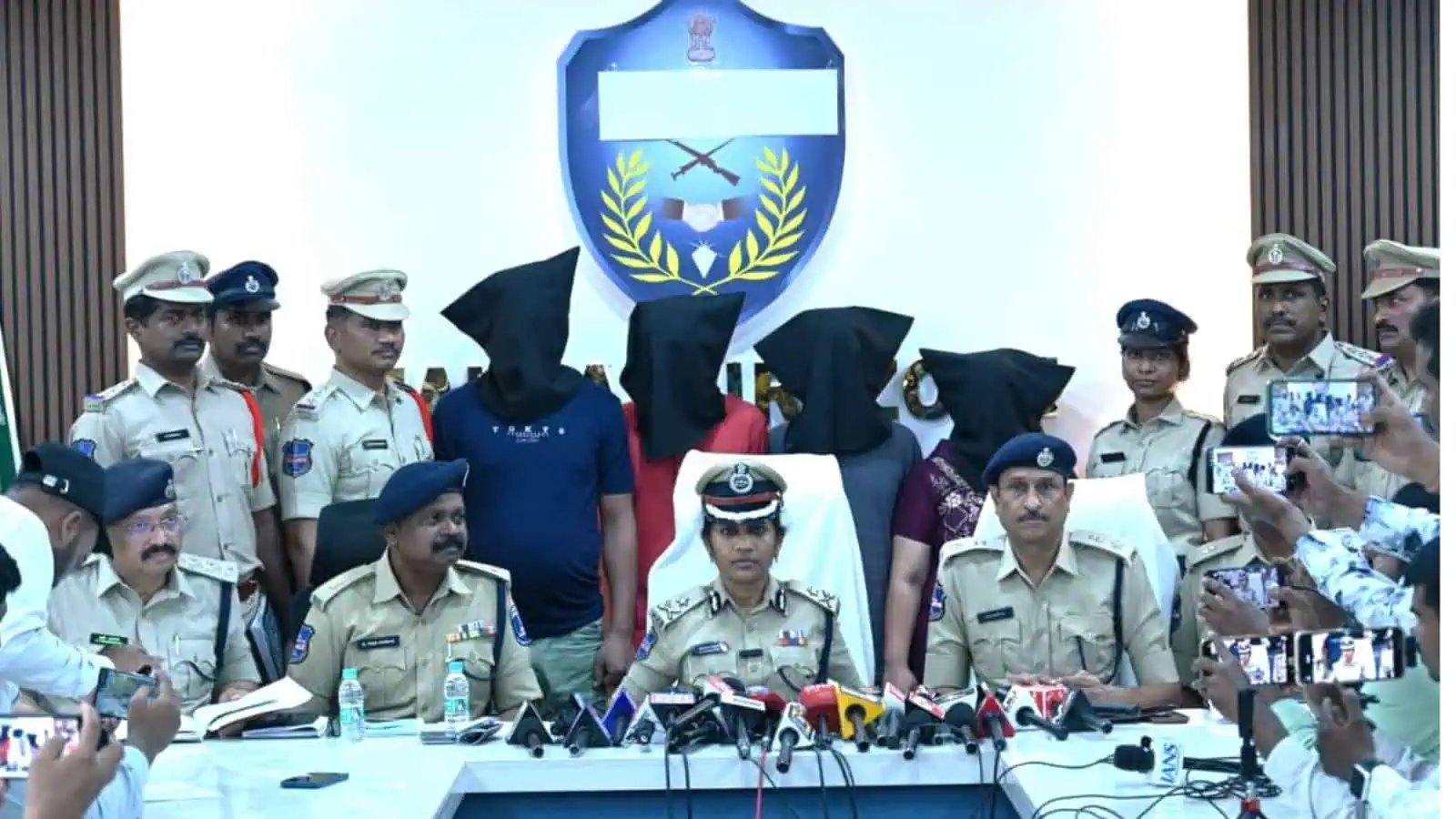
Jawaharnagar dacoity: Four more members of Nepali gang held
Hyderabad: Four more people, including two main accused allegedly involved in the Jawaharanagar dacoity case, have been arrested, the police said on Saturday, June 6. The accused have been identified as Meena, Rajesh, Daniel Charoh alias Chang and Kiran. While Meena, Rajesh and Kiran are natives of Nepal, Chang is a native of Darjeeling. Earlier, Get the latest updates in Hyderabad City News , Technology , Entertainment , Sports , Politics and Top Stories on WhatsApp & Telegram by subscribing to our channels. You can also download our app for Android and iOS .
Bengal Polls: BJP Leading In 8 Seats, TMC In 2; BGPM Ahead In Kalimpong
KOLKATA, May 4: The BJP was leading in eight assembly constituencies while the TMC was ahead in two, according to early trends available on the Election Commission website, as counting of votes for the West Bengal Assembly elections was underway on Monday. The Bharatiya Gorkha Prajatantrik Morcha (BGPM), an ally of the Trinamool Congress (TMC) in the Darjeeling hills, was leading in Kalimpong. As per EC data, BJP candidate Lakshmi Kanta Sau was leading in Jhargram with 5,156 votes, ahead [] The post Bengal Polls: BJP Leading In 8 Seats, TMC In 2; BGPM Ahead In Kalimpong appeared first on Daily Excelsior .